
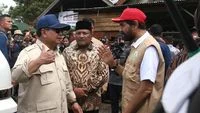
The political landscape of Aceh and its ongoing integration and development within the framework of the Unitary State of the Republic of Indonesia reached a significant juncture on Wednesday, November 4, 2026. The newly elected Governor of Aceh, Muzakir Manaf—widely known by his nom de guerre Mualem—held a high-profile, strategic bilateral meeting with Indonesian President Prabowo Subianto at the State Palace in Jakarta. The meeting, which drew intense interest from regional observers and national policymakers alike, focused on resolving long-standing structural, economic, and cultural agreements stemming from the historic 2005 Helsinki Peace Accord, alongside pressing contemporary development issues facing the westernmost province of the Indonesian archipelago.
The encounter was officially brought to public attention through digital media channels, notably via Governor Muzakir Manaf’s verified Instagram account (@muzakirmanaf1964) late Wednesday evening. The post was subsequently reposted by the official Instagram story of the Cabinet Secretariat, signaling the federal administration’s recognition of the meeting’s importance. Governor Mualem documented the occasion with a straightforward caption stating his meeting with the head of state at the nation’s political nerve center. Accompanying the Governor during this crucial dialogue were key figures from both the executive branch of the central government and the regional administration of Aceh. The central government was represented by Minister of State Secretariat (Mensesneg) Prasetyo Hadi and Cabinet Secretary (Seskab) Teddy Indra Wijaya, ensuring that the administrative machinery required to execute any presidential directives was present from the outset. Representing the regional interests of Aceh alongside Governor Mualem was the Special Staff to the Governor of Aceh, Teuku Irsyadi.
Comprehensive Agenda on the Table: From Autonomy to Historical Commitments
The discussions held behind closed doors at the State Palace were substantive, touching upon a multifaceted agenda that has historically defined relations between Banda Aceh and Jakarta. According to post-meeting statements released by Governor Mualem, the dialogue encompassed several critical pillars: the financial sustainability of the Aceh Special Autonomy (Otsus) funds, the legal certainty surrounding the long-debated Aceh Regional Flag, the resolution of the contentious Blang Padang waqf land status, the follow-up to a 2007/2017 presidential correspondence regarding the post-conflict settlement mechanisms (PATNA), the acceleration of decisions pertaining to the management and revenue-sharing of the Rantau Oil and Gas Block, and a novel proposal concerning the establishment of an endowment fund dedicated to former combatants of the Free Aceh Movement (GAM).
The inclusion of these specific topics underscores the complex legacy of the decades-long separatist conflict that officially ended with the signing of the Memorandum of Understanding (MoU) in Helsinki on August 15, 2005. While significant strides have been made toward lasting peace, regional autonomy, and local democracy in Aceh over the past two decades, several technical, financial, and symbolic provisions of the peace agreement have faced prolonged bureaucratic delays and legislative hurdles at the national level.
Background Context: The Helsinki Peace Accord and Unresolved Legacy Issues
To fully comprehend the significance of the meeting between Governor Mualem and President Prabowo Subianto, one must examine the historical architecture of Aceh’s special status. Following the devastating Indian Ocean tsunami in December 2004, international pressure and domestic exhaustion converged to create a unique window of opportunity for peace negotiations facilitated by the Crisis Management Initiative (CMI) led by former Finnish President Martti Ahtisaari. The resulting Helsinki MoU laid the foundation for Law Number 11 of 2006 on the Governing of Aceh (UUPA), which granted the province broad legislative autonomy, the right to establish local political parties, and a generous stream of special autonomy funding designed to catch up economically with other regions.
However, the implementation of several key clauses within the UUPA and the peace accord has faced recurrent friction between central government ministries in Jakarta and regional authorities in Banda Aceh. Chief among these has been the debate over regional symbols, specifically the official flag and crest of Aceh. Under local legislative frameworks passed by the Aceh House of Representatives (DPRA) years ago, the regional flag mirrors the historical standard used by the GAM movement. Successive central administrations in Jakarta have historically raised legal and constitutional objections, arguing that regional symbols must not replicate those associated with past separatist movements, thereby leaving the issue in a protracted legal limbo.
Furthermore, economic grievances have consistently dominated Acehnese politics. Despite receiving hundreds of trillions of rupiah in Special Autonomy funds since 2008, poverty rates in Aceh have stubbornly remained among the highest on the island of Sumatra. This economic paradox has fueled continuous demands from local leaders for the extension, restructuring, and increased transparency of autonomy funding, even as national oversight mechanisms have tightened. The governance of natural resources—typified by the Rantau Oil and Gas Block—and the socio-economic welfare of former combatants who laid down their weapons two decades ago remain vital pressure points for regional stability.
Detailed Breakdown of Core Agenda Items
The agenda items presented by Governor Mualem to President Prabowo represent a comprehensive wishlist designed to address both symbolic and material aspirations of the Acehnese populace.
-
Sustainability of Special Autonomy (Otsus) Funds
Aceh has been a recipient of Special Autonomy funds, which originally amounted to 2 percent of the National General Allocation Fund (DAU) for a period of 20 years. Although statutory extensions have been debated and partially implemented, regional leaders continually seek financial predictability to fund infrastructure, education, and health programs. Governor Mualem’s push for the long-term sustainability of Otsus funds is critical for preventing fiscal shocks in the regional budget. -
The Aceh Regional Flag and Legal Certainty
The dispute over the regional flag has simmered for over a decade. For many Acehnese, the flag represents cultural identity and the fulfillment of the peace pact. For Jakarta, it touches upon constitutional sensitivities regarding national unity. Mualem’s appeal for a definitive legal resolution aims to close this chapter cooperatively, balancing local cultural aspirations with national legal frameworks. -
The Blang Padang Waqf Land Status
The historic Blang Padang field in Banda Aceh, spanning nearly ten hectares, has been a subject of long-standing dispute regarding its ownership and legal status, involving local religious endowments (waqf) and military assets. Resolving this status holds significant emotional and practical value for the local community, as the field serves as a central hub for public activities and religious events. -
Presidential Correspondence on PATNA
The reference to the 2017 presidential correspondence regarding PATNA relates to mechanisms for addressing past human rights violations, truth-seeking, and reconciliation frameworks envisioned under the peace process. Ensuring that these historical commitments are actively managed helps maintain trust between former combatant networks and the central state. -
Acceleration of the Rantau Block Decision
Natural resource management is a cornerstone of regional economic independence. The Rantau Oil and Gas Block, located in Tamiang, is a mature field with historical significance. Accelerating decisions regarding its operational oversight and revenue allocation directly impacts regional revenues and local employment opportunities. -
Endowment Fund for Former GAM Combatants
Perhaps one of the most socially sensitive proposals is the request for an endowment fund specifically tailored for former GAM combatants. Two decades after demobilization, many aging ex-combatants face socio-economic vulnerability due to a lack of formal vocational transition, sustainable employment, or reintegration support. An institutionalized endowment fund is viewed by regional leaders as an essential investment in maintaining long-term peace and security.
Official Responses and Immediate Reactions
Following the conclusion of the meeting at the State Palace, Governor Mualem expressed cautious optimism regarding the reception of his proposals. He noted that President Prabowo Subianto responded positively and constructively to the wide-ranging agenda items placed before him. While specific executive decrees or legislative timelines were not immediately announced following the brief meeting, the presence of high-ranking administrative officials such as Mensesneg Prasetyo Hadi and Seskab Teddy Indra Wijaya suggests that the technical follow-up has already been assigned to relevant ministries.
Political analysts have interpreted the cordial and direct nature of the meeting as a pragmatic continuation of President Prabowo’s broader political strategy of coalition-building and regional engagement. Having secured significant political support in Aceh during the national elections, the current administration has demonstrated a willingness to engage directly with regional leaders to address historical grievances before they manifest as political instability.
Broader Implications and Future Outlook
The implications of the Jakarta meeting extend far beyond bureaucratic negotiations; they touch upon the core durability of Indonesia’s asymmetric decentralization model. Aceh remains one of the few provinces in Indonesia endowed with special and distinct autonomies—alongside Jakarta, Yogyakarta, and Papua—making its governance a bellwether for how the central state manages regional diversity, historical reconciliation, and resource federalism.
If the proposals championed by Governor Mualem translate into concrete presidential regulations, legislative revisions, or executive budget allocations, it could herald a new era of administrative harmony between Banda Aceh and Jakarta. Conversely, prolonged inaction or bureaucratic stalling on sensitive issues like the regional flag and ex-combatant welfare risks reigniting latent frustrations among grassroots elements in Aceh.
As the administration of Governor Muzakir Manaf moves forward with the implementation of its regional development plans, the outcomes of this high-level summit at the State Palace will be scrutinized closely by local legislators, civil society organizations, and former combatant networks alike. For now, the dialogue has established a constructive working channel at the highest level of government, setting the stage for what both regional and national leaders hope will be a decisive chapter in resolving the lingering architecture of the Aceh peace process.
