
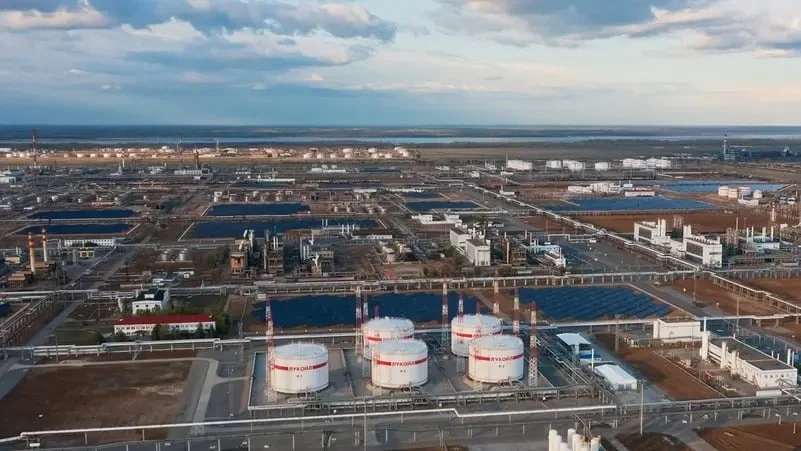
MOSCOW — Russian oil refineries have ramped up diesel production throughout October following a strategic shift in government export policies designed to satisfy a new supply agreement with the United States and other global markets. While the Kremlin has signaled its intent to normalize export flows, the logistical reality of Russia’s energy sector remains precarious as ongoing military conflicts, specifically drone attacks by Ukraine, continue to threaten the operational capacity of vital refining infrastructure.
The move comes at a critical juncture for the global energy market, where supply volatility and geopolitical maneuvering have forced a reassessment of trade relationships between traditionally opposing powers. According to industry data and government statements, Russia’s refineries have adjusted their output profiles to meet specific volume targets, even as domestic demand transitions into the post-harvest, lower-consumption cycle.
A Strategic Shift in Export Policy
The policy pivot began in early October when the Russian government introduced a quota-based system for diesel exports. This decision followed intense diplomatic engagement and a landmark announcement from U.S. President Donald Trump on October 9, 2026. President Trump indicated that Russia had committed to an initial delivery schedule of over 300,000 tons of diesel, with subsequent tranches of 500,000 tons in November and a potential escalation to 1 million tons in the following months.
To facilitate this influx, the U.S. Department of the Treasury issued General License 135. This regulatory instrument provides a temporary carve-out from existing sanctions, authorizing transactions related to Russian diesel—including direct imports into the United States—effective through April 7, 2027. This development represents a significant departure from the restrictive trade policies that have characterized U.S.-Russia relations since the onset of the conflict in Ukraine.
Production Dynamics and Market Capacity
Industry sources tracking refinery output have noted a distinct volatility in daily production rates throughout the month. During the first half of October, production levels dipped to approximately 160,000 tons per day, a decline from the 175,000 tons recorded in September. Analysts attribute this drop to a combination of scheduled maintenance and the initial shock of the export restriction policies that preceded the new quota system.
However, as the government formalized the new export quotas in mid-October, refineries recalibrated their operations. Daily output rebounded toward the 180,000-ton mark. From a seasonal perspective, this increase aligns with a natural contraction in domestic demand. In Russia, the end of the agricultural harvest and the conclusion of the summer driving season typically reduce internal diesel consumption to roughly 140,000 tons per day. This leaves a surplus of at least 40,000 tons daily—translating to over 1 million tons per month—available for international shipment.
Despite these figures, energy analysts remain cautious. "The mathematical capacity to export is present, but the structural integrity of the refining network is under immense pressure," noted one industry expert. "When you factor in the persistent threat of drone strikes targeting distillation units and storage facilities, the promised volumes are contingent on a level of operational stability that is currently elusive."
Chronology of the October Energy Policy Shift
- October 1, 2026: Russia begins the month with restricted export policies, causing a temporary dip in daily refining output as refineries recalibrate for the winter season.
- October 9, 2026: U.S. President Donald Trump publicly announces the supply agreement with Russia, detailing a phased export schedule of up to 3 million tons of diesel.
- October 9, 2026: The U.S. Treasury Department releases General License 135, legalizing specific diesel transactions with Russian entities until April 2027.
- October 10, 2026: The Russian government officially relaxes its total ban on diesel exports, authorizing an initial shipment of 500,000 tons to global markets.
- Mid-October 2026: Production stabilizes at approximately 180,000 tons per day as refineries align operations with new government quotas.
- October 26, 2026: Kremlin spokesperson Dmitry Peskov confirms that the first tankers have departed for international customers, signaling the commencement of regular supply chains.
Official Responses and Diplomatic Context
Kremlin spokesperson Dmitry Peskov addressed the situation on October 26, 2026, emphasizing that the government is committed to fulfilling its international obligations. "The first oil tankers have already set sail toward our customers, and we expect that regular supplies will continue without interruption," Peskov stated. This messaging is designed to reassure global markets that, despite the broader geopolitical friction, Russia remains a reliable energy partner within the parameters of the new U.S.-brokered arrangement.
Conversely, the U.S. administration has framed the move as a pragmatic effort to stabilize global fuel prices and prevent energy shortages as the Northern Hemisphere heads into the winter months. By allowing Russian diesel into the market, Washington is attempting to mitigate the inflationary pressure on energy costs that could otherwise trigger domestic economic volatility.
Broader Implications for Global Energy Markets
The integration of Russian diesel back into the U.S. and broader Western-aligned markets has profound implications for global trade. For months, Russian diesel had been redirected toward markets in Turkey, Brazil, and parts of Asia, often at significant discounts. The formalization of this trade via U.S. license suggests a reconfiguration of the global oil market, where the "shadow fleet" of tankers—previously used to bypass sanctions—may be replaced by more transparent, albeit highly regulated, shipping routes.
However, the "drone factor" remains the primary variable. Ukraine has demonstrated an increasing capability to strike deep into Russian territory, targeting refineries that are critical to both the Russian domestic economy and its export commitments. Each successful strike not only disrupts the supply chain but also increases the cost of insurance and transportation for Russian energy products. If the frequency of these attacks increases, the 3 million tons promised by the Russian government could become increasingly difficult to secure.
Furthermore, the environmental and economic impact of these exports is under scrutiny. Critics of the agreement argue that it undermines the effectiveness of long-term sanctions regimes and provides the Kremlin with the capital necessary to sustain its military operations. Proponents, however, argue that in a globalized energy economy, the physical availability of fuel must take precedence over political posturing to prevent a worldwide energy crisis.
Future Outlook and Market Stability
Looking toward the remainder of the year and into early 2027, the market will closely monitor three key indicators: the consistency of refinery output, the success of security measures at energy sites, and the potential for the U.S. to extend the provisions of General License 135.
Should Russia prove capable of maintaining the 180,000-ton daily production rate, global diesel prices are likely to remain stable, or perhaps soften, as supply meets or exceeds current demand levels. If, however, operational disruptions continue to plague the Russian refining sector, the gap between promised and actual delivery could widen, potentially leading to renewed price volatility in the first quarter of 2027.
As the situation evolves, the global energy industry is observing a rare moment of cooperation between two nations that have otherwise been deeply entrenched in an adversarial standoff. This move suggests that when the pressures of market supply and domestic inflation reach a critical threshold, the pragmatic demands of energy security can occasionally override the rigid boundaries of geopolitical policy. For now, the tankers are moving, and the global energy market is watching with cautious optimism.
