
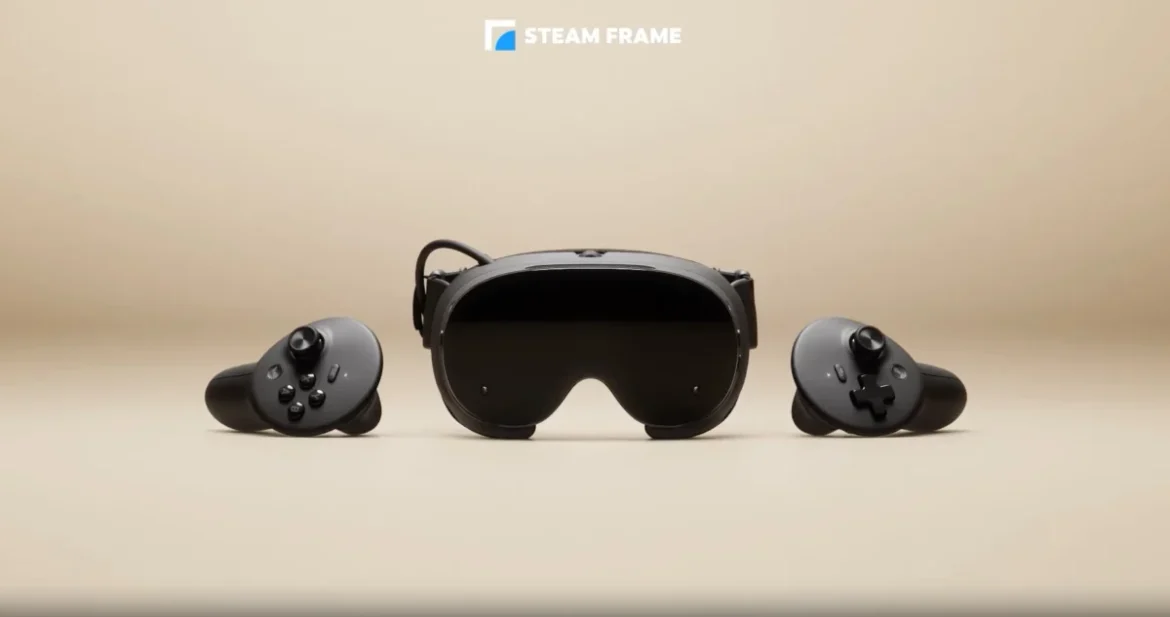
The intersection of consumer feedback and rapid software development has once again highlighted the agile nature of modern hardware manufacturing, as Valve Corporation swiftly responded to a niche user request regarding its Steam Frame virtual reality headset. Demonstrating a level of customer responsiveness rarely seen in the consumer electronics sector, a Valve developer integrated optical disc drive support into the Steam Frame’s Linux kernel within ten minutes of addressing a user’s query on community forums. This unexpected update not only bridges the gap between contemporary virtual reality hardware and legacy physical media but also underscores the growing trend of hardware manufacturers leveraging open-source flexibility to accommodate highly specialized consumer demands.
The Genesis of the Request: Bridging Modern VR and 2006 Media
The sequence of events began on October 18, 2026, when a member of the Steam Community operating under the username AiodensGhost published a discussion thread detailing an unconventional use case for the Steam Frame. The user expressed a desire to connect an external optical disc drive to the headset. The motivation behind this unusual hardware pairing was twofold: to watch films while traveling using legacy media formats and to install classic PC games directly from their original compact discs. Specifically, the user cited the 2006 racing title Need for Speed: Carbon as a prime example of a legacy title they wished to experience on the platform.
At the time of the post, the Steam Frame lacked the requisite device drivers and kernel configurations needed to recognize and read data from external optical media. Operating systems designed for modern, highly portable devices like VR headsets typically strip away legacy support for compact discs, floppy drives, and other obsolete storage mechanisms to conserve system resources, reduce kernel bloat, and streamline hardware security profiles. Consequently, AiodensGhost’s request was initially viewed by community members as a logistical long shot—an interesting theoretical proposition that would likely be ignored by engineering teams focused on mainstream VR gaming, spatial computing performance, and battery optimization.
Chronology of a Rapid Engineering Turnaround
What transformed this community suggestion from a speculative forum post into a tangible engineering milestone was the swift intervention of Valve’s internal development team. On October 19, 2026—just one day after the initial forum inquiry—a developer utilizing the official Valve staff account identifier "gaberowe" formally responded to the thread. The developer acknowledged the query and confirmed that the matter would be investigated.

Rather than logging the request into a long-term project management queue or dismissing it as an edge-case scenario, the developer took immediate action. Within ten minutes of publishing the response, a code commit was pushed directly to the public-facing Linux kernel repository utilized by the Steam Frame operating system.
It is important to note that the developer did not write a completely new file system or optical drive driver from scratch. Instead, the update involved toggling and enabling CD-ROM support modules that were already natively present within the broader Linux kernel architecture, but had been intentionally disabled or omitted from the Steam Frame’s custom distribution build. By simply configuring the kernel compilation flags to include standard optical disc reading protocols, the engineering team effectively unlocked the hardware’s underlying capacity to interface with external USB-connected CD and DVD drives.
Current Status and Implementation Roadmap
Despite the rapid deployment of code to the source repository, everyday users cannot yet plug an external CD drive into their Steam Frame and immediately begin playing legacy titles. The code integration represents only the first phase of the software development lifecycle.
As standard protocol for consumer electronics and operating system maintenance, newly committed kernel patches must undergo rigorous internal testing, quality assurance evaluations, and integration builds before being packaged into a public software update. Furthermore, while the kernel can now theoretically recognize an attached optical drive, companion software layers—such as the user interface handlers within SteamOS and appropriate compatibility toolsets like Proton configured for optical file paths—may require additional refinement to ensure seamless execution of legacy disc-based games within a virtual reality environment.
Valve has not yet issued an official timeline regarding when this specific kernel update will roll out to the public via a stable firmware channel. Industry analysts anticipate that the feature will likely ship alongside a broader system software update in the coming months, once stability testing is fully concluded.
Technical Implications and Accessibility

The integration of CD drive support into a modern VR headset kernel carries interesting technical and philosophical implications for the hardware ecosystem. From a purely practical standpoint, the Steam Frame is primarily designed as a standalone spatial computing and virtual reality gaming device. Equipping it with the capability to read physical optical media might seem redundant in an era dominated by cloud storage, digital storefronts, and high-speed broadband downloads.
However, this modification significantly broadens the hardware’s accessibility and versatility. By enabling external USB-C optical drives, Valve has inadvertently transformed the Steam Frame into a multi-purpose portable entertainment hub. Users who maintain physical collections of compact discs, DVDs, or older PC games on CD-ROM can now theoretically access that media without needing to digitize files through a secondary computer or rely on cumbersome emulation workarounds.
Moreover, this development highlights the inherent strengths of Linux-based operating systems in consumer hardware. Because SteamOS and the underlying architecture of Valve’s devices are built upon open-source foundations, developers possess the agility to tap into a vast repository of pre-existing drivers and modules. This modularity allows for rapid feature deployment that proprietary operating systems, bound by rigid corporate bureaucracies and lengthy software approval pipelines, struggle to replicate.
Broader Industry Impact: Listening to the Niche Community
The incident has sparked widespread discussion across tech and gaming forums regarding the obligations and responsiveness of hardware manufacturers. In recent years, consumers have frequently voiced frustrations over walled gardens, planned obsolescence, and a lack of backward compatibility for physical media. As modern consoles and PCs increasingly phase out disc drives in favor of all-digital ecosystems, preservationists and retro-gaming enthusiasts have faced mounting hurdles in accessing older titles.
Valve’s spontaneous update serves as a compelling case study in consumer-manufacturer collaboration. While the percentage of Steam Frame users who actually own an external USB CD drive and wish to play 2006-era racing games on a VR headset is undeniably small, the willingness of a major corporation to accommodate such a hyper-specific request signals a corporate culture deeply attuned to its user base. It demonstrates that customer feedback channels can sometimes yield immediate, tangible results rather than vanishing into automated ticketing systems.
As technology companies continue to refine spatial computing and wearable hardware, the balance between streamlining devices for mass-market appeal and maintaining open, flexible ecosystems will remain a critical design challenge. Valve’s recent maneuver suggests that embracing the fringe demands of a passionate community does not necessarily detract from a product’s core mission; rather, it can enhance consumer goodwill, foster brand loyalty, and showcase the sheer technical adaptability of modern engineering teams.
