
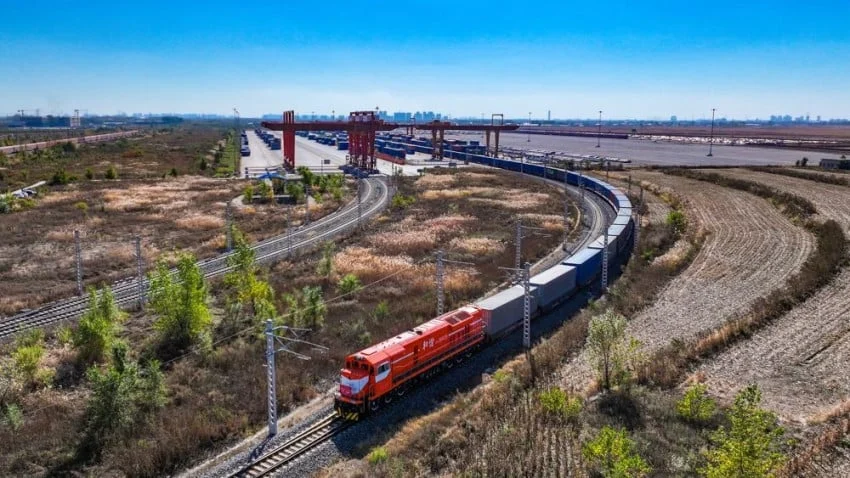
The global landscape of transportation infrastructure is currently defined by a stark divergence in capital allocation, with railway development serving as a primary indicator of national economic ambition. As nations grapple with the dual pressures of urbanization and the urgent need for decarbonization, rail infrastructure—historically one of the most capital-intensive public works projects—has become the focal point of state-led investment strategies. Data provided by the International Transport Forum (ITF), an intergovernmental organization operating under the auspices of the OECD, reveals that a select few nations are investing at scales that dwarf their peers, with China maintaining a dominant, almost singular, position in the global railway hierarchy.
The Global Investment Hierarchy: A Statistical Overview
Based on a 2024 peer-reviewed study utilizing ITF datasets, the disparity in infrastructure spending is profound. In 2021, the top five nations by investment volume were China, Japan, the United Kingdom, France, and Germany. China’s expenditure, reaching approximately €92.5 billion, stood in a league of its own. To put this into perspective, China’s annual investment exceeded the combined total of Japan (€17.0 billion), the United Kingdom (€13.3 billion), France (€11.5 billion), and Germany (€10.1 billion), which together spent roughly €51.9 billion.
While nations such as India, Italy, and the United States maintain robust railway programs, they often utilize different accounting methodologies, placing them outside the direct comparative scope of the ITF’s standardized survey. Nevertheless, the trend remains clear: the global pivot toward rail is being led by East Asian and Western European economies, with China acting as the outlier that has fundamentally altered the global benchmark for infrastructure deployment.
The Evolution of China’s Railway Hegemony
China’s commitment to rail is not a recent phenomenon but the culmination of a multi-decade state strategy aimed at fostering national connectivity and economic integration. In 2018, the ITF reported that China accounted for a staggering 52% of the total rail infrastructure investment among 42 surveyed nations, totaling €101 billion. Even more revealing is the internal composition of China’s infrastructure spending; reports indicate that by 2020, the rail sector absorbed 15% of the total combined spending on both rail and road infrastructure, highlighting a strategic shift toward rail as the backbone of the nation’s logistics and transit network.
The pace of development accelerated further into the mid-2020s. According to the China State Railway Group, investment in fixed assets reached a record 901.5 billion yuan (approximately USD 128.9 billion) in 2025, a 6% increase over the previous year. This capital injection translated into physical expansion: 3,109 kilometers of new tracks were commissioned, including 2,862 kilometers dedicated specifically to high-speed rail.
Between 2021 and 2025, China expanded its operational rail network from 146,300 kilometers to 165,000 kilometers. The growth in the high-speed rail (HSR) sector was even more aggressive, surging from 37,900 kilometers to 50,400 kilometers in just five years. This expansion has solidified China’s status as the operator of the world’s largest high-speed rail network, a feat of engineering that connects nearly every major urban center in the country. By the first three quarters of 2026, despite a slight normalization in the growth rate, China still invested 601.2 billion yuan (approximately $89 billion), marking a steady 1.3% increase and signaling that the country has moved from a phase of explosive construction to one of sustained maintenance and strategic refinement.
Regional Perspectives: Japan, Europe, and Beyond
While China dominates in absolute volume, the strategies in other top-tier nations reflect different priorities. Japan, long a pioneer in high-speed rail with its Shinkansen system, continues to focus on modernization and technological upgrades, particularly in seismic resilience and rolling stock efficiency. The investment of €17.0 billion reflects a mature network that prioritizes safety, frequency, and reliability over rapid geographic expansion.
In Europe, the investment patterns of the United Kingdom, France, and Germany are heavily influenced by the European Union’s "Green Deal" and the objective of shifting passenger and freight traffic from roads and aviation to electrified rail. The United Kingdom’s expenditure, while high at €13.3 billion, has been subject to intense political scrutiny regarding cost overruns on projects like High Speed 2 (HS2). France, conversely, continues to leverage its TGV network to maintain economic cohesion, while Germany is currently focused on the massive task of rehabilitating an aging network to meet the increasing demand for cross-border connectivity.
Economic and Strategic Implications
The implications of these investment levels extend far beyond the construction sector. For China, the massive expenditure on rail is a deliberate policy tool for "Internal Circulation"—a strategy designed to boost domestic consumption and inter-regional trade. By reducing transit times between inland provinces and coastal economic hubs, the government has effectively flattened the economic geography of the country, allowing for more balanced growth.
Economists note that such high levels of investment are not without risk. The "debt-to-asset" ratio of major rail operators is a frequent point of discussion among international analysts. However, proponents of this model argue that the "social return on investment"—the gains in productivity, environmental impact reduction, and land value appreciation—far outweigh the direct fiscal costs. Furthermore, the massive scale of China’s rail industry has fostered a robust export sector, with Chinese state-owned enterprises now bidding for and winning rail projects in Southeast Asia, Africa, and parts of Europe, effectively exporting their domestic technological standards to the global market.
Challenges to Continued Expansion
Despite the successes, the sector faces several challenges. As networks reach saturation, the focus of investment is shifting. In China, the era of building massive lines in remote areas is yielding to a focus on urban rail transit and the integration of "smart" technologies. The slight plateau in 2026 expenditure suggests that the Chinese government is becoming more selective, prioritizing high-efficiency projects that offer the best return on investment rather than purely maximizing track length.
Furthermore, the global increase in interest rates and the rising cost of raw materials—specifically steel, concrete, and energy—are exerting pressure on national budgets worldwide. For European nations, the challenge is bureaucratic and environmental: navigating strict planning regulations and environmental impact assessments can delay projects for years, inflating costs significantly compared to the centralized, top-down planning model seen in China.
Conclusion: The Future of Rail Infrastructure
The data provided by the ITF and national state entities provides a clear snapshot of a world increasingly reliant on rail. As the international community seeks to meet climate goals, the expansion of high-speed rail is likely to remain a top priority for governments globally. While China currently serves as the global benchmark for both speed and scale, the focus for the next decade will likely shift toward the interoperability of networks, the digitalization of traffic management, and the integration of low-carbon energy sources to power these massive transit systems.
As these five nations continue to funnel billions into their respective rail infrastructures, they are not merely building tracks; they are defining the future of human mobility. The sheer scale of China’s investment has set a high bar, one that challenges other nations to innovate in terms of engineering efficiency and funding models to remain competitive in a world where physical connectivity remains the ultimate catalyst for economic prosperity. Whether this "race for the rails" will continue at its current pace remains to be seen, but the trajectory suggests that for the foreseeable future, railway infrastructure will remain at the heart of global fiscal policy and national development agendas.
