
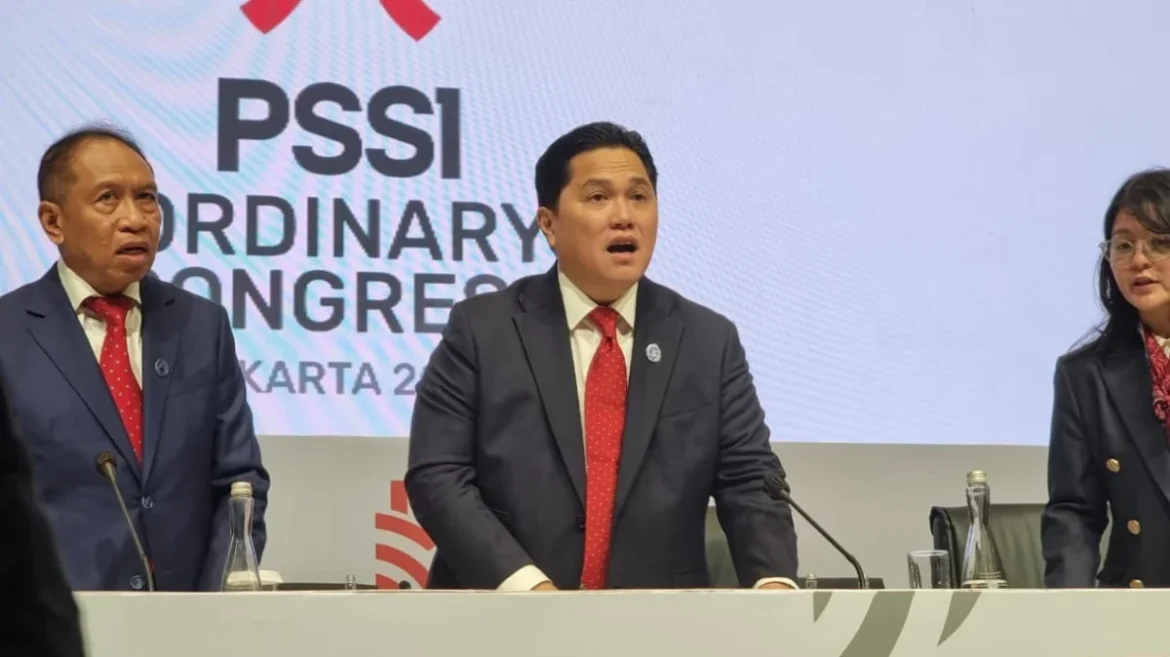
JAKARTA — Securing the hosting rights for the inaugural FIFA ASEAN Cup 2026 was far from a straightforward administrative procedure for Indonesia. Behind the momentous announcement lies a fierce, high-stakes diplomatic and sporting bidding war against regional powerhouses, stringent technical evaluations by world football governing body FIFA, and a unified mobilization of the Indonesian government apparatus.
Football Association of Indonesia (PSSI) Chairman Erick Thohir has revealed the intricate details of the protracted selection process, shedding light on the immense geopolitical maneuvering, government coordination, and strategic leverage required to bring the historic tournament to Jakarta and co-host alongside Hong Kong. The journey to hosting rights highlights Indonesia’s growing stature in international sports diplomacy, while also establishing high expectations for both logistical execution and on-field performance.
The Geopolitical and Regional Context of the Inaugural Tournament
The FIFA ASEAN Cup 2026 marks a watershed moment in the landscape of Southeast Asian football. Designed to integrate and elevate the competitive standards of football within the ASEAN bloc under the direct sanction and backing of FIFA, the tournament has drawn intense interest from regional member associations eager to etch their names into history as the inaugural hosts.
From the outset, several prominent footballing nations in the region recognized the prestige associated with hosting the first-ever edition of the tournament. Among the chief competitors vying for the rights were Thailand and Vietnam, both of which boast robust domestic leagues, passionate fan bases, and established infrastructure capable of staging major international fixtures.
Because this tournament carries the explicit branding and strategic backing of FIFA, the competition among candidate nations was fierce, leading to a delay of several weeks in the final decision-making timeline. The pitch process was described by football insiders as grueling, requiring nations to demonstrate not only sporting infrastructure but also government guarantees, financial stability, security frameworks, and a proven track record in event management.
The Decisive Intervention of FIFA and Regional Identity
Despite heavy lobbying and competitive bids from alternative candidates within and outside the immediate region, FIFA maintained a strict geographical and developmental mandate. According to Erick Thohir, the governing body remained resolute that the tournament must stay true to its core identity as a showcase for Southeast Asian football development.
Thohir expressed deep gratitude to FIFA’s leadership for upholding this vision despite mounting pressure from various bidding parties. FIFA’s steadfast stance—insisting that the event must serve the nations of the ASEAN region directly—paved the way for Indonesia to emerge as a primary host nation, sharing the hosting responsibilities with Hong Kong.
This decision serves as a testament to FIFA’s strategic focus on decentralizing major football events and fostering growth in emerging markets. For Indonesia, being selected is both an honor and a heavy responsibility, as the nation is tasked with setting a high benchmark for all subsequent editions of the tournament.
The Mechanics of the Bid: Unified National Support and Presidential Backing
Securing an international sporting event of this magnitude requires a multi-layered approach that transcends sports governance alone. Recognizing that PSSI could not secure the bid on athletic prestige and infrastructural readiness alone, the Indonesian government orchestrated a comprehensive, whole-of-nation campaign to impress FIFA inspectors and decision-makers.
Thohir detailed the extensive collaboration required across various branches of the Indonesian state. The bidding dossier was bolstered by active, coordinated support from multiple government ministries, regional and municipal local governments, and the Indonesian National Police (Polri). This unified front was essential in assuring FIFA of the country’s capacity to manage large crowds, guarantee safety, and streamline immigration, logistics, and transportation for international delegations and traveling supporters.
The cornerstone of the Indonesian pitch, however, was a direct endorsement from the highest office in the land. Thohir personally carried an official letter of support signed by President Prabowo Subianto during the final stages of presentations to FIFA.
The inclusion of the President’s signature signaled to FIFA that the hosting of the FIFA ASEAN Cup 2026 is a matter of national priority, backed by the financial, logistical, and political weight of the Indonesian government. Furthermore, this high-level governmental alignment demonstrated a stark contrast to previous bids, showing international federations that Indonesia possesses the administrative cohesion necessary to deliver complex, multi-nation sporting events seamlessly.
Leveraging Past Success: The Legacy of the FIFA U-17 World Cup
A critical factor that tipped the scales in Indonesia’s favor during the final evaluations was the country’s recent, highly successful tenure as host of the FIFA U-17 World Cup. That tournament served as a vital proving ground for Indonesia’s logistical capabilities, stadium modernization, security protocols, and hospitality standards.
When evaluating host candidates for the FIFA ASEAN Cup 2026, FIFA officials heavily weighed past performance metrics. Indonesia’s ability to upgrade multiple stadiums across different islands to international standards within tight deadlines, coupled with flawless tournament operations and enthusiastic crowd attendance during the U-17 showcase, left a lasting positive impression on world football authorities.
Building upon this institutional memory, the Indonesian government and PSSI committed to replicating and surpassing the standards set during the youth world championship. The planning for the FIFA ASEAN Cup 2026 incorporates lessons learned regarding crowd flow, ticketing transparency, stadium accessibility, and medical response times, ensuring a world-class participant and spectator experience.
Economic, Diplomatic, and Strategic Implications
The awarding of the FIFA ASEAN Cup 2026 to Indonesia carries far-reaching implications that extend well beyond the ninety minutes of play on the pitch. From an economic perspective, hosting a major international football tournament stimulates domestic consumption, boosts the hospitality and tourism sectors, and accelerates urban infrastructure development in the host cities.
From a diplomatic standpoint, successfully staging a marquee regional tournament reinforces Indonesia’s position as a stable, capable, and influential leader within Southeast Asia and the broader international community. In recent years, Indonesia has increasingly utilized sports diplomacy—hosting events such as the Asian Games, MotoGP, and international football championships—to project soft power and enhance its global profile.
Furthermore, sports industry analysts point out that the success of the FIFA ASEAN Cup 2026 will serve as a crucial litmus test for Indonesia’s long-term sporting ambitions. PSSI has made no secret of its desire to eventually bid for even larger international events, including senior FIFA World Cup matches or major continental championships. A flawless execution in 2026 will provide undeniable proof to international federations that Indonesia is a reliable, premier destination for global sports entertainment.
Looking Beyond Logistics: The Quest for Sporting Glory
While securing the hosting rights represents a monumental administrative victory for PSSI and the Indonesian government, stakeholders and fans alike emphasize that the ultimate measure of success will not be restricted to smooth logistics and packed stadiums. The ultimate aspiration for the nation centers on the performance of the national team.
Thohir and the PSSI leadership have consistently underscored that the euphoria of hosting must be matched by competitive excellence on the field. The tournament serves as a crucial developmental milestone for the Timnas Indonesia (The Indonesian National Team), providing players with high-level competitive exposure against premier regional opponents under intense tournament pressure.
As preparations ramp up toward the tournament kickoff in September 2026, technical staff, coaching teams, and player development pipelines are being aligned to ensure that the national team is not merely a hospitable host, but a formidable contender capable of lifting the inaugural trophy on home soil. The combination of government backing, infrastructural readiness, and rising national team ambitions places Indonesian football at an unprecedented crossroads of opportunity and expectation.
