
For many Indonesian travelers, the allure of international exploration is often curtailed by the administrative burden of obtaining visas. However, several nations across the globe maintain favorable diplomatic relations with Indonesia, granting citizens holding the standard green passport the privilege of extended stays without the need for prior visa applications. This facilitation of cross-border movement is not only a testament to Indonesia’s growing diplomatic standing but also a significant boon for digital nomads, long-term travelers, and those seeking to immerse themselves in foreign cultures for extended periods. While the standard tourist visa often limits visitors to 30 days, specific nations offer regimes allowing for stays of up to 90 or even 120 days, providing a unique opportunity for deep cultural integration.
The Diplomatic Context of Visa-Free Travel
The ability for a passport holder to cross international borders without a visa is fundamentally rooted in bilateral agreements, reciprocity, and the "strength" of a nation’s passport as measured by international indices. According to the Henley Passport Index, the Indonesian passport has seen consistent growth in its global mobility score over the last decade. This progress is the result of years of sustained diplomatic efforts by the Indonesian Ministry of Foreign Affairs, which works to negotiate visa-waiver agreements that simplify travel for Indonesian citizens while fostering tourism and economic exchange.
Visa-free access is rarely a unilateral decision; it is almost always a reciprocal arrangement where both nations agree to ease entry requirements. When a country grants visa-free access to Indonesian citizens, it signals a desire to attract Indonesian tourists, business professionals, or cultural exchange participants. For the traveler, this means bypassing the often-costly and time-consuming process of visiting embassies, submitting biometric data, and waiting for approval—a process that can often take weeks.
Fiji: An Oceanic Gateway for Extended Stays
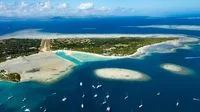
Fiji, the archipelago nation in the South Pacific, stands as one of the most generous destinations for Indonesian travelers, offering up to 120 days of visa-free entry. This policy is particularly notable because it significantly exceeds the industry-standard 90-day window found in most other visa-waiver programs.
From an economic perspective, Fiji’s decision to maintain these liberal entry requirements is driven by the importance of the tourism sector to its national GDP. By allowing visitors to stay for up to four months, Fiji incentivizes longer-duration tourism, which typically leads to higher per-capita spending on local services, accommodation, and regional travel within the islands. For the Indonesian traveler, this allows for a slow-travel experience, moving beyond the tourist hubs of Nadi and Viti Levu to explore the more remote and culturally distinct islands of the archipelago.
To capitalize on this, travelers must arrive with a valid passport, proof of onward travel, and evidence of sufficient financial resources. The latter is a standard requirement for all visa-exempt entries; immigration authorities require assurance that a visitor will not seek unauthorized employment or become a public charge during their stay.
South American Destinations: Peru and Chile
The inclusion of Peru and Chile on the list of visa-free destinations for Indonesians highlights the strengthening ties between Indonesia and the Latin American region. Both countries permit stays of up to 90 days for tourism purposes.
Peru, home to the iconic Machu Picchu and a burgeoning culinary scene in Lima, has become an increasingly popular destination for Indonesian travelers. The visa-free arrangement is governed by the principle of mutual convenience. Peru’s tourism board has actively targeted Southeast Asian markets to diversify its visitor demographics, and the waiver is a core component of this strategy. However, travelers should note that while the visa is not required, the final decision on entry rests solely with the immigration officer at the point of arrival. Factors such as the traveler’s itinerary, accommodation bookings, and general demeanor during questioning can influence the outcome.
Chile, often regarded as one of the most stable and prosperous nations in South America, offers a similar 90-day window. Unlike many other nations, Chile’s immigration framework for tourists, known as Permanencia Transitoria, is particularly robust. An interesting feature of the Chilean system is the possibility of extending this 90-day stay by an additional 90 days, provided the visitor applies through the official government portal and pays the associated administrative fees. This unique policy makes Chile an ideal destination for those looking for a long-term base in South America, whether for leisure or remote work.
The North African Connection: Maroko
Maroko (Morocco) serves as a vital bridge between the African continent and the Middle East, and it remains one of the few nations in the region to offer visa-free access to Indonesian passport holders for up to 90 days. This access is a reflection of the long-standing cultural and religious ties between Indonesia and Morocco, both of which share a significant Islamic heritage.
For travelers, the lack of a visa requirement simplifies the logistics of visiting complex destinations like Marrakech, Fes, and the Sahara Desert. The Consulate of the Kingdom of Morocco in Singapore confirms that Indonesia is on the list of exempted nations, allowing for a seamless entry process. It is, however, critical for travelers to ensure their passports possess at least six months of validity beyond the date of departure from Morocco, as this is a strict requirement enforced by the Royal Moroccan Gendarmerie and border control agents.
Analysis: Economic and Social Implications
The trend of offering extended visa-free stays carries significant implications for both the host country and the traveler. For the host, the primary advantage is the "extended stay economy." When a tourist stays for three months instead of one week, they are more likely to rent local apartments, use public transportation, and engage in local cultural activities, thereby circulating more currency into the grassroots economy.
For the Indonesian traveler, this represents a democratization of travel. It reduces the "barrier to entry" that often makes international travel the exclusive domain of those who can afford expensive visa processing fees or who have the time to navigate complex bureaucratic systems. It also allows for a higher quality of travel—moving away from the "checklist" style of tourism toward a more experiential, sustainable model.
However, these freedoms come with the responsibility of compliance. Immigration authorities in Fiji, Peru, Chile, and Morocco all emphasize that "visa-free" does not equate to "unrestricted." Travelers are strictly prohibited from engaging in paid labor, starting businesses, or overstaying their allowed duration. Breaching these conditions can lead to immediate deportation, blacklisting, and significant fines, which can jeopardize the bilateral agreements that make this travel possible in the first place.
Strategic Recommendations for Travelers
While the rules are straightforward, seasoned travelers advise a "preparedness-first" approach when entering countries under visa-waiver programs:
- Financial Documentation: Always carry digital or physical copies of bank statements or credit card limits. Immigration officers are increasingly vigilant about ensuring visitors have the means to support themselves.
- Onward Travel: Most border officials will demand to see a return flight ticket or a booking for a trip to a third country. Failing to provide this is the most common reason for being denied entry.
- Accommodation Proof: Having the first few nights of accommodation booked is a standard requirement that provides immigration officers with a sense of security regarding the traveler’s itinerary.
- Insurance: While not always mandatory for entry, having comprehensive travel insurance is essential, especially for stays of up to 90 or 120 days. Healthcare costs in foreign countries can be prohibitively expensive for uninsured tourists.
Future Outlook on Global Mobility
The landscape of global travel is in a state of flux. As nations look to recover from the economic stagnation of the early 2020s, there is a renewed interest in attracting high-quality, long-term tourists. Indonesia’s continued participation in these visa-waiver agreements serves as a bellwether for the country’s international standing. By maintaining these relationships, Indonesia ensures its citizens remain competitive in the global mobility market.
Ultimately, the ability to travel to Fiji, Peru, Chile, and Morocco for extended periods is a privilege that highlights the necessity of maintaining a clean travel record. As more countries observe the behavior of Indonesian travelers, the potential for further visa-free expansion into other regions remains high. For the modern Indonesian traveler, the world has never been more accessible, provided they approach these opportunities with respect for the host nation’s laws and a spirit of cultural curiosity.
As the international community continues to evolve, the distinction between a short-term visitor and a long-term resident becomes more blurred. The 90-to-120-day window offered by these four nations provides a perfect middle ground, allowing for a comprehensive exploration of diverse landscapes, from the islands of the South Pacific to the historic medinas of North Africa and the Andean peaks of South America. By utilizing these provisions effectively, Indonesians can continue to broaden their horizons and participate more fully in the global community.
