
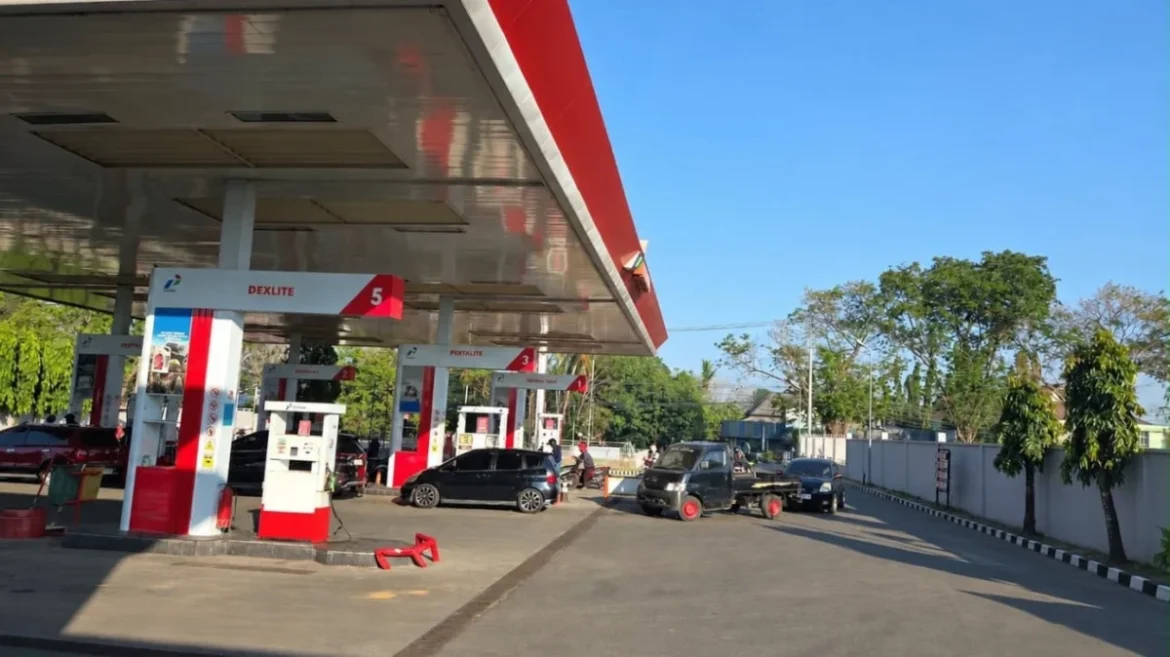
Jakarta — The Ministry of Energy and Mineral Resources (ESDM) has officially refuted viral social media reports claiming that the price of the subsidized fuel Pertalite would increase to Rp13,500 per liter starting September 26, 2026. The government reaffirmed that pricing for subsidized energy products remains stable despite ongoing fluctuations in global crude oil markets and geopolitical uncertainties.
The clarification was issued following a massive wave of misleading content across multiple social media platforms. The false reports alleged that the government was preparing to adjust the price of Pertalite—currently maintained at Rp10,000 per liter—to align with international oil benchmarks, reduce state budget subsidies, enhance energy security, and encourage fuel efficiency. Officials have firmly categorized these claims as entirely fabricated.
Official Clarification and Government Stance
Speaking in Jakarta, ESDM Ministry Spokesperson Dwi Anggia formally addressed the circulating rumors, emphasizing that the information lacks any factual basis.
"We need to clarify that there is currently a massive volume of social media content containing information about a Pertalite price hike. This content and information is a hoax or fake news," Dwi Anggia stated on Thursday, September 24, 2026.
Anggia underscored that Minister of Energy and Mineral Resources Bahlil Lahadalia has repeatedly stated across various public forums that the prices of subsidized fuels, namely Pertalite and Biosolar, will not be increased. This commitment holds firm even when global crude oil prices exhibit upward trends.

In light of the widespread misinformation, the Ministry has urged the Indonesian public to exercise greater caution and critical thinking when consuming digital content. Citizens are advised to avoid being easily provoked by unauthorized sources or inflammatory narratives designed to elicit public anxiety.
"Seek information from official sources and verified media outlets," Anggia added.
The circulating hoax claimed that the hypothetical price adjustment from Rp10,000 to Rp13,500 per liter was scheduled for implementation on September 26, 2026. However, this narrative starkly contradicts the official policy framework outlined by the administration of President Prabowo Subianto, which prioritizes the protection of purchasing power for lower- and middle-income households.
Broader Economic Context and Global Pressures
The decision to maintain subsidized fuel prices is rooted in a deliberate strategy to shield domestic consumers from external economic shocks. Minister Bahlil Lahadalia has consistently maintained that safeguarding the welfare of ordinary citizens remains the paramount objective of the national energy policy. The Ministry continues to monitor global crude oil dynamics closely under the directives of the central government, ensuring that domestic energy pricing remains insulated from sudden international volatility.
Echoing these sentiments, Coordinating Minister for Economic Affairs Airlangga Hartarto previously confirmed that the prices of subsidized fuels will not experience any upward adjustments through the end of 2026. Airlangga pointed out that the global economic landscape remains plagued by uncertainty, driven notably by protracted geopolitical conflicts, including the ongoing war in Ukraine and disruptions in critical trade corridors such as the Strait of Hormuz.
Despite these external pressures, Airlangga emphasized that Indonesia possesses the fiscal mechanisms necessary to absorb and mitigate the impact of global instability. The primary instrument for this buffer is the state budget (APBN), which allows the government to absorb international price spikes through energy subsidies and compensation funds without transferring the financial burden directly to the public.

Implications of Energy Subsidies on the National Budget
The maintenance of energy subsidies plays a critical role in stabilizing Indonesia’s broader macroeconomic environment. Subsidized fuels like Pertalite and Biosolar act as a foundational cost anchor for the transportation, logistics, and agricultural sectors. Allowing these prices to surge uncheckedly would likely trigger a cascading inflationary effect, raising the cost of basic goods and services and directly eroding the purchasing power of vulnerable populations.
Economic analysts note that while maintaining fixed energy prices protects consumers in the short term, it places a substantial fiscal demand on the APBN. When global oil prices trade significantly higher than the baseline assumptions embedded in the state budget, the government must allocate additional funds for energy compensation payments to state-owned energy enterprise PT Pertamina (Persero).
Nevertheless, the administration’s current fiscal posture indicates a strong willingness to utilize budgetary buffers to prioritize social stability. By relying on state revenue surpluses and strategic fiscal management, policymakers have successfully insulated the domestic market from the full brunt of geopolitical supply chain disruptions.
Combating Misinformation in the Digital Era
The rapid spread of the Pertalite price hike hoax highlights ongoing vulnerabilities within the digital information ecosystem in Indonesia. False narratives regarding staple goods and energy prices frequently circulate on platforms like TikTok, X (formerly Twitter), and WhatsApp groups, often exploiting public anxieties surrounding inflation and the cost of living.
Government agencies, independent fact-checkers, and mainstream media organizations continue to face the challenge of countering viral misinformation rapidly. Officials reiterate that any official policy changes regarding fuel tariffs, taxation, or fiscal adjustments would invariably be announced through official state channels, cabinet press briefings, and recognized press releases rather than anonymous social media posts.
As the situation stabilizes following the Ministry’s prompt refutation, authorities continue to urge citizens to verify sensitive economic news through credible journalistic institutions. The government maintains that energy stability remains a cornerstone of national security, and public policy will continue to prioritize economic resilience and the protection of the Indonesian populace.
