
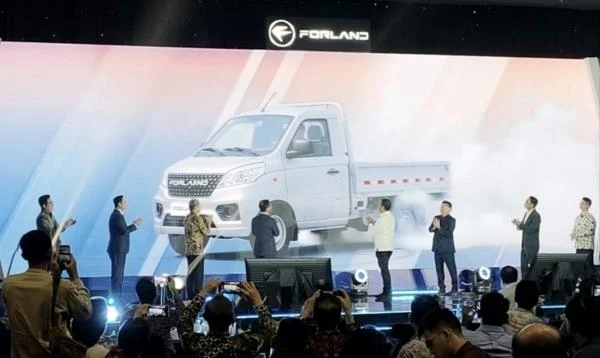
The Indonesian commercial automotive sector has entered a new phase of electrification as Forland, the prominent Chinese manufacturer of commercial vehicles, officially announced its market entry into the archipelago. Through a strategic partnership with PT Tangguh Utama Sejahtera (TUS), which will serve as the primary distributor, Forland introduced two flagship electric vehicle (EV) models—the ET5 and the EL5e. This move is positioned as a direct contribution to Indonesia’s national agenda of transitioning toward sustainable transportation and reducing carbon emissions in the logistics and cargo sectors.
The announcement, held in Jakarta on Tuesday, October 3, 2026, marks the arrival of a global manufacturing powerhouse into the Southeast Asian market. Forland, a subsidiary with extensive experience in heavy-duty and light commercial vehicle production, brings with it a pedigree of over 7 million units produced cumulatively across its history. With a presence currently spanning 50 countries, the company’s entry into Indonesia signifies a calculated expansion aimed at capturing the growing demand for "green" logistics solutions in one of Asia’s most dynamic economies.
The Strategic Partnership and Market Rationale
The collaboration between Forland and PT Tangguh Utama Sejahtera (TUS) is designed to address the specific needs of the Indonesian market, which has traditionally been dominated by internal combustion engine (ICE) vehicles. By introducing the ET5 and EL5e, Forland is targeting the light-to-medium commercial vehicle segment, which is essential for "last-mile" delivery and urban logistics.
During the launch event, CEO of Forland International, Dong YongSheng, emphasized that the decision to enter Indonesia was driven by the country’s strong economic fundamentals. "Indonesia possesses a remarkably resilient and dynamic economy within the Southeast Asian region. Our expansion strategy is built upon our decade-long global manufacturing expertise, and our partnership with TUS is the critical mechanism through which we will facilitate the transition toward efficient, sustainable electric commercial mobility," YongSheng stated.
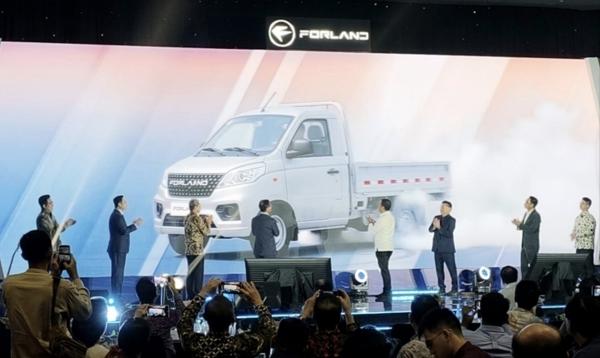
For the local partner, PT Tangguh Utama Sejahtera, the collaboration represents a shift in how foreign automotive firms should approach the Indonesian market. JinHong Lin Darwin, the President Director of TUS, articulated a vision that moves beyond simple import-sales dynamics. He emphasized that the partnership is rooted in a long-term commitment to infrastructure and local integration rather than mere commercial transaction.
"Our philosophy is centered on the principle of ‘growing and rooting’ within Indonesia. We are not here simply to utilize Indonesia as a sales territory; we are here to build a comprehensive ecosystem. This involves investing in after-sales support, technical training for local mechanics, and infrastructure that supports the lifecycle of electric vehicles," said Darwin.
Technical Overview and Market Positioning
The ET5 and EL5e models represent Forland’s technological answer to the logistical challenges of modern urban centers. While technical specifications vary by load capacity and battery configuration, these vehicles are engineered to offer high torque at low speeds—a critical requirement for urban freight transport.
In the context of the Indonesian market, the adoption of electric commercial vehicles faces several hurdles, including charging infrastructure density and total cost of ownership (TCO) comparisons with diesel-powered counterparts. Forland’s entry suggests that the company is prepared to compete on the basis of operational efficiency. Electric motors in commercial vehicles typically require less maintenance, involve fewer moving parts, and offer significant fuel cost savings compared to diesel, which remains a volatile expenditure for logistics firms in Indonesia.
The market for electric commercial vehicles in Indonesia has been steadily gaining momentum. The government’s initiatives, including tax incentives for EV manufacturers and the promotion of green industrial zones, have created a fertile ground for companies like Forland to establish a foothold.

Chronology of the Indonesian EV Transition
The entry of Forland into the Indonesian market is the latest development in a broader timeline of the nation’s shift toward sustainable transport:
- 2019: The Indonesian government issued Presidential Regulation (Perpres) No. 55/2019, which officially initiated the Battery-Based Electric Motor Vehicle Program. This set the legal framework for the development of the EV industry.
- 2021-2022: Increased focus on downstreaming the nickel industry. By positioning itself as a hub for EV battery production, Indonesia began attracting significant foreign direct investment (FDI) from global automotive giants.
- 2023-2024: Introduction of various subsidies for electric motorcycles and pilot programs for public transport electrification in major metropolitan areas like Jakarta and Bali.
- 2025: Acceleration of charging infrastructure rollout, with state-owned enterprises and private firms collaborating to build a nationwide network of fast-charging stations.
- October 2026: Forland and PT Tangguh Utama Sejahtera officially launch the ET5 and EL5e, signaling the entry of dedicated, mass-produced electric commercial vehicles for private sector logistics.
Economic Implications and Future Outlook
The arrival of a major Chinese commercial vehicle manufacturer is expected to intensify competition in the Indonesian automotive sector. Currently, the market is heavily influenced by Japanese incumbents that have historically focused on diesel-powered trucks and vans. The arrival of Forland forces a shift in the competitive landscape, compelling existing players to accelerate their own electrification roadmaps.
From an economic perspective, the long-term success of this venture will depend on the degree of localization. The Indonesian government has been clear in its policy trajectory: foreign manufacturers are encouraged to increase the Domestic Component Level (TKDN—Tingkat Komponen Dalam Negeri). Forland’s commitment to "rooting" itself in the country implies that future phases of their investment may include the establishment of local assembly plants, which would create jobs, transfer technical knowledge to the local workforce, and potentially lower the retail price of their vehicles.
Furthermore, the integration of Forland’s vehicles into the logistics sector could have a significant impact on Indonesia’s carbon footprint. Commercial vehicles, such as delivery vans and small trucks, are often responsible for a disproportionate share of urban emissions due to their continuous operation in congested traffic. By replacing these with electric models, logistics companies can significantly reduce their Scope 1 emissions, aligning with global corporate sustainability goals.
Addressing the Challenges of Infrastructure
While the launch of the ET5 and EL5e is a milestone, industry analysts point to the "charging bottleneck" as a primary concern. Unlike passenger vehicles, commercial electric vehicles require robust charging capabilities, ideally integrated into logistics hubs or warehouse facilities to minimize downtime.

PT Tangguh Utama Sejahtera is reportedly working on a strategy to provide comprehensive support for fleet operators. This includes consultations on charging installation and potential fleet management software that optimizes route planning based on remaining battery life and proximity to charging stations. By bundling hardware with software-driven solutions, the partnership aims to lower the barrier to entry for small-to-medium enterprises (SMEs) that may be wary of the shift to electric technology.
A Broader Impact on the Logistics Industry
The logistical sector in Indonesia is characterized by a high degree of fragmentation and reliance on road transport, given the archipelago’s geography. Improving the efficiency of land transport through electrification is not merely an environmental decision but an economic one. As global supply chains demand greener logistics, Indonesian businesses that adopt electric fleets early may gain a competitive advantage in international trade.
The entry of Forland also serves as a litmus test for the scalability of electric logistics in Indonesia. If the ET5 and EL5e prove reliable under the demanding conditions of Indonesian road usage—characterized by heavy traffic, high humidity, and varying road quality—it is likely that other global manufacturers will follow suit, accelerating the transition of the entire national logistics network.
In conclusion, the partnership between Forland and PT Tangguh Utama Sejahtera represents a pivotal moment for Indonesia’s commercial transportation sector. By combining Forland’s global manufacturing scale with TUS’s local market insight, the alliance is well-positioned to navigate the complexities of the Indonesian market. As the country continues to refine its regulatory framework and expand its infrastructure, the adoption of commercial electric vehicles will move from an experimental phase into a standard operational requirement for businesses aiming for long-term growth and sustainability in the evolving modern economy. The commitment to building an ecosystem, rather than just selling units, serves as a blueprint for future foreign investments in the nation’s burgeoning green industry.
