

As the 2026 academic calendar progresses, students in the eleventh grade of the Social Sciences (IPS) stream across Indonesia are preparing for the upcoming Penilaian Tengah Semester (PTS). This assessment period, often referred to as the midterm examinations, serves as a critical benchmark for evaluating academic progress during the first semester. Covering a diverse range of disciplines including Mathematics, Economics, Geography, History, and Sociology, the curriculum is designed to challenge students’ analytical thinking and application of complex theoretical frameworks.
Mathematics: Mastering Inductive Reasoning
The Mathematics curriculum for the eleventh grade heavily emphasizes the foundational concepts of Mathematical Induction, a rigorous method for proving statements about natural numbers. A significant portion of the syllabus focuses on divisibility proofs.
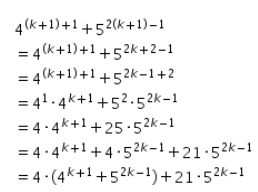
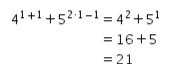
A common assessment task involves proving that specific algebraic expressions, such as 4^n+1 + 5^2n-1, are divisible by a constant, in this case, 7. The verification process follows a two-step induction model. First, the base case (P1) is proven by substituting n=1 into the expression. In this instance, 4^1+1 + 5^2(1)-1 results in 16 + 5, equaling 21, which is divisible by 7, thereby confirming the base case. The second step involves the inductive hypothesis: assuming Pk is true for some integer k, one must demonstrate that Pk+1 is also true. This logic ensures the validity of the mathematical statement for all natural numbers. Beyond induction, students are expected to demonstrate proficiency in matrix operations, including addition, subtraction, and multiplication, as well as the calculation of determinants, which are essential tools for solving systems of linear equations.

Economics: Analyzing National Income and Economic Growth
The Economics syllabus shifts from micro-level analysis to macroeconomic indicators, specifically focusing on the measurement of national income. Students must navigate the complexities of Gross National Product (GNP), Net National Product (NNP), and Disposable Income (DI).

The calculation of national income typically follows three distinct approaches: the production approach, the income approach, and the expenditure approach. A key focus for the 2026 semester is the understanding of how various components—Consumption (C), Investment (I), Government Expenditure (G), and Net Exports (X-M)—contribute to a nation’s total output. For instance, the Disposable Income formula, which subtracts taxes and adds transfer payments to personal income, serves as a proxy for consumer purchasing power.

Furthermore, the curriculum addresses the theories of economic growth, including the Harrod-Domar model and Schumpeter’s theory of innovation. Schumpeter’s perspective remains vital, as he identified the entrepreneur as the primary driver of growth through continuous innovation and creative destruction. These concepts are frequently applied to practical scenarios, such as analyzing the impact of banking credit products on national investment and long-term economic development.

Geography: Indonesia as a Global Maritime Axis
In the realm of Geography, the eleventh-grade curriculum highlights Indonesia’s strategic position as a global maritime axis. This topic integrates geological, climatic, and socio-economic perspectives to provide a comprehensive understanding of the archipelago.
A primary area of study is the geological structure of Indonesia, characterized by its location at the convergence of the Eurasian, Indo-Australian, and Pacific tectonic plates. This positioning renders much of the nation susceptible to seismic and volcanic activity. However, the curriculum also examines why certain regions, such as Kalimantan, remain relatively stable, attributing this to their distance from active subduction zones.

Additionally, students explore the concepts of the Sunda Shelf and the Sahul Shelf, which define the submerged continental extensions connecting Indonesia to the Asian and Australian landmasses. The study of maritime potential also includes the Alur Laut Kepulauan Indonesia (ALKI) shipping routes, which are critical for global trade, and the conservation of biodiversity. The curriculum emphasizes the importance of managing these resources sustainably, particularly in regions like Nusa Tenggara, where the savanna-stepa biome dictates local economic activities such as livestock farming.

History: Colonialism, Imperialism, and National Identity
The History component of the midterm assessment focuses on the era of European colonialism and its profound impact on the Indonesian archipelago. The curriculum traces the trajectory from the arrival of Portuguese and Spanish explorers to the establishment of the Dutch East India Company (VOC) and the subsequent implementation of the Tanam Paksa (Cultivation System).

Chronologically, the assessment covers the shifts in colonial policy, particularly the transition from the mercantile interests of the VOC to the centralized, modern economic systems introduced by figures such as Herman Willem Daendels. Students are expected to analyze the causes of the VOC’s eventual bankruptcy, which included systemic corruption, high administrative costs, and the mismanagement of trade monopolies.

Furthermore, the curriculum delves into the resistance movements against colonial rule. Before the rise of nationalist consciousness in the 20th century, these movements were largely regional and unorganized, often falling victim to the colonial "divide and rule" (devide et impera) strategy. The analysis of these events requires students to understand the interplay between regional power dynamics, such as the conflict between the Mataram Sultanate and the VOC, and the broader global context of the Industrial Revolution, which accelerated the demand for raw materials and intensified colonial exploitation.

Sociology: Group Dynamics and Social Issues
Sociology provides the analytical tools for students to examine the structure of society and the problems that arise within it. The 2026 syllabus places a heavy emphasis on group dynamics, distinguishing between In-Groups and Out-Groups, as well as the transition from primary to secondary groups.

A key theme is the concept of "Reference Groups," which serve as psychological anchors for individuals, shaping their identity and behavior even if they are not official members of those groups. The curriculum also addresses the challenges of social stratification and poverty, distinguishing between absolute and relative poverty. For instance, urban poverty is frequently analyzed through the lens of relative poverty, where living standards are evaluated against the backdrop of an open and rapidly changing society.

The study of social problems—such as drug abuse among youth—is framed within a broader context of community responsibility. The curriculum argues that social issues cannot be solved by a single sector; rather, they require integrated efforts from educational institutions, local communities, and government authorities. By examining these dynamics, students learn to identify the mechanisms of social cohesion and the factors that lead to fragmentation or conflict, such as ethnocentrism and discrimination.

Implications and Preparation Strategy
The diversity of the eleventh-grade Social Sciences curriculum reflects the multidisciplinary nature of contemporary academic standards. The ability to synthesize knowledge from these distinct fields is essential for students as they transition toward higher education.

To excel in the 2026 midterm examinations, educators emphasize the importance of moving beyond rote memorization. Instead, students are encouraged to engage in active learning:

- Chronological Mapping: For History, creating visual timelines helps link local events to global developments, such as the Industrial Revolution.
- Conceptual Application: In Economics and Mathematics, applying formulas to real-world datasets—such as calculating economic growth rates or testing inductive proofs—is more effective than theoretical study alone.
- Thematic Integration: Recognizing the overlap between Geography and History, particularly regarding how trade routes influenced the spread of religion and culture, provides a deeper understanding of Indonesia’s maritime history.
- Critical Analysis: In Sociology, using case studies to analyze current social issues helps in applying complex theories to the reality of the 21st-century Indonesian society.
As the examination date approaches, schools and educational institutions are increasingly providing supplementary resources, including mock examinations and diagnostic tools. These resources are designed to help students identify their strengths and weaknesses across the five core subjects, ensuring a more targeted and efficient study process. The goal of this midterm assessment is not merely to assign a grade, but to ensure that students possess the analytical rigor required to navigate the complexities of their academic and social environments.
