
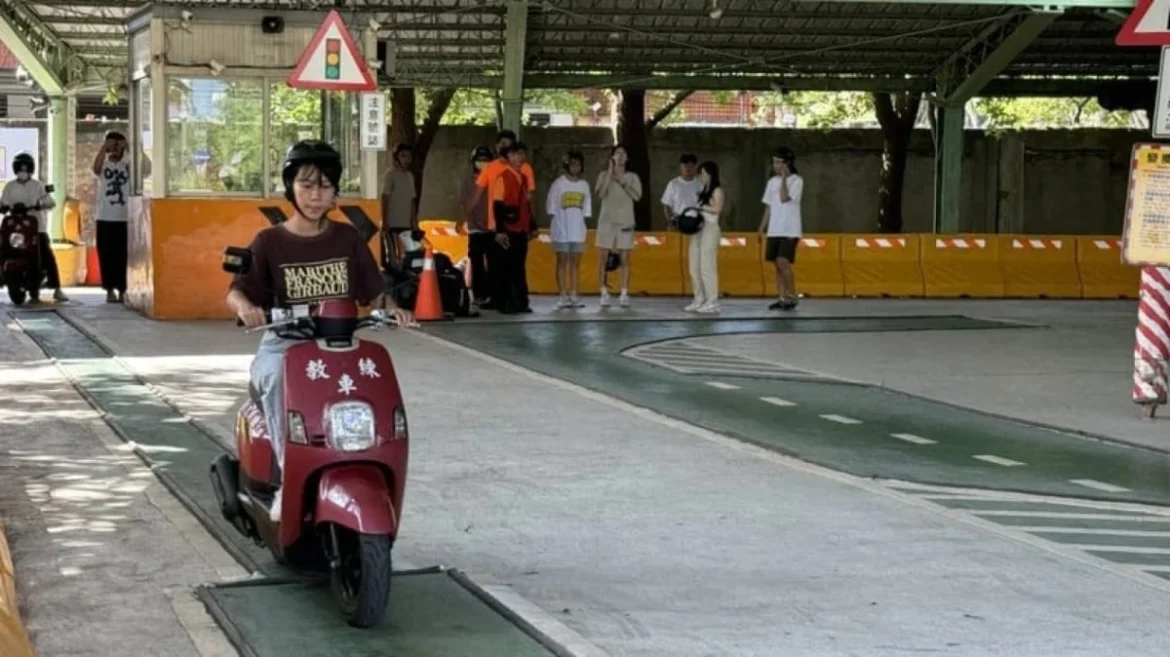
Taipei, Taiwan — In a significant move to enhance road safety and reduce motorcycle-related accidents, the government of Taiwan has unveiled a comprehensive overhaul of its motorcycle licensing system. The landmark policy changes, announced by the Ministry of Transportation and Communications (MOTC), introduce an extension of mandatory practical training hours and a pioneering real-world road test framework. Designed to bridge the gap between controlled testing environments and the unpredictable nature of actual traffic, these regulatory updates reflect Taiwan’s broader commitment to lowering traffic mortality rates and fostering a culture of defensive driving.
The newly proposed framework arrives at a critical juncture for Taiwan’s transportation sector, where two-wheeled vehicles serve as the primary mode of daily commute for millions of citizens. By mandating more rigorous preparation before issuing official credentials, authorities aim to ensure that new drivers possess not only basic vehicular control but also the situational awareness and hazard perception required to navigate dense urban corridors safely.
Expanding the Curriculum: From 10 to 15 Hours of Practical Training
Under the updated guidelines proposed by the MOTC, the mandatory practical training duration for prospective motorcycle license applicants is slated to increase from the current 10 hours to 15 hours. This structural adjustment is scheduled to take formal effect on January 1, 2027.
Rather than merely extending the time spent mastering basic maneuvers in a closed circuit, the additional five hours of instruction are strategically divided into two distinct components. Two hours will be dedicated to applied riding techniques, while the remaining three hours will involve direct, supervised training on actual public roadways.
This curriculum shift addresses a long-standing criticism of traditional licensing systems: that candidates could easily pass closed-course examinations without ever experiencing the psychological and spatial pressures of real traffic. The enhanced syllabus focuses heavily on practical, everyday scenarios. Instructors will train aspiring riders to maintain adequate visual fields, accurately identify shifting road conditions, and master the proper use of motorcycle lighting systems under varying weather and visibility conditions. By introducing these real-world elements early in the learning phase, authorities hope to instill cautious driving habits from day one.
Pioneering Real-World Road Testing
Complementing the extended training hours is perhaps the most radical shift in Taiwan’s licensing protocol: the introduction of on-road testing. While preliminary closed-course practical evaluations will remain a foundational prerequisite, regional trial programs for actual road tests are scheduled to commence in October 2027.
During these on-road evaluations, examiners will observe candidates navigating open traffic streams, assessing their ability to interact harmoniously with larger vehicles, pedestrians, and cyclists. This dual-layered testing method ensures that license holders have demonstrated competence not just in executing cones-and-figures maneuvers, but in making split-second decisions amid the dynamic environment of municipal streets and highways.
Transport analysts have widely praised the integration of real-world testing, noting that standard closed circuits fail to replicate crucial risk factors such as blind spots, sudden pedestrian crossings, unpredictable lane-splitting by other motorists, and complex intersection geometries.
A Multifaceted Road Safety Strategy
The overhaul of motorcycle training is not an isolated initiative; it forms a core pillar of a comprehensive driver management strategy introduced by the Taiwanese government. This multi-pronged approach addresses several vulnerable demographics and behavioral categories within the national transit ecosystem.
In addition to tightening initial licensing standards for novice riders, the strategy establishes mandatory retraining protocols for motorists who repeatedly violate traffic regulations. Furthermore, recognizing the demographic shifts of an aging society, the government has integrated heightened safety assessments and specialized refresher requirements for elderly drivers renewing their licenses.
Despite these stricter measures, obtaining formal motorcycle training prior to taking the licensing examination remains voluntary rather than legally compulsory. Instead of imposing a rigid mandate that could place financial burdens on lower-income citizens, the government continues to rely on a robust system of financial incentives and subsidies to encourage voluntary enrollment in professional driving schools.
Financial Subsidies and Growing Public Participation
To ensure that the enhanced training remains accessible to all economic strata, the MOTC has substantially increased funding for its motorcycle training subsidy programs. Official figures highlight a sharp upward trajectory in public participation over recent years.
In 2024, approximately 40,378 individuals took advantage of government subsidies to complete structured motorcycle training courses. This figure experienced a substantial surge in 2025, rising to 59,912 participants. Prospective riders can enroll in certified driving schools distributed across various municipalities throughout Taiwan, with subsidy amounts varying according to the specific curriculum chosen.
As an added financial incentive, candidates who successfully complete the certified training program and secure their motorcycle driver’s license within the designated subsidy period are eligible to receive a direct government reimbursement of NT$1,300 (approximately USD $40 or IDR 734,000). This financial cushion significantly defrays the cost of professional instruction, making formal driving schools an attractive and affordable alternative to informal, self-taught preparation.
Background Context and Traffic Safety Pressures
Taiwan’s heavy reliance on scooters and motorcycles is well-documented. With millions of two-wheelers clogging metropolitan areas such as Taipei, Kaohsiung, and Taichung daily, traffic safety has perennially remained a top-tier public policy concern. Historically, dense traffic congestion combined with lax initial training requirements contributed to a high incidence of traffic accidents, injuries, and fatalities involving motorcyclists.
International observers and local safety advocacy groups have long urged the Taiwanese government to align its licensing standards with advanced global benchmarks. Critics pointed out that a ten-hour closed-course requirement was insufficient for preparing drivers to handle high-speed arterial roads and complex multi-lane interchanges.
In response, the MOTC has steadily tightened regulations over the past decade, progressively introducing defensive driving modules, hazard perception videos in theoretical exams, and now, the expansion into on-road practical training. The 2026–2027 timeline reflects a deliberate, phased rollout, allowing driving schools, municipal authorities, and testing centers adequate preparation to scale up their infrastructure, train certified road examiners, and update evaluation protocols.
Economic and Societal Implications
The long-term implications of these regulatory changes extend far beyond compliance statistics. From an economic perspective, reducing motorcycle accidents translates directly into lower healthcare expenditures, reduced burdens on emergency medical services, and diminished economic losses stemming from workplace absenteeism due to injuries.
Insurance industry stakeholders have also responded favorably to the initiative. Actuarial models suggest that better-trained drivers with demonstrated on-road competence pose a lower risk profile, which could eventually influence premium structures for motorcycle insurance across the island.
Moreover, the policy underscores a philosophical shift in transport administration: moving away from a purely punitive approach to traffic violations and toward a proactive, education-first prevention model. By investing heavily in subsidies and structured learning environments, the government is signaling that safety is a shared responsibility achieved through systemic institutional support.
Looking Ahead: Implementation Timeline and Monitoring
As the implementation date for the 15-hour training requirement approaches on January 1, 2027, followed by the regional road test trials in October 2027, transport authorities face the complex task of monitoring execution quality across all participating driving academies.
The MOTC has indicated that it will closely evaluate the success of the regional road test trials, collecting qualitative and quantitative data on pass rates, accident involvement among new license holders, and feedback from driving instructors and examiners. Adjustments to the curriculum will likely be made iteratively based on real-world performance metrics gathered during the rollout phase.
Ultimately, Taiwan’s proactive modernization of its motorcycle licensing system serves as a noteworthy case study for densely populated nations grappling with urban mobility challenges. By pairing higher educational standards with robust financial assistance, Taiwan is forging a balanced path toward safer streets, protecting its most vulnerable motorists through empowerment and rigorous preparation.
