
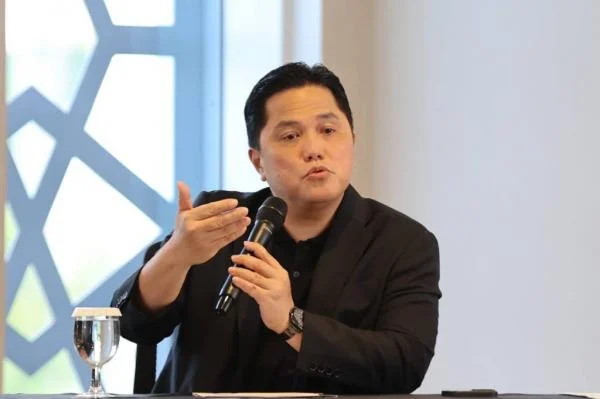
The landscape of Indonesian professional football is currently facing a critical juncture as the 2026-2027 Super League season grapples with a concerning rise in supporter-related violence. Amidst growing public concern and pressure from stakeholders to maintain the integrity of the game, PSSI Chairman Erick Thohir has issued a stern ultimatum: there will be no tolerance for hooliganism or civil unrest within the stadiums. This directive places the burden of responsibility squarely on the shoulders of the league operator, I.League, and individual club management, with the threat of severe sanctions—including substantial point deductions—looming for those who fail to maintain security protocols.
The mandate follows a series of high-profile incidents that have cast a shadow over the progress made in Indonesian football over the past few years. The most notable of these occurred at the Banten International Stadium (BIS) during a high-stakes fixture between Persita Tangerang and Persija Jakarta. The match, which should have been a celebration of domestic talent, devolved into chaos when skirmishes broke out between opposing fan bases, eventually spilling out of the stadium perimeter and resulting in direct physical assaults on spectators.
Chronology of Recent Unrest
The incident at Banten International Stadium was not an isolated event but rather the culmination of simmering tensions throughout the early stages of the 2026-2027 campaign. In the weeks preceding the Persita versus Persija clash, local authorities and match commissioners reported several smaller altercations in various regions, often involving clashes between rival supporters or skirmishes near public transportation hubs.
On October 24, 2026, the situation reached a breaking point, prompting the PSSI leadership to step in. The aftermath of the BIS incident saw several injuries and significant damage to public and private property, leading to a swift condemnation from both the football federation and local law enforcement agencies. This sequence of events has reignited the national conversation regarding the "safe stadium" initiative, a policy framework that has been central to the post-Kanjuruhan reforms implemented by the PSSI under Thohir’s tenure.

The PSSI Directive: A Firm Stance
Speaking to the media in Jakarta on October 29, 2026, Erick Thohir left little room for ambiguity regarding the federation’s expectations. He emphasized that the era of lenient warnings has passed and that the focus must shift to structural accountability.
"Our position as PSSI is clear: we are demanding that the league and the individual clubs act with absolute firmness. There are established rules of play, and those rules exist to be followed, not to be circumvented or debated," Thohir stated. He noted that for too long, management teams have sought excuses for the actions of their supporters, effectively shielding the perpetrators from the consequences of their behavior.
The proposed sanctions, which the PSSI is currently discussing with I.League officials, include not only financial penalties but also the loss of match points. This move is intended to ensure that clubs take a proactive role in vetting their own supporters and managing the security of their home games. If a club’s home ground becomes a site of recurring violence, the PSSI suggests that the ultimate penalty—playing behind closed doors or in neutral, distant venues—will be utilized to protect the safety of the general public.
Supporting Data and Contextual Challenges
The current state of the Super League is heavily influenced by the competitive nature of the 2026-2027 season, which has seen higher attendance numbers than in previous years. With stadiums reaching near-capacity levels, the logistical challenge of crowd control has increased exponentially. Data from the PSSI’s Security and Safety Committee indicates that matches classified as "high-risk" have increased by 15% compared to the 2025-2026 season.
Furthermore, the integration of new security technologies—including facial recognition at entry gates and improved CCTV surveillance—has been inconsistent across different club facilities. While the top-tier clubs have largely complied with the installation of these systems, mid-table and smaller clubs often struggle with the financial overhead required to maintain high-level security staff. This disparity is a key factor that Thohir has identified as a "weak link" that must be addressed immediately to ensure a uniform standard of safety across the league.

Stakeholder Reactions and Institutional Cooperation
Beyond the federation’s internal actions, there is significant international pressure to ensure these games remain incident-free. Recently, President Prabowo Subianto sent a formal letter of support to FIFA President Gianni Infantino, reaffirming Indonesia’s commitment to the global football standards established by the governing body. Thohir, who has been working closely with FIFA officials, met with Infantino in Tokyo to discuss the long-term development of Indonesian football, including the necessity of a stable and secure domestic league.
I.League, the primary operator of the competition, has responded to the PSSI’s mandate by announcing an emergency meeting with the board of directors of all participating clubs. In a preliminary statement, the league operator acknowledged the need for a more rigid enforcement mechanism. They are currently reviewing the "Disciplinary Code for Supporter Conduct," which is expected to be updated by the end of November 2026 to incorporate the harsher penalties proposed by Thohir.
Broader Implications for the Future of Indonesian Football
The implications of this policy shift are significant. If the PSSI successfully implements point deductions for supporter violence, it will fundamentally change the power dynamic between clubs and their fan bases. Clubs will be forced to take a more aggressive stance in managing their supporters’ groups, potentially leading to the implementation of mandatory membership cards and stricter vetting processes for away-day travel.
From a commercial perspective, the league cannot afford the reputational damage that accompanies widespread violence. Sponsors, broadcasters, and potential commercial partners have expressed concerns regarding the optics of the Super League. Maintaining the current momentum of growth in the Indonesian sports economy depends heavily on the perception of the league as a safe, family-friendly entertainment product.
Furthermore, the PSSI is emphasizing the necessity of "proactive prevention" rather than "reactive punishment." Thohir noted that the current approach must involve local community leaders and fan group representatives in a dialogue that stresses the long-term harm caused by violence to the clubs they support. By involving these groups in the security planning phase, the federation hopes to foster a culture of shared responsibility.
Conclusion: A Turning Point
The 2026-2027 Super League season is now a litmus test for the effectiveness of the reforms introduced over the last few years. The PSSI’s insistence that there is "no room for excuses" signals a transition into a more disciplined phase of Indonesian football. While the threat of point deductions is controversial and may face pushback from club owners concerned about their league standings, it is viewed by many as a necessary surgical intervention to excise the rot of violence from the sport.
As the season progresses, all eyes will be on the next series of high-stakes matches. The, consistency with which these new, stricter guidelines are applied will ultimately determine whether Indonesian football can transcend its current challenges and solidify its standing on the regional and international stage. The message from the top of the PSSI is definitive: the safety of the stadium is paramount, and those who fail to protect it will face the full weight of the sport’s governing regulations. The survival of the sport’s integrity rests on the commitment of every club to prioritize order over the chaotic impulses that have too often defined recent matchdays.
