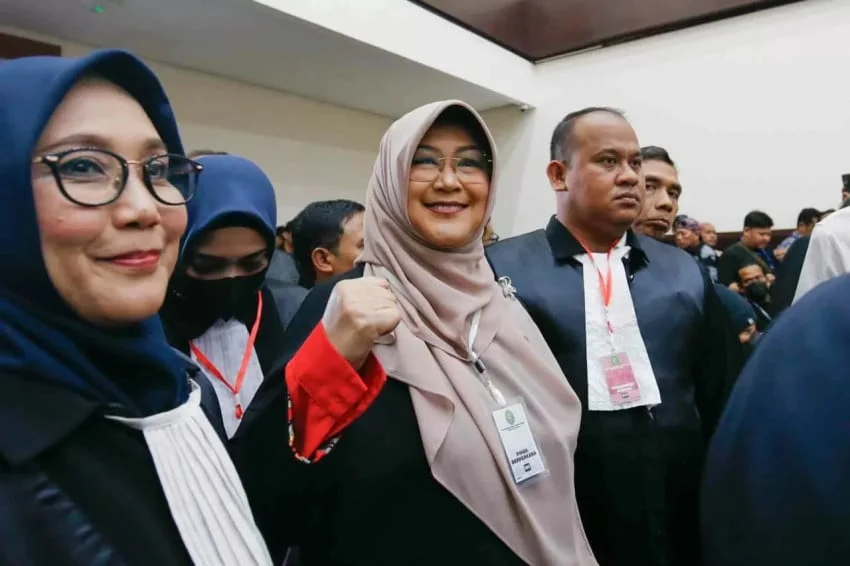
Former Junior Attorney General for Special Crimes (Jampidsus) at the Attorney General’s Office, Febrie Adriansyah, has officially appointed Febri Diansyah, a prominent former spokesperson for the Corruption Eradication Commission (KPK), as his legal counsel. This significant development comes as Adriansyah underwent an intensive and prolonged examination at the Kejaksaan Agung (Attorney General’s Office) on Friday, July 24, 2026. Diansyah confirmed his team’s engagement, stating that they were newly appointed to represent "Pak FA (Febrie Adriansyah)" and were present during the extensive 10-hour session held at the Attorney General’s Building in Jakarta.
The appointment of Febri Diansyah, widely recognized for his tenure as the public face of the KPK during critical periods, to represent a high-ranking official from a parallel anti-corruption institution like the Kejaksaan Agung, has garnered considerable attention within Indonesia’s legal and political circles. Diansyah’s transition from actively advocating for anti-corruption efforts and prosecuting graft cases to now defending a senior state prosecutor underscores the evolving landscape of legal representation for public officials under scrutiny in Indonesia.
Background of the Key Figures and Institutions
Febrie Adriansyah: A Veteran Prosecutor in Anti-Corruption
Febrie Adriansyah, until recently holding the pivotal position of Jampidsus, was at the forefront of Indonesia’s fight against financial crimes and high-level corruption within the Attorney General’s Office. The Jampidsus department is one of the most powerful and visible units within the Kejaksaan Agung, responsible for investigating and prosecuting major corruption cases, state asset recovery, and other complex economic crimes that often involve significant public funds.
During his tenure as Jampidsus, Adriansyah oversaw numerous high-profile investigations and prosecutions that captured national headlines, ranging from massive financial fraud involving state-owned enterprises to large-scale graft schemes implicating political figures and business tycoons. His role demanded a deep understanding of complex financial forensics, intricate legal procedures, and often navigating intense public and political pressure. The responsibilities of Jampidsus are immense, with the department acting as a key pillar in maintaining the integrity of the state apparatus and safeguarding national assets from illicit activities. The very nature of his former role meant that he was often privy to sensitive information and involved in decisions that carried substantial implications for individuals and the state.
Febri Diansyah: From KPK Spokesperson to Defense Counsel
Febri Diansyah’s journey to becoming a defense counsel for a former top prosecutor is noteworthy. Before establishing himself as an advocate in private practice, Diansyah was a highly visible and articulate spokesperson for the Corruption Eradication Commission (KPK). His time at the KPK, particularly during a period marked by intense scrutiny and challenges for the independent anti-graft body, solidified his public image as a staunch advocate for transparency and accountability.
As KPK spokesperson, Diansyah was responsible for communicating the commission’s investigations, findings, and policies to the public, often navigating complex legal details and public expectations with clarity and conviction. His background as a former anti-corruption activist before joining the KPK further cemented his reputation as someone deeply committed to upholding ethical governance. His move into private legal practice and, specifically, taking on the defense of a former Jampidsus, illustrates the professional versatility of legal practitioners in Indonesia, where expertise in anti-corruption law can be applied from various perspectives—prosecution, public communication, and defense. This shift highlights the inherent right to legal representation for all individuals, regardless of their past or present public roles, and the specialized knowledge required to navigate high-stakes legal proceedings.
The Attorney General’s Office (Kejaksaan Agung): A Pillar of Justice
The Kejaksaan Agung serves as the primary prosecutorial body in Indonesia, holding broad powers to investigate and prosecute criminal offenses, including those related to corruption. Alongside the KPK, it plays a crucial role in the nation’s anti-corruption architecture. While the KPK is an independent agency specifically tasked with eradicating corruption, the Kejaksaan Agung’s jurisdiction extends to a wider array of crimes, with its Jampidsus unit specializing in corruption cases. The two institutions often collaborate on investigations, but also maintain distinct operational domains, sometimes leading to complex inter-agency dynamics. The examination of a former Jampidsus official within the very institution he once served underscores the Kejaksaan Agung’s internal oversight mechanisms and its commitment to internal accountability.
Chronology of the Event: July 24, 2026
The focal point of the news is the examination of Febrie Adriansyah on Friday, July 24, 2026. According to Febri Diansyah, the examination lasted for approximately 10 hours at the Attorney General’s Office building in Jakarta. During this extensive session, Adriansyah reportedly provided all known information and demonstrated full cooperation with the examining officials.
The presence of legal counsel, particularly Febri Diansyah, from the outset of such a lengthy examination is a standard legal practice designed to safeguard the rights of the individual being questioned. Legal representation ensures that the process adheres to established procedures, that questions are within legal bounds, and that any statements made are accurately recorded and understood. For a high-ranking former official like Febrie Adriansyah, having experienced counsel is paramount, especially given the sensitive nature of his previous role and the potential implications of any ongoing scrutiny. The specific nature or subject matter of the examination has not been publicly disclosed by the Attorney General’s Office, maintaining the confidentiality typical of ongoing internal processes or investigations.

The Role and Significance of Legal Representation in High-Profile Cases
The decision by Febrie Adriansyah to appoint Febri Diansyah as his legal counsel highlights the critical importance of legal representation, particularly for individuals in high-profile public positions facing scrutiny. In Indonesia’s legal framework, the right to legal counsel is a fundamental constitutional guarantee, ensuring that every individual, irrespective of their status or the allegations they face, can access professional legal assistance.
For public officials, especially those previously involved in anti-corruption efforts, an examination can be a complex and high-stakes process. Legal counsel serves multiple crucial functions:
- Protecting Rights: Ensuring that the individual’s constitutional rights are upheld throughout the examination, including the right against self-incrimination, the right to fair treatment, and the right to privacy where applicable.
- Ensuring Due Process: Monitoring the procedural aspects of the examination to guarantee that all legal protocols are followed, thereby preventing any procedural irregularities that could compromise the fairness or validity of the process.
- Strategic Guidance: Providing advice on how to respond to questions, clarify ambiguities, and present information effectively, especially when dealing with complex legal or financial details.
- Managing Public Perception: While the immediate focus is on the legal process, the presence of reputable counsel can also send a message about the individual’s commitment to cooperate with legal procedures while asserting their right to defense.
Febri Diansyah’s statement affirming Febrie Adriansyah’s cooperation during the 10-hour examination underscores the standard expectation for individuals undergoing such scrutiny—to be forthcoming and assist the authorities. However, cooperation does not negate the need for legal counsel, which provides an essential layer of protection and ensures that interactions with law enforcement or investigative bodies are conducted fairly and transparently.
Broader Implications and Analysis
The examination of a former Jampidsus official, coupled with the appointment of a former KPK spokesperson as legal counsel, carries several significant implications for Indonesia’s legal and anti-corruption landscape:
-
Accountability at All Levels: This event reinforces the principle that accountability extends to all levels of government, including those entrusted with upholding the law. Even high-ranking officials from institutions like the Attorney General’s Office are subject to scrutiny, whether through internal mechanisms or external investigations. This demonstrates a commitment to transparency and equality before the law, vital for public trust.
-
Inter-Agency Dynamics: The fact that a former official from one key anti-corruption body (Kejaksaan Agung) is being examined, with legal representation from a figure previously associated with another (KPK), highlights the interconnected yet distinct roles of these institutions. It also subtly indicates the fluidity of legal expertise and professional transitions within the anti-corruption ecosystem. The perceived independence and effectiveness of these institutions are crucial for maintaining national integrity.
-
Public Perception of Justice: For the general public, such events can shape perceptions of justice and the rule of law. When high-ranking officials are seen to be undergoing examinations and utilizing legal counsel, it can either reinforce confidence in the system’s ability to hold anyone accountable or, if handled poorly, raise questions about institutional integrity. Transparency, within the bounds of legal confidentiality, becomes paramount in managing public opinion. The absence of specific details regarding the nature of the examination, while legally sound, often fuels public speculation, making the statements from involved parties about cooperation and due process even more important.
-
The Evolving Role of Anti-Corruption Figures: Febri Diansyah’s shift from a public advocate and spokesperson for the KPK to a defense lawyer for a former top prosecutor reflects the multifaceted nature of the legal profession. It underscores that legal expertise developed within anti-corruption bodies is valuable across the spectrum of legal practice, contributing to a robust justice system where both prosecution and defense are competently handled. This evolution can also be seen as a maturation of Indonesia’s legal system, where specialized knowledge is leveraged in various capacities.
-
Strengthening Legal Processes: The intensive 10-hour examination and the presence of legal counsel emphasize the rigor of legal processes within the Kejaksaan Agung. Such thoroughness, when conducted fairly and transparently, contributes to the overall strength and credibility of Indonesia’s justice system. It underscores that examinations, especially for high-ranking individuals, are not cursory but involve detailed inquiry and meticulous documentation.
While the specific reasons behind Febrie Adriansyah’s examination remain undisclosed, the event itself serves as a powerful reminder of the continuous efforts to uphold integrity and accountability within Indonesia’s governmental and legal structures. The involvement of prominent legal figures like Febri Diansyah further underscores the high stakes and the meticulous legal navigation required in such sensitive proceedings. As Indonesia continues its fight against corruption, the scrutiny of its own officials, coupled with adherence to due process, remains a cornerstone of its commitment to good governance and the rule of law. Future developments, should they arise, will undoubtedly be closely watched by the public and legal observers alike, offering further insights into the ongoing efforts to ensure a clean and accountable administration.