
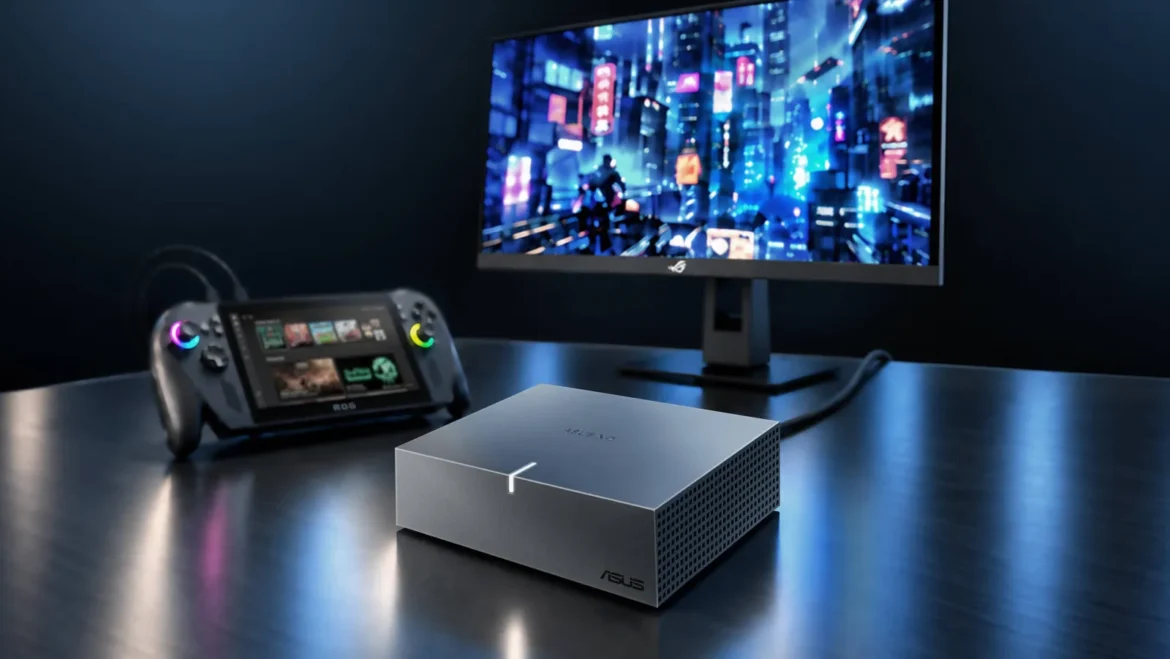
ASUS has officially expanded its ecosystem of external graphics solutions with the introduction of the ASUS XG Core Radeon RX 9060 XT LP 16GB, a uniquely ultra-compact external graphics card (eGPU) designed to bridge the gap between portable computing and desktop-class graphical capabilities. Unveiled to address the growing demand for high-performance mobile gaming and content creation setups, the device packs an AMD Radeon RX 9060 XT GPU into a remarkably small enclosure measuring just 144 × 117 × 39 mm. However, achieving this unprecedented miniaturization required significant engineering compromises, most notably a strict 75W power consumption limit that forces the GPU’s clock speeds down to nearly half of its standard desktop counterpart. As the market for handheld gaming PCs, compact mini PCs, and thin-and-light laptops continues to surge, hardware manufacturers are increasingly exploring external graphics docks as a viable upgrade path. Yet, the delicate balance between thermal constraints, power delivery, and performance output remains a central challenge in eGPU design.
Chronology and Development of the XG Core Ecosystem
The journey toward ultra-compact external graphics solutions has evolved significantly over the past half-decade. Traditionally, eGPU enclosures were bulky, desktop-sized chassis designed to house full-length graphics cards alongside dedicated, high-wattage power supply units. These systems, while powerful, defeated the purpose of portability, often requiring a dedicated desk setup and cumbersome power bricks. Recognizing a shift in consumer preferences toward highly mobile devices such as handheld gaming consoles and ultra-portable productivity laptops, ASUS began re-evaluating the form factor of external docks.
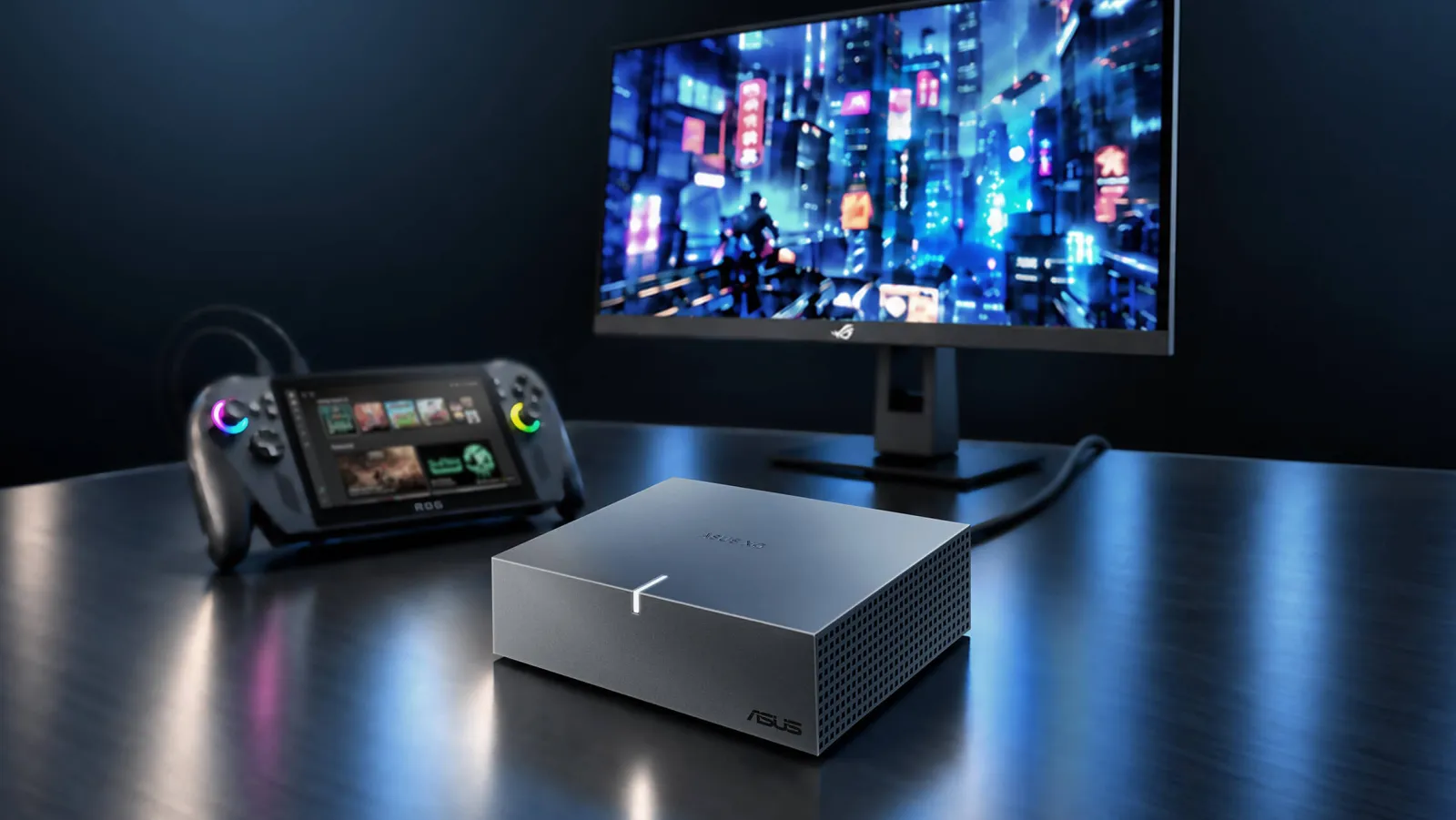
The development of the XG Core series represents a strategic pivot toward space-saving engineering. By leveraging low-profile (LP) component layouts and highly efficient thermal dissipation mechanisms, engineers managed to compress the necessary infrastructure into a footprint comparable to a small external hard drive enclosure. The inclusion of the Radeon RX 9060 XT architecture within this specific thermal envelope marks a notable milestone in AMD-based mobile graphics hardware integration. Although the formal announcement arrived recently, industry insiders note that miniaturized eGPU solutions have been in high demand as mobile processors increasingly rely on integrated graphics that struggle with modern, hardware-intensive AAA gaming titles at higher resolutions.
Technical Specifications and Performance Constraints
Despite its diminutive physical dimensions, the ASUS XG Core Radeon RX 9060 XT LP retains the core architectural integrity of its desktop sibling. The device features 2,048 Stream Processors, a generous 16GB of GDDR6 VRAM, a 20 Gbps memory speed, and a 128-bit memory bus. These foundational specifications ensure that the eGPU is not bottlenecked by memory capacity, allowing it to handle modern asset-heavy gaming environments and complex creative workloads that demand substantial frame buffers.
However, the primary trade-off for the XG Core’s ultra-compact design lies in its power delivery system. Restricted to a maximum power consumption of 75W, the GPU’s clock speeds have been drastically reined in. Under standard operating conditions, the device operates with a base clock of 1,010 MHz and a boost clock of 1,600 MHz. Users can leverage ASUS’s proprietary GPU Tweak III software to activate an OC Mode, which marginally increases these figures to a base clock of 1,030 MHz and a boost clock of 1,620 MHz.

To contextualize these figures, a standard desktop Radeon RX 9060 XT typically reaches boost clocks of up to 3,130 MHz while demanding approximately 160W of power. This means the XG Core operates at nearly half the clock frequency of the desktop variant. Despite this substantial performance reduction, preliminary internal claims from ASUS suggest the eGPU remains capable of driving select AAA gaming titles at 1440p resolution exceeding 60 frames per second (FPS), though comprehensive, independent third-party benchmarks will ultimately determine its real-world efficacy across a wider array of software.
Connectivity, Power Delivery, and I/O Infrastructure
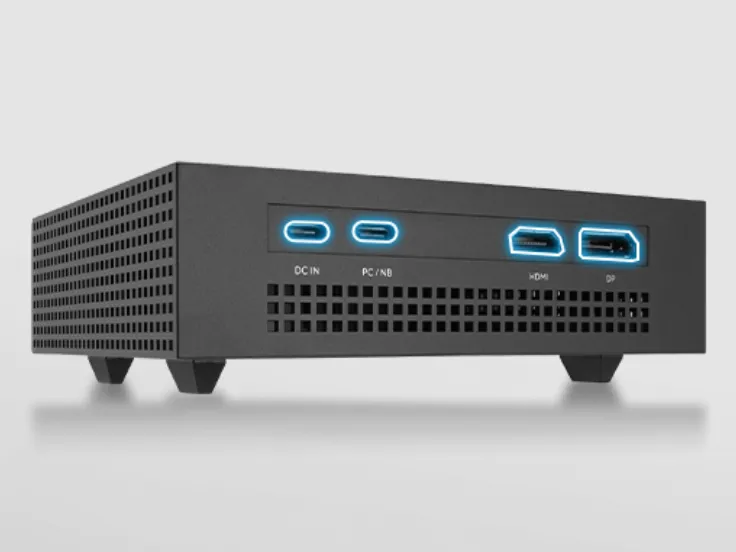
Modern external graphics solutions rely heavily on high-bandwidth data transmission interfaces to minimize latency between the external GPU and the host system. The ASUS XG Core addresses this by implementing a high-speed USB-C connection utilizing a 40Gbps bandwidth protocol. This ensures sufficient data throughput for the PCIe lanes routed to the graphics processor, making it broadly compatible with a wide range of modern host devices, including Thunderbolt-enabled laptops, high-performance mini PCs, and the latest generation of handheld gaming consoles.
In addition to the primary host connection, the enclosure features a dedicated, separate USB-C power input to ensure stable operation without heavily draining the connected host device’s battery. For visual output, the XG Core is equipped with HDMI 2.1b and DisplayPort 2.1a ports, providing native support for modern high-refresh-rate displays and multi-monitor configurations capable of driving up to two external screens simultaneously. This robust I/O selection transforms a portable host device into a fully fledged desktop workstation or gaming rig with minimal cable management complexity.
Industry Implications and Market Outlook
The introduction of the ASUS XG Core Radeon RX 9060 XT LP 16GB highlights a fascinating dichotomy in current hardware development: the constant push for raw performance versus the practical limitations of thermal design power (TDP) and physical space. By capping the power draw at 75W, ASUS has created a device that avoids the need for massive internal cooling fans or heavy external power bricks, thereby preserving the core philosophy of portability. However, this restriction inherently positions the product as a niche solution rather than a universal upgrade for hardcore enthusiasts seeking uncompromised desktop performance.
From a market perspective, the success of the XG Core will likely hinge on its eventual pricing and availability, neither of which ASUS has officially disclosed at the time of writing. If positioned competitively, such an eGPU could find a robust audience among digital nomads, frequent travelers, and users of handheld gaming PCs who desire enhanced graphical fidelity and expanded VRAM capacity without the burden of hauling a heavy traditional eGPU enclosure. Conversely, if the performance penalty proves too steep relative to the cost, consumers may remain hesitant to invest in heavily down-clocked external graphics hardware. As the industry awaits further details regarding regional launch dates and official retail pricing, the XG Core stands as a bold engineering experiment in redefining how much graphical muscle can be packed into the palm of a hand.
