
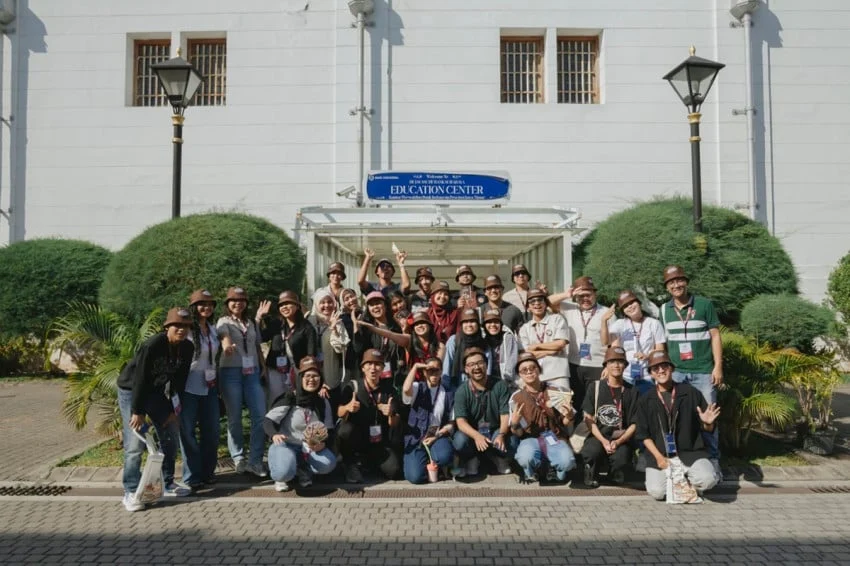
The Indonesian Youth Communications Fellowship (IYCF) 2026, a prestigious intensive training program aimed at cultivating the next generation of public communicators, officially concluded its first phase in Surabaya on Sunday, November 8, 2026. The four-day event, held at the DoubleTree by Hilton Surabaya from November 5 to November 8, marked a significant milestone in the effort to strengthen Indonesia’s digital landscape through the empowerment of 30 handpicked young leaders from across the archipelago. This initiative, supported by the British government, represents a strategic investment in human capital, bridging the gap between grassroots activism and professional-grade public communication.
A Strategic Convergence of Young Talent
The cohort of 30 fellows was selected through a rigorous national recruitment process, ensuring a diverse representation of sectors. The participants included professional content creators, educators, social activists, and private sector employees. By bringing together these varied perspectives, the IYCF 2026 aims to create a multi-disciplinary network capable of addressing the complexities of the modern digital ecosystem.
The fellowship was designed to address the growing demand for high-quality, credible information in an era often dominated by misinformation and digital noise. By providing these young leaders with advanced communication tools, the program seeks to foster a more informed and resilient society. The inclusion of participants from diverse backgrounds ensures that the lessons learned during the fellowship can be disseminated effectively across different societal strata, from urban centers to remote regions.
Chronology of the Four-Day Intensive Program
The fellowship was structured as a comprehensive seven-block training module, each designed to build upon the last. The chronology of the event unfolded as follows:
- Day 1: Strategic Foundations (November 5, 2026): The opening day focused on the theoretical framework of public communication. Participants were introduced to the core principles of narrative building and strategic messaging, setting the stage for more technical training.
- Day 2: Content Architecture and Production (November 6, 2026): Under the guidance of expert communication trainers from the United Kingdom, the fellows delved into the mechanics of content creation. This included technical workshops on video production, scriptwriting, and the nuances of platform-specific algorithmic storytelling.
- Day 3: Digital Ethics and Literacy (November 7, 2026): A significant portion of the third day was dedicated to the ethics of digital communication. Given the prevalence of misinformation, the trainers emphasized the importance of fact-checking, source verification, and the responsibility inherent in disseminating information to the public.
- Day 4: City Dialogue and Synthesis (November 8, 2026): The final day featured the "City Dialogue: Surabaya Edition," where fellows engaged in high-level discussions with local policymakers. The program concluded with a presentation of strategies developed by the fellows to address specific communication challenges within their respective communities.
The Role of International Collaboration
The partnership between the Indonesian organizers and the British government highlights the global nature of the digital literacy challenge. By leveraging British expertise in media studies and public relations, the IYCF provides a curriculum that meets international standards while remaining deeply relevant to the Indonesian context.
British diplomatic representatives involved in the initiative noted that supporting such programs is vital for the development of democratic discourse. As Indonesia continues to expand its digital economy, the capacity for its youth to navigate and contribute to the digital space becomes a matter of national interest. This collaboration not only transfers knowledge but also strengthens the bilateral relationship between the UK and Indonesia, focusing on shared values of transparency, innovation, and educational growth.
City Dialogue: Surabaya as a Case Study
One of the most anticipated segments of the fellowship was the City Dialogue. Surabaya, a city known for its robust "arek Suroboyo" identity and its recent strides toward becoming a "human-centered smart city," served as the perfect case study.
The dialogue addressed several critical issues:
- Combating Digital Misinformation: Fellows discussed localized strategies to prevent the spread of hoaxes among students, proposing school-based programs that emphasize critical thinking over passive consumption.
- Evaluating Literacy Metrics: There was a consensus on the need for more nuanced metrics to evaluate digital literacy. The group argued that literacy should not just be defined by the ability to access the internet, but by the ability to evaluate the quality and credibility of online content.
- Smart City Integration: The participants explored how technology can be used to improve public services in Surabaya without eroding the city’s unique cultural heritage. They concluded that a smart city must prioritize the needs of its citizens, ensuring that technological advancements remain accessible and inclusive.
Supporting Data and Digital Trends in Indonesia
The urgency of the IYCF 2026 is underscored by current data regarding Indonesia’s digital landscape. As of 2026, Indonesia boasts one of the highest social media penetration rates in Southeast Asia. However, this growth has come with significant challenges. Recent reports from the Ministry of Communication and Informatics indicate that the spread of disinformation remains a primary concern, particularly during politically sensitive periods and in the context of public health information.
The fellowship aims to address these issues by cultivating "digital influencers" who are trained in responsible communication. Data suggests that peer-to-peer education—where information is shared by trusted community members rather than institutions—is significantly more effective at countering misinformation. By training 30 influencers, the IYCF 2026 has the potential to impact millions of digital users across the country.
Implications for Public Policy and Civil Society
The conclusion of this fellowship marks only the beginning of a broader movement. The implications of this training are twofold. First, on an individual level, the fellows are now equipped with a professional toolkit that will enhance their career trajectories and their ability to lead in their respective sectors. Second, on a societal level, the fellowship establishes a replicable model for training digital citizens.
The emphasis on a "human-centered" approach is particularly noteworthy. As governments worldwide rush to adopt AI-driven communication strategies, the IYCF’s focus on the human element—empathy, cultural nuance, and community-level dialogue—serves as a necessary counterweight. This ensures that while technology is used to facilitate communication, the substance of that communication remains rooted in human values.
Future Outlook
Looking ahead, the organizers plan to expand the reach of the IYCF in subsequent years. The success of the Surabaya pilot program suggests that regional-based dialogues are an effective way to engage local stakeholders while addressing national challenges. There is potential for this network of fellows to become a permanent advisory body, providing input to the government on digital policy and youth engagement strategies.
Furthermore, the curriculum developed during these four days will be distilled into a series of open-access digital resources. By making these materials available to the public, the IYCF ensures that the impact of the program extends far beyond the 30 participants who attended the intensive sessions.
Conclusion
The Indonesian Youth Communications Fellowship 2026 has proven to be a vital initiative in the effort to professionalize and ethicalize digital communication in Indonesia. By fostering a collaborative environment, bringing in international expertise, and grounding discussions in real-world urban challenges, the program has successfully empowered a new generation of leaders. As these 30 fellows return to their respective communities, the lessons learned in Surabaya will likely ripple outward, contributing to a more informed, critical, and connected Indonesian society. The fellowship stands as a testament to the power of targeted education and international cooperation in shaping the digital future.
