
The landscape of professional soccer in the United States has undergone a seismic shift, with Major League Soccer (MLS) cementing its status as a premier global commercial entity. According to the latest valuation data from Forbes for 2026, the league has reached a historic inflection point: five distinct franchises have now surpassed the USD 1 billion valuation mark. This growth underscores the league’s transition from a developmental prospect to a major powerhouse in international sports business, fueled by strategic infrastructure investment, marquee player acquisitions, and an unprecedented surge in broadcast and sponsorship revenue.
The Ascension of Inter Miami CF
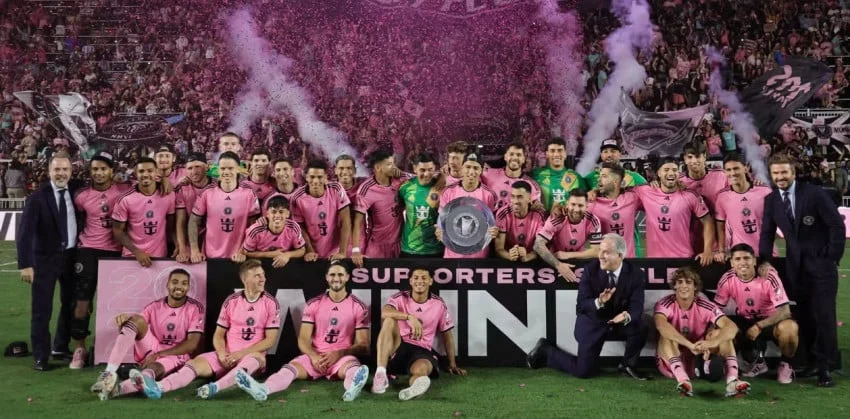
At the zenith of this financial transformation sits Inter Miami CF. Under the ownership of Jorge and Jose Mas, in partnership with global icon David Beckham, the club has achieved a valuation of USD 1.35 billion. This figure distinguishes Inter Miami as the most valuable franchise in the league, a meteoric rise that directly correlates with the arrival of Lionel Messi.
The "Messi Effect" is no longer merely a anecdotal observation but a quantified economic phenomenon. Before the Argentine superstar’s arrival, Inter Miami’s annual revenue hovered around USD 56 million in 2022. By 2025, that figure had skyrocketed to USD 200 million. This financial windfall coincided with the club’s on-pitch success, specifically the historic capture of the MLS Cup, the first in the franchise’s short existence. The synergy between high-profile global talent and sustained competitive performance has created a self-sustaining cycle of revenue growth, merchandise sales, and elevated media rights demand.
The Competitive Landscape: LAFC and LA Galaxy
While Inter Miami currently holds the top spot, the competition for financial and sporting supremacy remains fierce. Los Angeles FC (LAFC) occupies the second position with a valuation of USD 1.32 billion. Having held the top spot in the Forbes rankings for three consecutive years prior to 2026, LAFC remains a titan of the American soccer industry. With a 2025 revenue stream of USD 167 million, the club’s business model is built on consistent stadium attendance and robust corporate partnerships.
LAFC’s ambition is perhaps best exemplified by its recent record-breaking transfer activity. The club’s acquisition of South Korean international Son Heung-min from Tottenham Hotspur for a reported maximum of USD 26.5 million set a new benchmark for transfer fees within the league. This move signals a strategic shift: MLS is no longer just a destination for aging superstars; it is now actively competing with European elite clubs for players in their prime, thereby increasing the league’s overall competitive quality and global marketability.
Rounding out the top tier is the LA Galaxy, with a valuation of USD 1.08 billion and a 2025 revenue of USD 106 million. As one of the league’s most storied franchises, holding six MLS Cup titles, the Galaxy continues to leverage its brand heritage to maintain a high commercial floor.
Chronology of Commercial Growth
The journey to the billion-dollar valuation era did not happen overnight. It is the result of a long-term strategic plan initiated by MLS leadership over the last two decades.
- 2007: The implementation of the Designated Player Rule (the "Beckham Rule") allowed teams to sign players outside of the salary cap, fundamentally changing the talent ceiling of the league.
- 2015-2020: A period of aggressive expansion saw the league grow in footprint, adding high-value markets and ensuring that teams were playing in soccer-specific stadiums. This period shifted the focus from merely surviving to building long-term equity.
- 2023: The landmark partnership with Apple TV for the MLS Season Pass provided a global platform, decoupling the league from regional sports networks and allowing for exponential growth in international viewership.
- 2025: The year serves as a high-water mark for the league, characterized by the successful integration of global stars and the stabilization of post-pandemic attendance figures.
- 2026: The current valuation cycle reflects the culmination of these efforts, with five teams exceeding the billion-dollar mark, a threshold that seemed unattainable a decade ago.
Infrastructure and Future Growth
A critical factor in the valuation of these clubs is the transition from shared stadium facilities to ownership of soccer-specific venues. Inter Miami’s upcoming move to the Nu Stadium at Miami Freedom Park is emblematic of this trend. By controlling the entire stadium experience—including premium seating, concessions, and naming rights—clubs can significantly increase their EBITDA.
Market analysts have noted that the "stadium-first" strategy is the primary driver for sustained value. Clubs that control their infrastructure are less susceptible to the volatility of rental agreements and are better positioned to host major international events, such as the upcoming FIFA World Cup, which will further amplify the league’s visibility and secondary revenue streams.
Official Perspectives and Industry Reaction
While individual club owners have generally declined to comment on specific valuation figures, the broader consensus within the MLS front office is one of tempered confidence. League officials have frequently cited the "growth trajectory" as evidence that the investment thesis for American soccer is sound.
"The influx of capital and the quality of players entering the league represent a new chapter," noted an industry analyst familiar with the 2026 reports. "When you see clubs paying record transfer fees for players like Son Heung-min, it indicates that the revenue streams—media, tickets, and sponsorships—are now robust enough to support significant long-term debt and operational costs. We are seeing a move away from speculative investment toward institutional-grade asset management."
Broader Economic Implications
The rapid appreciation of MLS franchises has significant implications for the North American sports market. Firstly, it places MLS on par with other major professional leagues, such as the NHL or certain mid-market NBA teams, in terms of franchise valuation. This transition makes MLS an attractive proposition for private equity firms and sovereign wealth funds looking to diversify their sports portfolios.
Secondly, the success of the league impacts the domestic talent pipeline. Increased valuations allow clubs to invest more heavily in academies and scouting networks. As revenue grows, the disparity between MLS and the major European leagues—specifically regarding the "sell-on" value of players—is expected to narrow. The league is currently transitioning from a "league of choice" for retirement into a "league of development and competition."
However, this growth is not without challenges. Critics point to the rising cost of tickets and the potential for a "commercial bubble." As valuations soar, the pressure to deliver immediate returns on investment increases. The league must balance the need for profit maximization with the requirement to keep the sport accessible to the average fan, whose engagement is the foundation of the league’s broadcast value.
Conclusion: A New Era for American Soccer
The 2026 Forbes report marks a watershed moment for Major League Soccer. With five clubs crossing the USD 1 billion valuation threshold, the league has officially entered a new tier of professional sports. Driven by the star power of figures like Lionel Messi, the strategic acquisition of prime international talent, and the development of state-of-the-art infrastructure, the league has successfully built a model that is both commercially viable and increasingly relevant on the world stage.
As the league continues to navigate the complexities of global sports expansion, the focus will likely remain on international brand integration and the continued improvement of the on-field product. For now, the numbers confirm what many observers have suspected: Major League Soccer is no longer an emerging project, but a mature, high-value component of the global sporting economy. The path ahead will be defined by how these billion-dollar entities continue to innovate, adapt, and compete in an increasingly crowded international marketplace.
