
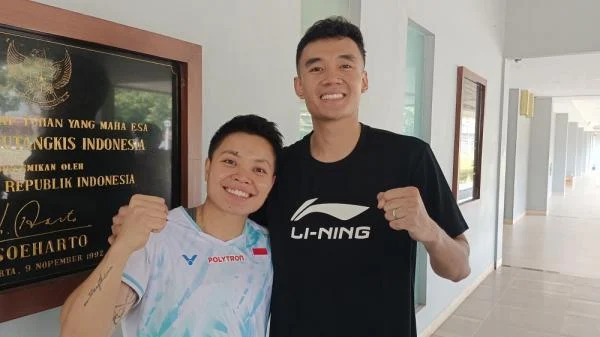
The shift, initiated by Nova Widianto, marks a significant departure from the traditional career paths of Indonesian shuttlers. For Bagas Maulana, whose professional identity has been forged entirely in the high-intensity, speed-driven environment of men’s doubles, the transition to the more tactical and nuanced mixed doubles discipline represents one of the most demanding challenges of his career.
The Strategic Rationale Behind the Shuffle
The decision to pair Bagas Maulana with Apriyani Rahayu did not happen in a vacuum. It is part of a broader, three-pronged initiative led by Nova Widianto to bolster Indonesia’s mixed doubles depth. Alongside the Bagas/Apriyani experiment, the coaching staff has introduced two other pairings: Dejan Ferdinansyah with Felisha Alberta Nathaniel Pasaribu, and the younger duo of Nawaf Khoiriyansyah and Indah Sari Cahya Jamil.
This shake-up is fundamentally aimed at the 2028 Los Angeles Olympic cycle. The Indonesian badminton hierarchy, led by the technical directors at PBSI, identified a clear need for tactical evolution. By mixing experienced campaigners like Bagas and Apriyani—both of whom have enjoyed success at the highest levels of their respective previous disciplines—with younger talent, the coaching staff hopes to create a pipeline of competitive pairs capable of challenging the world’s elite.
The Evolution of Bagas Maulana’s Career
Bagas Maulana’s transition is particularly noteworthy given his pedigree. At 28, he has spent his prime years operating in the men’s doubles sector, where he achieved notable milestones. His previous partnerships, most prominently with Muhammad Shohibul Fikri, saw them rise through the world rankings, eventually securing titles on the BWF World Tour. His later stint with Leo Rolly Carnando further demonstrated his adaptability to different partners, but the switch to mixed doubles requires more than just a change in teammate; it requires a wholesale re-evaluation of his on-court movement, shot selection, and defensive positioning.
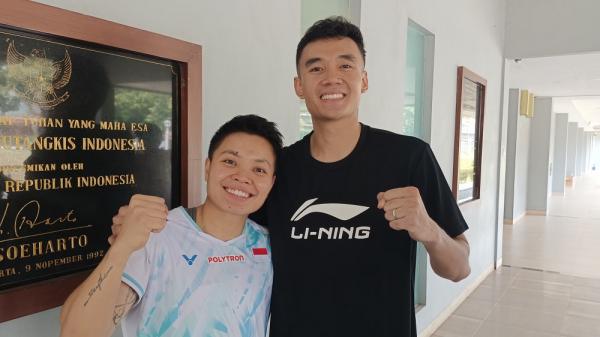
In the mixed doubles game, the dynamics of rotation are fundamentally different. Players must balance the aggressive front-court dominance required of a female partner with the defensive coverage and tactical setup required of a male partner. For Bagas, the transition involves unlearning the instinctive, high-speed reflexive habits that define men’s doubles and replacing them with the more methodical, structure-based play that characterizes the mixed doubles discipline.
Nova Widianto’s Vision for the Future
Nova Widianto’s return to the national training center as a head coach has been met with both anticipation and scrutiny. His own background as a legendary mixed doubles player—having won two world titles and an Olympic silver medal—positions him as the ideal architect for this restructuring.
In his recent assessments, Nova has been candid about the "heavy challenges" inherent in rebuilding the discipline. He has noted that the current landscape of world badminton is defined by high parity, where the margins between winning and losing are razor-thin. His philosophy centers on building "chemistry and character" rather than simply pairing high-ranked individuals. Nova has emphasized that while talent is present, the cohesion required to compete at the Olympic level takes time to cultivate, particularly when athletes are moving between disciplines.
Chronology of the Transition
The current restructuring phase began in earnest in the summer of 2026. Following the conclusion of major international tournaments, the PBSI coaching staff took the decision to prioritize the 2028 Olympic cycle.
- August 2026: The official announcement of the restructuring of the national training center’s mixed doubles squad.
- Late August 2026: Initial training sessions commence, focusing on tactical drills for the new pairs.
- September 2026: First public comments from players and staff regarding the adjustment period. The focus shifts to long-term integration rather than immediate tournament results.
- Late 2026 to 2027: The anticipated phase for these pairings to make their debuts on the BWF World Tour, with a focus on building ranking points and competition experience.
Technical Challenges and Analytical Perspectives
The shift for an athlete of Bagas’s caliber is fraught with technical hurdles. Sport science experts often note that the "muscle memory" of a men’s doubles player is heavily conditioned toward explosive, overhead-heavy play. Mixed doubles, by contrast, demands a more nuanced approach to the net game and the ability to dictate play through placement rather than raw power.

Analysts tracking the move suggest that the partnership with Apriyani Rahayu is a calculated risk. Apriyani, a former Olympic gold medalist in women’s doubles, brings a wealth of experience, tactical acumen, and a winning mentality. The pair’s success will likely depend on how quickly they can establish a "split-court" philosophy that complements each other’s strengths. If they can synchronize their defensive rotations and offensive transition patterns, they could potentially become a potent force on the circuit.
Broader Implications for Indonesian Badminton
The move to experiment with such high-profile players in mixed doubles signals a shift in PBSI’s strategic thinking. Historically, Indonesian badminton has been defined by the dominance of its men’s singles and men’s doubles sectors. By diverting significant resources and top-tier talent into the mixed doubles program, the governing body is acknowledging that the future of the sport lies in a more diversified and balanced national squad.
This policy has implications for the younger generation of players as well. By pairing rising stars like Felisha Alberta Nathaniel Pasaribu and Nawaf Khoiriyansyah with seasoned professionals like Dejan and Indah, the federation is creating a mentorship-heavy environment. This "tiered" approach to development is designed to accelerate the learning curve for younger players while providing the older generation with a new sense of purpose and a fresh competitive outlook.
The Road to Los Angeles 2028
The ultimate goal for these three pairs is the 2028 Los Angeles Olympic Games. This timeline provides a two-year window for the current pairings to find their footing, gain international exposure, and climb the world rankings.
However, the pressure is immense. The Indonesian public, which holds its badminton athletes to a high standard, expects nothing less than championship-level performance. The transition period, while necessary, will likely see the pairs struggle in early-round matches as they refine their coordination. The test for both the athletes and the coaching staff will be maintaining discipline and belief during this volatile formative period.

Expert Reaction and Future Outlook
While observers remain cautious, the general consensus is that the restructuring is a necessary evil. Without such drastic changes, the Indonesian mixed doubles program risked stagnation. By forcing the hand of change, Nova Widianto has ensured that the program remains agile and responsive to the evolving demands of the sport.
The success of the Bagas/Apriyani experiment will serve as a bellwether for the entire program. If they can demonstrate measurable progress over the next twelve months, it will validate the strategy and potentially pave the way for further experimentation in other sectors. If they struggle, it will provide the coaching staff with critical data on the limits of transitioning players between disciplines.
As the international circuit prepares for the upcoming season, all eyes will be on the Indonesian training center. The performance of these new duos will be analyzed not just for their win-loss records, but for the fundamental changes they bring to the court. For Bagas Maulana, the challenge is clear: he must redefine his game and prove that his transition is not just a tactical experiment, but a successful evolution of his professional career. The road to 2028 is long, and the process of building a world-class pair has only just begun.
