
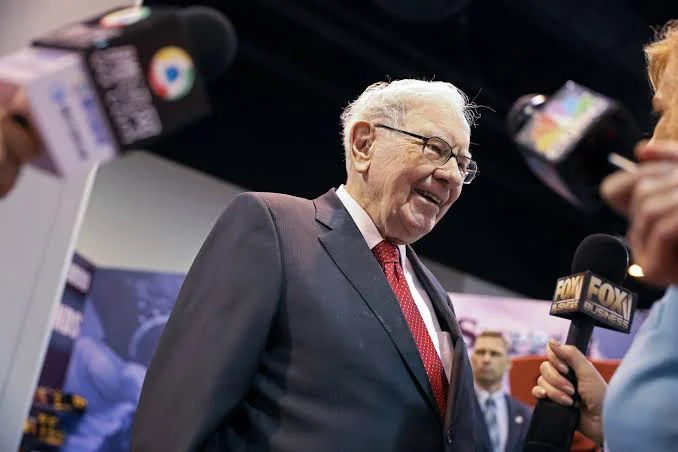
The corporate landscape has undergone a monumental shift as Warren Buffett, widely regarded as the most successful and influential investor of the twentieth and twenty-first centuries, officially stepped down from his position as Chairman of Berkshire Hathaway Inc. At 96 years of age, Buffett’s decision to relinquish the chairmanship marks the definitive close of an extraordinary chapter in modern financial history. The leadership transition, which takes effect immediately, sees Buffett transitioning into the newly created role of chairman emeritus. Concurrently, his son, Howard Buffett, has been appointed to succeed him as chairman of the board, marking a seamless generational handover at the helm of the American multinational conglomerate.
This governance restructuring follows a meticulously planned succession timeline that began unfolding roughly nine months prior, when Greg Abel formally assumed the responsibilities of Chief Executive Officer from Buffett. While Abel oversees the vast day-to-day operational machinery of Berkshire’s sprawling empire—which spans insurance, rail transportation, energy generation, and manufacturing—the board leadership has now been entrusted to Howard Buffett, ensuring the preservation of the unique corporate philosophy that has defined the organization for decades.
The Evolution of a Financial Titan: From Fading Textile Mill to Global Conglomerate
To understand the magnitude of Warren Buffett’s departure is to examine the transformation of Berkshire Hathaway from a struggling enterprise into an economic superpower. Buffett took control of Berkshire Hathaway in 1965, a time when it operated primarily as a declining textile manufacturing company in New England. Recognizing the structural headwinds facing the textile industry, Buffett gradually pivoted the firm’s capital toward insurance operations, most notably acquiring National Indemnity Company, which provided the float necessary to fund subsequent equity investments and corporate acquisitions.
Over the subsequent six decades, Buffett’s disciplined approach to capital allocation, preference for businesses with wide economic moats, and steadfast focus on intrinsic long-term value transformed Berkshire into a financial colossus. Today, the conglomerate boasts a market capitalization hovering around USD 1.1 trillion. Its portfolio includes iconic American brands such as GEICO, Dairy Queen, BNSF Railway, and Fruit of the Loom, alongside massive equity stakes in publicly traded giants like Apple, American Express, and Coca-Cola. Under Buffett’s stewardship, Berkshire generated compounding returns that vastly outperformed the broader S&P 500 index, turning patient long-term shareholders into multi-millionaires and cementing Omaha, Nebraska, as an annual pilgrimage site for the global investing community during the company’s legendary weekend shareholder meetings.
A Dual-Track Succession Strategy: Separating Governance from Operations
The appointment of Howard Buffett as Chairman of the Board, alongside Greg Abel as Chief Executive Officer, reflects a carefully structured governance model designed to protect Berkshire Hathaway’s distinctive corporate culture. Howard Buffett, who has served as a member of Berkshire’s board of directors since 1993, will not assume executive operational duties in his new capacity. Instead, his primary mandate is to act as the institutional guardian of Berkshire’s core values: simplicity, unwavering integrity, fair dealing, and decentralized management that grants autonomous operating executives the freedom to run their respective businesses without bureaucratic interference from corporate headquarters.
This dual-track leadership structure addresses one of the most critical challenges facing multi-industry conglomerates: maintaining entrepreneurial agility and ethical standards as the organization scales. By separating the oversight of the board—tasked with cultural preservation and governance—from the day-to-day executive management led by Greg Abel, Berkshire attempts to insulate its decentralized business model from the conventional corporate bloat that often plagues enterprises of comparable scale.
"The culture that Warren built and the values that he has championed will remain at the core of Berkshire, and Howard will be its guardian," stated CEO Greg Abel in an official company communication released in Omaha. Abel’s remarks underscore the executive team’s commitment to continuity, assuring institutional investors, retail shareholders, and employees that the fundamental operating philosophy pioneered by Buffett will remain unaltered despite the top-level transition.
Reflections on Time: Buffett’s Final Message as Active Chairman
In characteristic fashion, Buffett marked the transition not through grand public press conferences, but via a direct, reflective letter addressed to the shareholders of Berkshire Hathaway. In the missive, the nonagenarian investor offered a philosophical perspective on his legendary career and the inexorable march of time.
"Time always wins. However, time has been generous to me," Buffett wrote, encapsulating a career spanning more than eighty years of active investing, spanning from the post-World War II economic expansion through the digital revolution and into the modern era of artificial intelligence.
Despite stepping down from the chairmanship, Buffett’s connection to the company he built remains unbroken. He will retain his seat on the board of directors, ensuring that his unparalleled institutional memory and strategic wisdom remain accessible to Abel, Howard Buffett, and the executive leadership team. Rather than completely severing ties, Buffett’s transition to chairman emeritus positions him as a senior counselor, available to provide guidance during major capital allocation decisions or macroeconomic shifts.
Recent Events and Contextual Shifts Surrounding the Transition
The announcement of Buffett’s departure arrives against the backdrop of significant personal and philanthropic developments for the billionaire investor. Earlier in the year, financial and philanthropic circles were shaken by a historic milestone: for the first time in two decades, Buffett temporarily delayed his annual philanthropic donation to the Bill & Melinda Gates Foundation, a decision prompted by scrutiny surrounding the Epstein case revelations and their implications for prominent philanthropic networks. This recalibration of his philanthropic schedule highlighted Buffett’s increasing focus on streamlining his personal legacy, estate planning, and the future distribution of his massive fortune, the vast majority of which is earmarked for charitable foundations managed by his children.
Simultaneously, the broader macroeconomic environment has presented unique challenges for Berkshire Hathaway. With cash reserves swelling to unprecedented levels—surpassing USD 300 billion in preceding quarters—analysts and market participants have closely scrutinized the conglomerate’s capital deployment strategy. The scarcity of attractively priced acquisition targets of sufficient scale to move the needle for a trillion-dollar enterprise has forced Abel and Buffett to exercise extreme patience, a discipline that remains a hallmark of the Berkshire playbook.
Implications for Investors and the Broader Financial Markets
The departure of Warren Buffett as chairman marks the end of an era for global financial markets, yet institutional analysts generally view the transition as low-risk due to Berkshire’s thorough, multi-year succession planning. Unlike many founder-led corporations that experience severe volatility upon the departure of their visionary leaders, Berkshire Hathaway has methodically institutionalized its investment philosophy.
- Operational Continuity Under Greg Abel: With Abel securely entrenched as CEO, day-to-day capital allocation, underwriting decisions, and subsidiary management continue under a seasoned leader who worked alongside Buffett and the late Charlie Munger for decades. Abel’s deep familiarity with Berkshire’s energy and utility investments provides a steady hand during a transitional period for global energy markets.
- Cultural Stewardship via Howard Buffett: The presence of Howard Buffett as board chairman assures investors that corporate governance will remain aligned with the ethical standards established in the twentieth century. The focus on decentralization and minimal corporate overhead is expected to endure.
- The Cash Deployment Question: The market will continue to monitor how Berkshire manages its monumental cash hoard. Without Warren Buffett at the helm of the board, analysts will watch closely to see if Abel adopts a more aggressive approach to share repurchases, dividend initiations, or large-scale acquisitions to put the capital to work in an evolving economic landscape.
Conclusion: A Lasting Legacy in Global Finance
Warren Buffett’s transition to chairman emeritus closes a chapter that fundamentally reshaped the practice of value investing. From his early days managing investment partnerships in Omaha to steering a trillion-dollar global enterprise, Buffett demonstrated that patience, emotional discipline, and unwavering integrity could achieve superior long-term results in a market often dominated by short-term speculation.
As Berkshire Hathaway enters this new era under the combined leadership of Greg Abel and Howard Buffett, the foundational principles laid down over sixty years ago remain intact. While time may have ultimately prompted a change in titles, the institutional ethos of Berkshire Hathaway stands positioned to endure well into the future, bearing the permanent imprint of the "Oracle of Omaha."
