
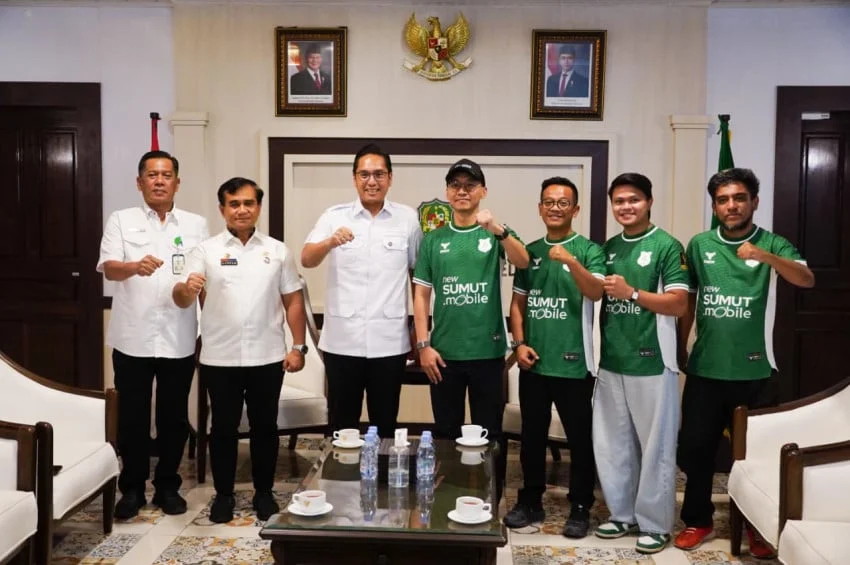
The municipal government of Medan has officially granted permission for the legendary football club PSMS Medan to return to its historic home, Stadion Teladan, marking a significant milestone in the city’s sports infrastructure development. The announcement was made following a formal audience between Medan Mayor Rico Tri Putra Bayu Waas and the senior management of PSMS Medan at the City Hall on Wednesday, November 4, 2026. This decision aims to revitalize the bond between the club, the local community, and the historic stadium that has served as the heartbeat of Medan’s football culture for decades.
A New Chapter for Medan’s Football Legacy
Stadion Teladan, which has undergone various phases of renovation and modernization in recent years, remains one of the most iconic sports venues in North Sumatra. The decision by Mayor Rico Waas to reinstate the stadium as the primary home base for PSMS Medan is viewed by local sports analysts as a strategic move to restore the club’s competitive edge and bolster its financial stability through increased gate receipts and local engagement.
During the meeting at City Hall, Mayor Rico Waas emphasized that PSMS Medan is not merely a professional sports organization but a cultural institution that represents the identity of the city. By facilitating the return to Stadion Teladan, the administration intends to provide a consistent platform for the club to perform in front of its home crowd, potentially reversing the logistical challenges that have plagued the team’s recent campaigns.
"I am delighted to have had the opportunity to discuss the future of both PSMS Medan and the development of Stadion Teladan directly with the club’s management," Mayor Rico stated during the press briefing. "For me, PSMS is a source of collective pride. Therefore, there are no obstacles to PSMS utilizing Stadion Teladan as its official home base. Our administration is committed to ensuring that the club has the necessary support to excel on the national stage."
Expanding Infrastructure: The Two-Homebase Strategy
In a surprising and ambitious policy shift, Mayor Rico Waas proposed an expansion of the club’s logistical capabilities. Beyond granting access to Stadion Teladan, he encouraged the management of PSMS Medan to consider a dual-homebase strategy, integrating both Stadion Teladan and the newly constructed Stadion Utama Sumut.
"I suggest that if it is feasible, PSMS should strive to utilize two home bases: Stadion Teladan and the Stadion Utama Sumut," the Mayor added. This proposal, while unconventional in domestic football, is designed to maximize the club’s reach across different segments of the fan base and to ensure that the team can operate optimally regardless of scheduled maintenance or overlapping events at either facility.
The Stadion Utama Sumut, a modern facility built to meet international standards, offers amenities that complement the historical significance of Stadion Teladan. By leveraging both, the city government hopes to position Medan as a premier destination for high-profile football matches, potentially attracting regional tournaments and elevating the stature of North Sumatra’s football scene.
Chronology and Context: The Road to the Decision
The journey toward this agreement has been characterized by years of complex negotiations and infrastructural challenges. Historically, PSMS Medan—often referred to as Ayam Kinantan—has faced significant difficulties regarding venue availability and facility standards.
- Early 2020s: PSMS Medan faced mounting pressure as Stadion Teladan underwent necessary renovations to meet the increasing safety and broadcasting standards mandated by the national football league authorities.
- 2024: During the transition period of city leadership, discussions regarding the club’s home base shifted toward more sustainable long-term models, focusing on public-private partnerships.
- Mid-2026: The completion of the Stadion Utama Sumut project opened a new avenue for discussion, allowing the city to evaluate its capacity to host top-tier professional football.
- November 4, 2026: The meeting at City Hall serves as the definitive point where political will met operational necessity, resulting in the official clearance for PSMS to return to its roots while exploring broader infrastructure utilization.
Technical and Economic Implications
The return to Stadion Teladan carries significant weight for the club’s economic model. Matchday revenue remains a cornerstone of professional football in Indonesia, and the proximity of Stadion Teladan to the city center allows for greater accessibility for supporters compared to stadiums located on the city outskirts.
From a technical perspective, the stadium has been upgraded to feature improved lighting, enhanced media facilities, and better pitch drainage systems. These improvements were essential prerequisites for the Mayor’s approval. However, the management of two stadiums will require a robust operational plan. PSMS Medan must now navigate the logistical complexities of maintaining a high-performance environment across two distinct venues, each with its own set of technical specifications.
Analysts suggest that this move could also lead to a surge in local tourism. Matches at Stadion Teladan have historically drawn large crowds, which in turn benefit the local MSMEs (Micro, Small, and Medium Enterprises) operating in the surrounding areas. The influx of spectators on match days serves as an economic stimulus, providing a platform for local vendors to generate revenue.
Official Responses and Stakeholder Sentiment
The reaction from the PSMS Medan management has been overwhelmingly positive. Club representatives expressed their gratitude to the Medan City Government for its proactive approach. In a brief statement following the meeting, club officials noted that the Mayor’s support provides a much-needed morale boost for the players and coaching staff.
"The assurance provided by Mayor Rico Waas gives us a clear path forward," said a club representative. "Having a reliable home base allows us to plan our training cycles, tactical preparations, and marketing strategies with much greater precision. We look forward to working closely with the city government to ensure that our operations at both Stadion Teladan and Stadion Utama Sumut run seamlessly."
Supporters’ groups, which have long campaigned for the club’s return to the city center, have also welcomed the news. Social media engagement across local football forums indicates a renewed sense of optimism, with many fans citing the historic resonance of Stadion Teladan as a vital component of the team’s identity.
Broader Impact on Medan’s Sports Development
The decision to integrate the Stadion Utama Sumut into the club’s strategic plan is part of a broader vision to modernize sports management in North Sumatra. By providing top-tier facilities, the city government aims to cultivate a professional culture that attracts talent and investment.
Furthermore, this development aligns with the national government’s push to improve sports infrastructure across the archipelago. As Indonesia continues to bid for and host various regional and international sporting events, having venues that are actively utilized by professional clubs is essential for maintenance and operational readiness.
The collaboration between the Medan administration and PSMS Medan could serve as a blueprint for other cities in Indonesia. It demonstrates that when local governments view professional sports clubs as partners in urban development rather than just tenants, the result is a sustainable model that benefits both the community and the sporting institution.
Challenges Ahead: Maintaining High Standards
Despite the enthusiasm, the transition will not be without challenges. Maintaining two high-capacity stadiums requires significant financial and human resources. The city and the club will need to establish a clear framework for maintenance, revenue sharing, and operational management.
"We are entering a phase where professional standards must be upheld consistently," noted a sports policy analyst. "The challenge lies in ensuring that the quality of the pitch and the facilities remains at a professional level throughout the entire season. This will require transparent communication and strict adherence to maintenance schedules."
Furthermore, the club must now focus on building a sustainable fan engagement strategy that utilizes both venues effectively. If the transition is managed correctly, PSMS Medan stands to regain its status as a dominant force in Indonesian football, backed by a city that is fully invested in its success.
Conclusion
The official authorization for PSMS Medan to return to Stadion Teladan, coupled with the strategic option to utilize the Stadion Utama Sumut, represents a landmark moment for football in Medan. Mayor Rico Tri Putra Bayu Waas has set a clear precedent, placing the city’s football heritage at the forefront of his administrative agenda. As the club prepares for its upcoming fixtures, the focus will now shift to the successful execution of this dual-venue strategy. With the right management, infrastructure, and continued public support, PSMS Medan is well-positioned to leverage these developments to secure a competitive future and continue its storied legacy in the Indonesian professional football landscape. The coming months will be critical in determining how effectively these plans are implemented, but for now, the city of Medan celebrates a new, promising chapter for its beloved football team.
