
History is frequently defined by the ambition of military commanders and the high-stakes gambles of political leaders. Many of the most significant turning points in global conflict have arisen from audacious military operations that promised swift victory through meticulous planning, the element of surprise, and the deployment of overwhelming force. In the sterilized environment of a briefing room, these plans often appear foolproof, leveraging elite units, innovative tactics, or cutting-edge technology to decapitate an enemy’s leadership or seize vital territory before a defense can even be mounted. However, the reality of the battlefield—what Prussian general Carl von Clausewitz famously termed "the fog of war"—has a brutal tendency to expose the slightest flaws in a strategic blueprint.
A single intelligence oversight, an unpredicted weather pattern, a failure in communication equipment, or an unexpectedly resilient enemy can transform a masterstroke into a spectacular disaster. The most famous military failures in history were rarely the result of a lack of bravery on the part of the soldiers involved. Instead, they were the product of flawed intelligence, unrealistic assumptions, insurmountable logistical hurdles, or simply the intervention of misfortune. Paradoxically, these setbacks have often served as the most profound teachers, reshaping military doctrine and influencing amphibious assaults, special operations, and counter-insurgency tactics for decades. From clandestine invasions and airborne strikes to high-stakes rescue missions, these operations demonstrate that even the most daring plans can end in catastrophic failure.
1. The Bay of Pigs Invasion (1961): A Masterclass in Intelligence Failure
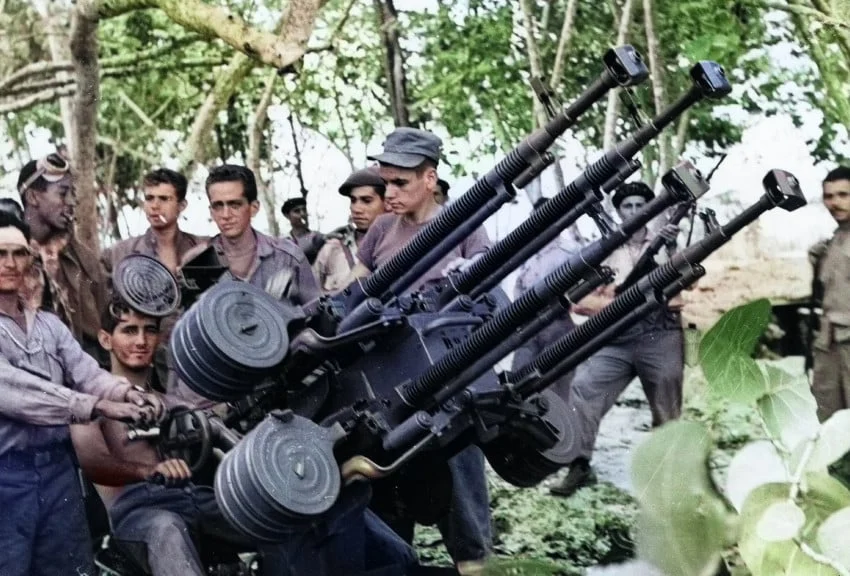
The Bay of Pigs invasion remains perhaps the most cited example of a Cold War military operation gone wrong. Orchestrated by the United States Central Intelligence Agency (CIA) during the transition between the Eisenhower and Kennedy administrations, the operation aimed to overthrow Cuban leader Fidel Castro without the overt involvement of the U.S. military.
Background and Planning
Following the 1959 Cuban Revolution, the U.S. grew increasingly concerned by Castro’s shift toward the Soviet Union. The CIA developed a plan to recruit, train, and arm approximately 1,400 Cuban exiles, designated as Brigade 2506. The strategic concept was based on the belief that a successful landing by a paramilitary force would serve as a catalyst for a general uprising among the Cuban populace, who were assumed to be dissatisfied with the revolutionary government. The invasion site chosen was the Bahia de Cochinos (Bay of Pigs), a remote inlet on Cuba’s southern coast.
Chronology of the Disaster
The operation began with a series of air strikes on April 15, 1961, intended to destroy Castro’s air force. However, the strikes were only partially successful, leaving several Cuban planes operational. On April 17, Brigade 2506 landed at the Bay of Pigs. Almost immediately, the plan began to unravel.
The "secret" invasion was one of the worst-kept secrets in the Caribbean; Castro’s security forces had detected signs of the operation weeks in advance. Contrary to CIA assumptions, the local population did not rise in support of the invaders. Instead, they remained loyal to Castro or were effectively suppressed by his militia. The exiles found themselves pinned down on the beaches, facing a counter-attack by 20,000 Cuban troops equipped with Soviet-made tanks and artillery.
Political Fallout and Data
In Washington, President John F. Kennedy, wary of triggering a direct conflict with the Soviet Union, famously scaled back the promised U.S. air support. This left the exile brigade completely vulnerable to the remaining Cuban air assets. By April 20, the battle was over. The statistics were grim: 114 members of Brigade 2506 were killed, and 1,189 were taken prisoner. The prisoners were eventually released in 1962 in exchange for $53 million worth of food and medicine.
Implications
The failure of the Bay of Pigs had profound geopolitical consequences. It solidified Castro’s grip on power, pushed Cuba further into the Soviet orbit, and eventually led to the Cuban Missile Crisis of 1962. It also served as a humbling lesson for the American intelligence community regarding the dangers of "groupthink" and the risks of relying on idealized political assumptions.
2. Operation Eagle Claw (1980): The Desert One Tragedy
Nineteen years after the Bay of Pigs, the United States faced another humiliating military setback, this time in the deserts of Iran. Operation Eagle Claw was a complex, multi-service mission designed to rescue 52 American diplomats held hostage at the U.S. Embassy in Tehran.
The Strategic Challenge
The Iranian Hostage Crisis had paralyzed the administration of President Jimmy Carter for months. The rescue mission was extraordinarily complex, requiring the coordination of the Army, Navy, Air Force, and Marines. The plan involved flying RH-53D Sea Stallion helicopters from the USS Nimitz to a remote staging area in the Iranian desert, codenamed "Desert One," where they would refuel from C-130 transport planes before proceeding to Tehran.
The Failure at Desert One
On the night of April 24, 1980, the operation was launched. Almost immediately, environmental factors intervened. The aircraft encountered a "haboob"—a massive, unexpected dust storm common in the region. The dust severely hampered visibility and caused mechanical failures in the helicopters’ sensitive hydraulic systems.
Of the eight helicopters sent, two suffered mechanical failures before reaching Desert One, and a third was deemed unfit for flight upon arrival due to a hydraulic leak. With only five operational helicopters—one fewer than the minimum required for the mission—the field commander, in consultation with Washington, made the difficult decision to abort. However, the tragedy was not yet over. During the attempt to withdraw, a helicopter collided with a parked EC-130 tanker, resulting in a massive explosion.
Casualties and Official Response
The disaster resulted in the deaths of eight U.S. servicemen—five Airmen and three Marines. The mission was abandoned, and the remaining forces were evacuated, leaving behind the wreckage of aircraft and the bodies of their comrades. President Carter took full responsibility for the failure in a somber televised address, a move that many believe contributed to his defeat in the 1980 presidential election.
Broader Impact
Operation Eagle Claw led to a massive overhaul of the U.S. military’s special operations capabilities. The Holloway Commission, which investigated the failure, identified a lack of inter-service coordination and specialized training as primary causes. This directly led to the creation of the United States Special Operations Command (USSOCOM) and the 160th Special Operations Aviation Regiment (Night Stalkers), ensuring that future joint-service operations would have a unified command structure.
3. Operation Market Garden (1944): A Bridge Too Far
In the autumn of 1944, during World War II, the Allied forces under British Field Marshal Bernard Montgomery launched Operation Market Garden. The objective was to end the war by Christmas by seizing a series of bridges in the German-occupied Netherlands, allowing Allied armor to bypass the Siegfried Line and strike into the industrial heart of Germany.
The Plan: Market and Garden
The operation consisted of two parts: "Market," the largest airborne operation in history, involving three divisions of paratroopers dropped behind enemy lines to seize key bridges; and "Garden," a ground assault by the British XXX Corps to link up with the paratroopers.
Intelligence and Logistical Failures
The operation was plagued by over-optimism. Allied intelligence ignored reports from the Dutch resistance and aerial reconnaissance indicating that two battle-hardened SS Panzer Divisions were refitting in the Arnhem area—the final objective of the mission.
Furthermore, the ground forces were forced to advance along a single, narrow elevated highway, making them easy targets for German anti-tank units. Communication was another disaster; the radios issued to the British 1st Airborne Division at Arnhem were tuned to frequencies that could not penetrate the local terrain or the thick walls of the city.
The Outcome
The British paratroopers at Arnhem held out for nine days against overwhelming odds, but the ground forces were unable to reach them in time. Of the 10,000 men who landed at Arnhem, only about 2,000 escaped across the Rhine; the rest were killed or captured. The operation failed to secure a bridgehead over the Rhine, and the war in Europe continued for another eight months.
4. The Dieppe Raid (1942): A Bloody Lesson in Amphibious Warfare
Operation Jubilee, the raid on the French port of Dieppe on August 19, 1942, remains one of the most controversial and disastrous Allied operations of World War II.
Strategic Context
Pressure was mounting on the Allies to open a "Second Front" in Europe to relieve the Soviet Union. The raid was intended to test the feasibility of capturing a significant port, gather intelligence, and draw the German Luftwaffe into a battle of attrition.
The Execution
The force consisted primarily of 5,000 Canadians, supported by 1,000 British Commandos and 50 U.S. Rangers. From the outset, the operation was a shambles. The element of surprise was lost when a landing craft encountered a German convoy. When the main force hit the beaches, they found themselves trapped on a shoreline of chert (pebbles), which immobilized the Churchill tanks. The German defenders, positioned on high cliffs overlooking the beaches, rained down devastating machine-gun and artillery fire.
Data and Reactions
Within six hours, the raid was called off. The statistics were horrifying: of the 6,086 men who made it ashore, 3,367 were killed, wounded, or taken prisoner—a casualty rate of nearly 60%. The Canadian 2nd Division alone suffered 907 deaths.
Analysis of Implications
While Dieppe was a tactical catastrophe, historians often argue it was a strategic necessity. The lessons learned regarding the need for preliminary naval bombardment, specialized landing craft, and integrated air support were vital for the success of the D-Day landings two years later. Lord Mountbatten, the architect of the raid, later stated, "For every soldier who died at Dieppe, ten were saved on the beaches of Normandy."
Conclusion: The Legacy of Failure
The history of military operations demonstrates that audacity is a double-edged sword. While the Bay of Pigs, Operation Eagle Claw, Market Garden, and the Dieppe Raid are remembered as disasters, they occupy a crucial space in the evolution of modern warfare. They highlight the immutable fact that no amount of technological superiority can compensate for flawed intelligence or the failure to account for the "human element" and environmental friction.
Modern military doctrine now places a significantly higher premium on "jointness"—the ability of different branches of the military to communicate and operate as a single unit. The failures of the past have led to the development of more robust contingency planning, better intelligence-sharing protocols, and a more realistic assessment of political objectives versus military capabilities. These operations serve as a perpetual reminder to commanders that in the theater of war, the distance between a brilliant victory and a spectactular catastrophe is often measured by the smallest of details.
