
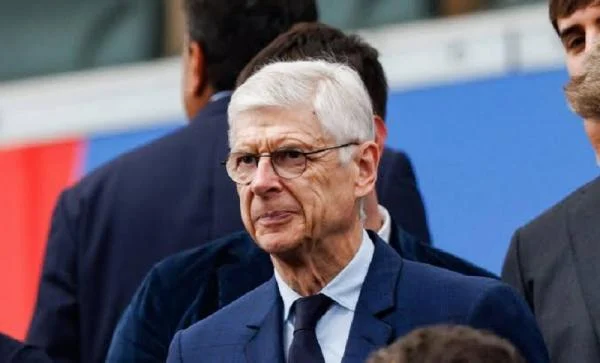
The landscape of global football governance is bracing for a potential seismic shift as reports emerge indicating that Arsene Wenger, the legendary former manager of Arsenal FC, is being considered as a primary challenger to incumbent Gianni Infantino for the FIFA presidency in 2027. This development, which has surfaced as European football stakeholders evaluate the future direction of the sport’s world governing body, positions the 77-year-old French tactician as a credible, if currently hesitant, candidate to lead FIFA into a new era.
The Emergence of a Tactical Contender
According to reports originating from the Press Association, Wenger’s name has surfaced within internal discussions at UEFA. The governing body for European football is actively scouting for viable alternatives to Gianni Infantino, whose tenure has been marked by significant structural changes, the expansion of the FIFA World Cup, and a series of high-profile controversies regarding governance and ethics.
While Wenger has not yet formally declared his candidacy, his inclusion in these discussions suggests a desire among European federations to install a figure with deep, technical understanding of the sport’s grassroots and elite development. Currently serving as the Chief of Global Football Development at FIFA—a role he has held since 2019—Wenger possesses a unique vantage point. He is intimately familiar with the internal bureaucracy of the organization while remaining untainted by the political scandals that have historically plagued FIFA’s executive committee.
The Chronology of an Administrative Transition
The timing of this potential challenge is not coincidental. Gianni Infantino has served as FIFA President since 2016, following the chaotic exit of Sepp Blatter. Over the past decade, Infantino has consolidated power through ambitious projects, including the controversial expansion of the FIFA Club World Cup and the 48-team FIFA World Cup format.

However, the 2027 election cycle is viewed by many as a critical juncture. As the sport faces unprecedented scrutiny over calendar congestion, player welfare, and the commercialization of the game, the demand for a "football-first" leader has grown. Wenger’s career trajectory—from his transformative years at Arsenal where he modernized English football to his current role overseeing technical innovation at FIFA—provides a narrative of a man who understands the modern game from both the touchline and the boardroom.
Evaluating the Wenger Factor: Credentials and Challenges
Arsene Wenger’s candidacy, should it materialize, would be defined by his reputation for intellectual rigor and long-term planning. During his 22-year tenure at Arsenal (1996–2018), he became synonymous with the "Invincibles" era and the development of the Emirates Stadium, balancing fiscal responsibility with aesthetic success.
At FIFA, his role has been to modernize technical standards, analyze match data, and propose rule changes designed to improve the spectacle of the sport. His proponents argue that his technical expertise would allow him to bridge the divide between the elite clubs, who are increasingly frustrated with FIFA’s mandate, and the national associations that rely on FIFA funding.
However, detractors note that Wenger has been a loyal employee of the current administration for several years. His proximity to Infantino’s projects—such as the potential biennial World Cup proposal, which faced significant pushback from UEFA and CONMEBOL—could be viewed as a liability. Whether he can distinguish his vision from the current status quo remains the central question for potential supporters.
The Geopolitical Landscape of the FIFA Election
The FIFA presidency is determined by a vote of the 211 member associations, each holding one vote regardless of the size or footballing success of the nation. Historically, this system has favored candidates who can secure broad support across Africa, Asia, and the Americas through development programs and financial subsidies.

Gianni Infantino has mastered this diplomatic game, securing strong support from smaller federations by significantly increasing FIFA’s development grants. To mount a successful challenge, any candidate—including Wenger—must present a platform that satisfies the diverse needs of these 211 members. UEFA’s involvement is critical; the European confederation provides the highest level of commercial revenue and technical infrastructure in the world. If UEFA throws its collective weight behind a candidate, it signals a fracture in the traditional support base that has kept Infantino in power.
Fact-Based Implications for the Sport
The potential candidacy of a figure like Wenger highlights a growing tension within football governance: the struggle between the commercial imperatives of the current FIFA leadership and the sporting integrity demanded by traditionalists.
- Player Welfare and Calendar Congestion: One of the primary criticisms of the current FIFA administration is the relentless expansion of the match calendar. Wenger, who has been vocal about player workload, would be forced to navigate the conflict between broadcasting demands and the physical limits of top-tier athletes.
- Financial Transparency: The FIFA of the post-2015 era promised a new dawn of transparency. Yet, the expansion of commercial operations has led to renewed questions regarding how revenue is distributed. A Wenger presidency would likely involve a forensic review of current financial structures.
- Governance and Rule-Making: Wenger’s tenure at the IFAB (International Football Association Board) and his work on technical regulations demonstrate a preference for evidence-based reform. His presidency would likely see an acceleration of technological integration in officiating and a focus on standardizing development programs globally.
Official Stances and Preliminary Reactions
Neither FIFA nor Arsene Wenger has issued an official statement regarding these reports. In the corridors of football power, however, the silence is telling. Observers suggest that the delay in any official announcement is likely due to the delicate nature of the current FIFA hierarchy. For Wenger, a former employee and current executive, challenging his boss is a high-stakes move that could jeopardize his current influence.
For UEFA, the strategy is one of cautious exploration. By floating Wenger’s name, they are testing the waters to see if there is a sufficient appetite for change among the larger voting blocs. If the response from major African or Asian federations is lukewarm, UEFA may pivot to other candidates or choose to maintain the current status quo to avoid an internal civil war that could weaken European football’s position on the global stage.
Looking Ahead to 2027
The road to the 2027 election will be paved with complex negotiations. The electoral process requires a formal nomination period, usually closing months before the congress. In the interim, candidates must build coalitions, conduct global outreach, and articulate a vision that transcends regional interests.

If Arsene Wenger chooses to run, he would represent the "technocrat" archetype—a leader who prioritizes the mechanics of the game over the political maneuverings that have defined FIFA for decades. His supporters would point to his integrity and deep footballing knowledge as the primary antidote to the perception that FIFA has become a bloated, commercially driven monolith.
Conversely, skeptics will argue that the challenges of managing global football require more than just a deep knowledge of tactics; they require the political acumen to balance the interests of sovereign nations, massive commercial partners, and the governing bodies themselves.
As the footballing world monitors these developments, the candidacy of Arsene Wenger remains a "what if" scenario that has suddenly become a central talking point. Whether he chooses to step into the political arena to complete his legacy, or prefers to remain in his current role, the mere fact that his name is being discussed at the highest levels of football governance signals that the 2027 election will be far from a coronation for the current leadership. The next eighteen months will determine whether football is ready for a shift toward a more sport-centric governance model or if the current administrative trajectory remains firmly in place.
