
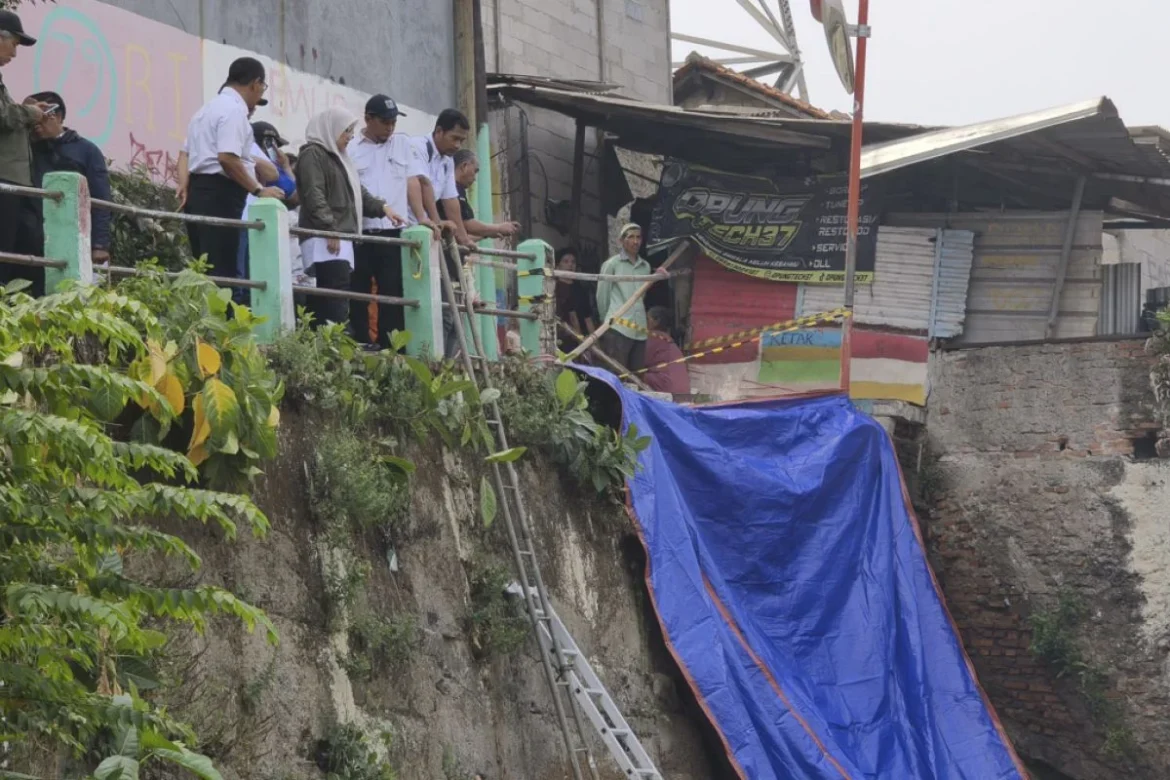
The Ministry of Public Works (PU) of Indonesia has mobilized emergency response efforts to address the critical soil landslide that recently struck Jalan Langgar II in the Pejaten Timur sub-district of South Jakarta. The incident, which severely damaged infrastructure and disrupted the local water drainage network, has prompted a swift inter-agency response aimed at stabilizing the terrain and mitigating the risk of future geological failures in the densely populated area.
Minister of Public Works Dody Hanggodo underscored the government’s unwavering commitment to not only addressing the immediate aftermath of natural disasters but also implementing systemic solutions to prevent recurrence. "The Ministry of Public Works remains committed to post-disaster handling. Our mandate is not merely to repair the damage but to ensure that the same disaster does not occur again in the future," Minister Hanggodo stated during a press briefing in Jakarta on Friday. This stance reflects a broader shift within the ministry toward proactive disaster risk management rather than purely reactive disaster response.
Chronology and Initial Assessment of the Pejaten Timur Incident
The landslide occurred along the embankment of the Poltangan Connecting Channel (Saluran PHB Poltangan), a critical piece of water management infrastructure in South Jakarta. Preliminary reports from the Balai Besar Wilayah Sungai (BBWS) Ciliwung Cisadane—the regional agency responsible for river and water resource management—indicate that the disaster was triggered by a combination of meteorological and geological factors.
According to the Acting Head of BBWS Ciliwung Cisadane, Ahmad Victor Samodra, the region had been experiencing prolonged, high-intensity rainfall in the days leading up to the collapse. This led to a state of extreme soil saturation, which ultimately exceeded the stability threshold of the embankment. The structural failure resulted in the collapse of a section of the retaining wall measuring approximately five meters in length and six meters in height.
The immediate consequence of this collapse was the obstruction of the Poltangan Channel. Debris from the landslide fell directly into the watercourse, creating a significant bottleneck that restricted the natural flow of water. This blockage caused water from upstream areas to spill over its banks, inundating nearby residential properties located at lower elevations. Furthermore, the structural compromise of the embankment has created an ongoing threat to local road accessibility, as the integrity of the surrounding ground remains unstable.
Emergency Response and Mitigation Strategies
The immediate response phase involved multi-stakeholder coordination between the Ministry of Public Works, the BBWS Ciliwung Cisadane, and the Jakarta Provincial Government. Recognizing the urgency of protecting local residents, the South Jakarta Fire and Rescue Department (Suku Dinas Pemadam Kebakaran) initiated temporary protective measures by installing heavy-duty tarpaulins over the exposed landslide site. This action was designed to prevent further erosion caused by continued rainfall, which could otherwise worsen the saturation of the soil.
Parallel to this, the BBWS Ciliwung Cisadane has mobilized resources to stabilize the riverbank. Technical teams have begun deploying sandbags to the site to serve as a temporary barrier. Plans are currently in motion to reinforce the toe of the slope using a combination of timber piles (cerucuk) and further sandbag placement. These measures are being executed with a high degree of caution, given the site’s limited accessibility and the potential for additional soil movement.
"We are constantly coordinating with regional authorities to support emergency handling according to field requirements," stated an official from the Ministry of Public Works. "These efforts are strictly aimed at reducing the risk of secondary landslides, maintaining the function of water resource infrastructure, and, most importantly, ensuring the safety of the community residing in the vicinity of the affected area."
Contextualizing Urban Landslides in Jakarta
The incident at Pejaten Timur serves as a microcosm of the challenges facing urban water management in Jakarta. The city’s complex geography, characterized by low-lying plains and an extensive network of man-made and natural drainage channels, makes it uniquely susceptible to hydrometeorological disasters.
Urbanization trends in South Jakarta have placed significant pressure on the landscape. Increased soil sealing—where permeable surfaces are replaced by concrete and asphalt—reduces the ground’s ability to absorb rainwater, leading to higher runoff rates and increased pressure on drainage systems. When these systems, such as the Poltangan Channel, are compromised by landslides or sediment buildup, the result is localized flooding that can have cascading effects on the city’s overall resilience.
The Ministry of Public Works has been focusing heavily on the maintenance of these assets. As part of a broader strategy, the ministry has been actively working on sediment management across various dams and channels, noting that sediment accumulation often reduces the capacity of drainage systems to handle extreme weather events. The current incident in Pejaten highlights the necessity of integrated spatial planning, where infrastructure development must be harmonized with natural topographical constraints.
The Path Toward Long-Term Resilience
While the immediate focus is on emergency stabilization, the Ministry of Public Works has acknowledged that a long-term, structural solution is required. Because the Poltangan Channel falls under the jurisdiction of the Jakarta Provincial Government, the Ministry of Public Works is advocating for a comprehensive urban redevelopment plan along the channel corridor.
The proposed long-term strategy involves more than just rebuilding the retaining wall. It requires a holistic assessment of the embankment’s structural integrity, the potential for residential relocation from high-risk zones, and the implementation of bio-engineering solutions to stabilize the slopes permanently. Experts suggest that integrating vegetation with structural engineering, such as retaining walls and drainage galleries, can significantly enhance the long-term stability of slopes in urban areas.
Furthermore, this event underscores the importance of the government’s recent investments in infrastructure. From the elevation of the Pantura Semarang-Demak road to the completion of underpasses such as the one in Bitung, the Ministry of Public Works is demonstrating a concerted effort to fortify Indonesia’s physical infrastructure against the realities of climate change and extreme weather. However, as the Pejaten incident proves, these large-scale projects must be matched by meticulous attention to local, community-level infrastructure maintenance.
Implications and Future Outlook
The landslide in Pejaten Timur serves as a stark reminder of the volatility of urban infrastructure under the influence of changing weather patterns. With global climate change leading to more frequent and intense precipitation, the threshold for infrastructure failure is increasingly being tested.
The Ministry of Public Works’ response to this incident marks a critical point of evolution in Indonesia’s disaster management policy. By emphasizing that the goal is not merely "repair" but "prevention," the ministry is signaling a move toward a more resilient infrastructure model. This includes:
- Enhanced Monitoring: Implementing real-time monitoring of soil stability and water levels in high-risk zones to provide early warnings to residents.
- Inter-Agency Collaboration: Strengthening the synergy between central government ministries and local provincial governments to ensure that maintenance responsibilities do not fall through the cracks.
- Public Education: Increasing public awareness regarding the dangers of building near unstable slopes and the importance of maintaining clear drainage channels.
- Data-Driven Engineering: Utilizing geological and meteorological data to inform the design of future infrastructure projects, ensuring they are built to withstand current and projected climate conditions.
As the recovery efforts continue in Pejaten Timur, the Ministry of Public Works remains on standby. The mobilization of equipment and personnel, while significant, is only the first step. The true test of success will be the successful implementation of the long-term stabilization plan and the restoration of a secure environment for the local residents.
In conclusion, the situation in Pejaten Timur, while localized, reflects the broader national priority of the Ministry of Public Works: building a nation that is not only equipped with robust infrastructure but also one that is resilient in the face of the unpredictable nature of the environment. As the nation approaches the end of the year and looks toward future development, the lessons learned from this incident will undoubtedly inform the next generation of infrastructure policy in Indonesia, ensuring that safety, sustainability, and foresight remain at the core of all public works initiatives. The government’s continued dedication to transparency and rapid response remains the bedrock upon which public trust and community safety are built in these challenging times.
