
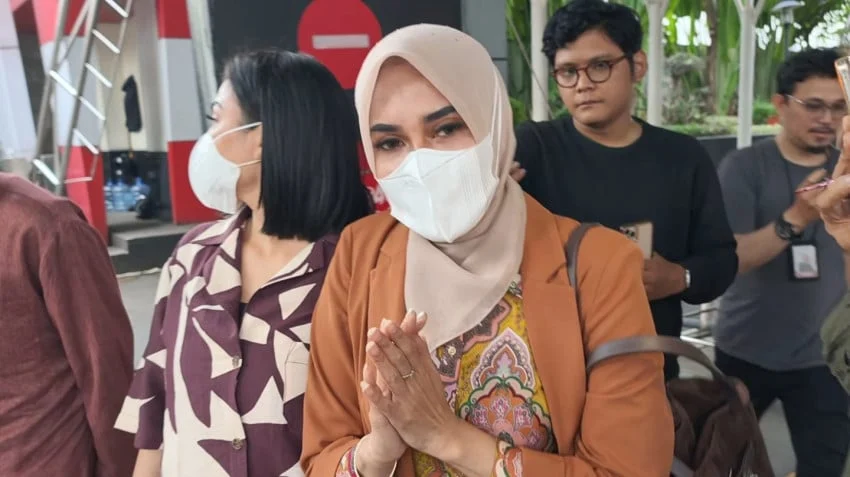
The Corruption Eradication Commission intensified its ongoing investigation into a high-profile regional graft network on Thursday, summoning and interrogating Vinna Ledy Anggraheni, a sitting member of the Bengkulu City Regional House of Representatives. The high-stakes questioning session, held at the KPK’s Red and White Building in Jakarta, marked a significant step in the anti-graft agency’s widening probe into systematic corruption, bribery, and illicit enrichment linked to regional political figures.
The federal anti-corruption body focused its inquiry on the lawmaker’s alleged involvement in receiving lavish gratuities, including luxury vehicles and high-end real estate properties, funneled through private business entities. As investigators work to untangle the complex web of financial transactions, the case continues to cast a long shadow over local governance in Bengkulu Province, drawing intense scrutiny from watchdog organizations, government accountability advocates, and the general public alike.
Background and Context of the Investigation
The legal proceedings involving Vinna Ledy Anggraheni do not exist in a vacuum; rather, they represent a direct offshoot of a broader, systemic corruption investigation that initially targeted former Rejang Lebong Regent M. Fikri Thobari. The primary case against Thobari involved widespread allegations of administrative corruption, procurement fraud, and the systematic extraction of illicit fees from municipal projects during his tenure.
As investigators combed through financial records, bank statements, and corporate registries connected to Thobari’s inner circle, a secondary network of beneficiaries and intermediaries began to emerge. Anti-graft analysts note that regional corruption in Indonesia frequently operates through patron-client networks, where executive powerholders collaborate with legislative officials and private contractors to siphon public funds and distribute illicit dividends. In this context, councilors and local politicians often act as conduits for graft, utilizing shell companies, proxies, and complex asset-hiding schemes to legitimize unexplained wealth.
The investigation into Vinna Ledy Anggraheni underscores the KPK’s strategic shift toward following the money trail across municipal boundaries. By examining how regional legislators accumulate assets far exceeding their official legislative salaries, federal investigators hope to dismantle the underlying financial infrastructure that sustains systemic corruption in Bengkulu Province and surrounding jurisdictions.
Chronology of Events and the Interrogation Session
The trajectory leading up to the October interrogation involved months of intelligence gathering, asset tracking, and preliminary witness interviews. The timeline of the case highlights the methodical approach adopted by federal investigators:
- Initial Phase: The KPK launched a formal corruption probe into M. Fikri Thobari, leading to his suspension and eventual designation as a corruption suspect following raids on municipal offices and private residences.
- Asset Tracing and Discovery: Forensic accountants and investigators analyzing financial flows uncovered suspicious transactions linking Thobari’s associates to private businessman Eno Bowo Susilo. Further investigation revealed that substantial assets had allegedly been transferred to individuals within the regional political sphere, including Bengkulu City Councilor Vinna Ledy Anggraheni.
- Asset Seizure Operations: Prior to the formal summons, KPK tactical teams executed targeted seizures of specific properties and luxury items suspected of being proceeds of corruption or undeclared gratuities tied to the ongoing investigation.
- The Summons and Interrogation: On Thursday, Vinna Ledy Anggraheni appeared at the KPK headquarters in Jakarta to fulfill the investigative summons, facing hours of intense questioning regarding her financial disclosures and asset acquisitions.
During the closed-door interrogation, KPK investigators confronted the councilor with documented evidence concerning high-value assets, including residential apartments and premium automobiles. The primary objective was to establish the legal origin of these possessions and determine whether they constituted unlawful gifts or bribes intended to influence municipal policymaking or budgetary allocations.
Official Statements from the Anti-Graft Agency
Speaking to reporters following the day’s proceedings, KPK Spokesperson Budi Prasetyo provided detailed insights into the scope of the examination and the specific lines of inquiry pursued by the investigative team. Prasetyo confirmed that the lawmaker, frequently referred to in case documents by her initials VLA, was questioned extensively regarding luxury assets purportedly obtained through private businessman Eno Bowo Susilo.
"For Sister VLA, she was present and examined thoroughly during today’s session regarding assets suspected of being received by Sister VLA from third parties," Prasetyo stated during a media briefing at the Jakarta headquarters.
Furthermore, the KPK spokesperson emphasized that the investigation is not limited to isolated property transfers but encompasses a broader inquiry into potential patterns of systemic gratification within the Bengkulu municipal government. Given her official status as an active member of the regional legislature, investigators are probing whether her political authority was leveraged to facilitate corrupt practices or secure illicit commercial advantages for private actors.
"Naturally, this also includes deep exploration concerning other alleged receipts or gratifications within the Bengkulu City environment in Sister VLA’s capacity as a member of the DPRD," Prasetyo added. He reiterated that while the commission has already executed administrative seizures of several disputed assets, tracking operations remain active to locate and secure any remaining properties linked to the criminal enterprise.
The Subject’s Reaction and Public Silence
Following the rigorous questioning session, Vinna Ledy Anggraheni exited the KPK Red and White Building under the watchful eye of media crews and security personnel. True to a growing trend among high-profile corruption suspects and witnesses in Indonesia, the lawmaker steadfastly refused to engage with journalists or address the substantive allegations leveled against her.
When pressed by reporters regarding the nature of the assets in question, the ongoing asset seizures, and her relationship with the implicated businessmen, Anggraheni offered a brief and dismissive response before departing the premises.
"No comment, sorry ya," she remarked tersely to reporters waiting outside the national anti-corruption headquarters.
This calculated silence has done little to quell public speculation or satisfy demands for transparency from local constituents. Civil society organizations in Bengkulu have pointed out that elected representatives bear a fundamental duty of accountability to the public, particularly when facing serious federal inquiries into illicit enrichment and abuse of office.
Broader Implications and Impact on Local Governance
The widening scope of the Rejang Lebong corruption case and its direct spillover into the Bengkulu City legislature carry profound implications for regional governance, political stability, and public trust in democratic institutions. Observers note that when municipal lawmakers become embroiled in federal corruption probes, the immediate casualty is the legislative body’s institutional credibility.
- Erosion of Public Trust: Scandals involving high-ranking regional politicians severely damage the social contract between voters and elected officials, fostering widespread cynicism regarding the integrity of local government institutions.
- Disruption of Municipal Oversight: With key council members entangled in legal battles and asset seizures, the capacity of the DPRD to effectively monitor executive spending, debate policy, and represent constituent interests is severely compromised.
- Stricter Financial Scrutiny: The case serves as a stark warning to regional politicians across the archipelago that federal anti-corruption agencies are increasingly utilizing advanced financial forensics and asset-tracing methodologies to uncover hidden wealth.
- Corporate Accountability: By implicating private business figures such as Eno Bowo Susilo, the investigation highlights the critical need to clean up public procurement processes and eliminate the corrupt nexus between opportunistic contractors and politically exposed persons.
As the KPK continues its forensic examination and evaluates the evidence gathered during the interrogation, further legal developments are anticipated in the coming weeks. Investigators are expected to review the defensive statements provided by witnesses, cross-reference bank records, and determine whether sufficient probable cause exists to elevate the legal status of additional individuals involved in the Bengkulu corruption network. For the residents of Bengkulu, the unfolding scandal remains a sobering reminder of the ongoing challenge to achieve clean, accountable, and transparent regional governance.
