
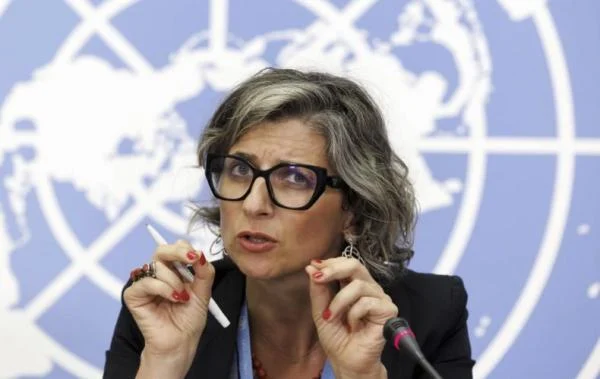
The diplomatic landscape between international human rights bodies and sovereign nations reached a new point of friction this week as Francesca Albanese, the United Nations Special Rapporteur on the situation of human rights in the Palestinian territories occupied since 1967, was denied entry into Costa Rica. Upon her arrival at Juan Santamaría International Airport in San Jose on Wednesday, November 25, 2026, Albanese was blocked from entering the country, where she was scheduled to receive an honorary doctorate from the University of Costa Rica. The incident has triggered a fierce rebuttal from the Italian diplomat, who has accused the Costa Rican government of spreading defamatory misinformation and aligning itself with the policies of the Israeli state.
Chronology of the Diplomatic Standoff
The sequence of events began on November 25, 2026, when Albanese touched down in San Jose. According to statements released by her office, immigration officials prevented her from proceeding past the airport terminal, citing security concerns and internal government directives. For the following two days, the UN official remained in a state of limbo within the international transit area of the airport.
By Friday, November 27, it became clear that the government of Costa Rica had no intention of granting her entry. In a defiant address delivered via teleconference from the airport to the academic community at the University of Costa Rica, Albanese expressed her profound indignation. She described the government’s actions as an attempt to delegitimize her mandate by labeling her advocacy for Palestinian rights as support for terrorism. The university, which had intended to honor her for her contributions to international law and human rights, was forced to conduct the ceremony in her absence, highlighting the stark divide between academic freedom and government foreign policy.
The Core of the Accusations
The Costa Rican government’s decision to bar the UN Rapporteur appears to be rooted in a broader geopolitical strategy. Officials have suggested that Albanese’s outspoken criticism of Israeli military operations and her characterization of the situation in Gaza as an "apartheid" regime constitute a bias that undermines the neutrality required of a UN mandate holder.
However, Albanese has vehemently rejected these claims. In her address, she maintained that the accusations of terrorism links are a "calculated smear campaign" designed to silence scrutiny of the humanitarian crisis in the Palestinian territories. She argued that the labeling of human rights advocacy as terrorism is a tactic increasingly used by states to insulate themselves from international law. "Defending the fundamental rights of the Palestinian people is not an act of terror; it is a fundamental pillar of the UN charter and international human rights law," she stated during her broadcast to the University of Costa Rica.
Historical Context and Mandate Challenges
Francesca Albanese has been a polarizing figure since assuming the role of Special Rapporteur in 2022. Her reports, which have frequently documented allegations of war crimes and violations of international humanitarian law, have made her a frequent target of criticism from Israeli officials and their diplomatic allies.
The mandate of the Special Rapporteur is inherently contentious, as it requires the holder to report on human rights violations in a region defined by decades of conflict. Previous rapporteurs have also faced challenges, including being denied entry to the occupied territories by the Israeli government, which has long maintained that the mandate itself is inherently biased. The situation in Costa Rica marks a significant escalation, as it involves a neutral third-party nation choosing to restrict the movement of a UN official—a move that human rights organizations suggest sets a dangerous precedent for the freedom of movement for international monitors.

Supporting Data: The Humanitarian Situation
The tension surrounding Albanese’s visit cannot be separated from the escalating violence in the region. Recent reports indicate that the humanitarian situation in Gaza has reached a critical threshold. Independent monitors have tracked thousands of breaches of ceasefire agreements, leading to a catastrophic toll on civilian life.
Data compiled by various international observers suggest that the death toll among Palestinians continues to climb, with infrastructure damage in Gaza rendering the territory nearly uninhabitable. The ongoing blockade, coupled with the restricted flow of aid, has created a situation that the UN has repeatedly described as a "man-made humanitarian disaster." Albanese’s mandate is specifically focused on gathering evidence and reporting on these conditions to the UN Human Rights Council. By restricting her movement, critics argue that Costa Rica is hindering the international community’s ability to remain informed about the ground-level realities of the conflict.
Official Responses and International Reactions
The government of Costa Rica has yet to provide a detailed, itemized justification for its decision beyond broad references to national security and the protection of its diplomatic interests. In diplomatic circles, the silence or ambiguity from the host nation is often interpreted as a signal of its alignment with specific international blocs.
Conversely, the United Nations has historically defended its special rapporteurs, asserting that they act in an independent capacity. While the UN Secretariat has not yet issued a formal sanction against Costa Rica, the incident has drawn the attention of the Office of the High Commissioner for Human Rights (OHCHR). Advocacy groups, including Amnesty International and Human Rights Watch, have expressed concern over the incident, noting that the obstruction of a UN official’s duties violates the principles of international cooperation.
Analysis of Implications
The barring of Francesca Albanese from Costa Rica has several profound implications for international diplomacy:
- The Erosion of UN Access: If sovereign states feel empowered to deny entry to UN rapporteurs based on their political stances, the efficacy of the entire UN human rights monitoring system is jeopardized. The independence of these mandates is the bedrock upon which international accountability is built.
- Weaponization of "Terrorism" Labels: The use of terrorism allegations as a blunt instrument to disqualify legitimate human rights critics is a growing trend. This strategy forces a shift in public discourse from the substance of the rapporteur’s findings to the character of the individual, effectively stalling necessary policy debates.
- Diplomatic Polarization: Costa Rica, historically known for its pacifism and strong human rights record, finds itself in a precarious position. By taking this step, the government risks alienating international partners who prioritize the role of multilateral institutions in resolving conflicts.
- Academic and Institutional Autonomy: The fact that a university’s decision to honor a guest was effectively vetoed by the state raises significant questions regarding the separation of academic and governmental spheres in Costa Rica.
The Path Forward
As the dust settles on this diplomatic incident, the focus will likely shift to the legal and procedural response from the United Nations. There is significant pressure on the UN to clarify the protections afforded to rapporteurs when traveling on official business. Furthermore, the incident serves as a bellwether for the increasingly hostile environment faced by international monitors.
The "honoris causa" ceremony, though disrupted, serves as a symbolic marker of the current global divide. While the University of Costa Rica sought to highlight the importance of international human rights, the state’s intervention highlighted the geopolitical pressures that define contemporary foreign policy. For Francesca Albanese, the event has only served to amplify her platform, turning a denied visit into a global conversation about the definition of terrorism, the sanctity of international mandates, and the enduring crisis in the Palestinian territories. As of late November 2026, there have been no indications that the Costa Rican government will retract its decision or issue a formal apology to the UN envoy.
