
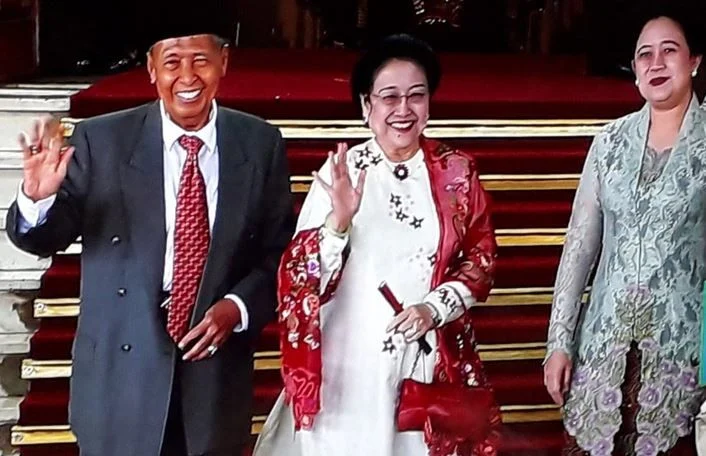
The political landscape of Indonesia has witnessed numerous dramatic shifts, constitutional crises, and high-stakes parliamentary showdowns since the dawn of the Reformasi era in 1998. Among the most pivotal moments in the nation’s legislative history was the high-tension vice-presidential election held within the People’s Consultative Assembly (MPR RI) in July 2001. This extraordinary political contest saw veteran politician and United Development Party (PPP) leader Hamzah Haz emerge victorious against formidable heavyweights, including future president Susilo Bambang Yudhoyono (SBY) and influential Golkar Chairman Akbar Tandjung.
This historic election was not merely a routine replacement of a public official; it was the direct consequence of a profound constitutional crisis that culminated in the impeachment of Indonesia’s fourth president, Abdurrahman Wahid, widely known as Gus Dur. The events of July 2001 reshaped the executive branch, established new precedents for legislative-executive relations, and altered the trajectory of Indonesian democratic governance for decades to come.
The Constitutional Crisis of 2001: The Fall of Gus Dur
To fully understand the significance of the 2001 vice-presidential election, one must examine the turbulent political climate that preceded it. By mid-2001, relations between President Abdurrahman Wahid and the national parliament—specifically the House of Representatives (DPR RI) and the MPR RI—had reached an absolute breaking point. Tensions had simmered for months over policy disagreements, allegations of corruption involving presidential aides, and an unpredictable leadership style that alienated key political allies who had initially helped Gus Dur secure the presidency in October 1999.
In response to mounting pressure, President Wahid issued a controversial presidential decree on July 23, 2001, attempting to suspend both the MPR and the DPR, alongside the Golkar Party. The legislature swiftly rejected the decree, viewing it as an unconstitutional power grab. Convening in an emergency plenary session on the very same day, the MPR, under the leadership of Chairman Amien Rais, voted unanimously to formally impeach and dismiss President Abdurrahman Wahid from office.
With Gus Dur removed, the constitutional mechanism of succession was immediately triggered. Vice President Megawati Soekarnoputri, the charismatic leader of the Indonesian Democratic Party of Struggle (PDI-P) and the daughter of Indonesia’s founding father Sukarno, was sworn in as the nation’s fifth president. Megawati’s elevation to the presidency instantly created a vacant vice-presidential seat, plunging the MPR into an urgent task: selecting a new second-in-command to maintain executive stability and steer the nation through its fragile democratic transition.
The Candidates: A Lineup of Heavyweights
The sudden vacancy of the vice presidency triggered an intense scramble among Indonesia’s major political factions. Unlike modern Indonesian politics, where vice-presidential candidates are chosen by presidential nominees ahead of a national direct election, the 2001 election was conducted internally by members of the MPR. This parliamentary mechanism transformed the race into a fierce lobbying battle among party elites, military figures, and parliamentary power brokers.
Several prominent national figures emerged as official contenders for the vice-presidential post:
-
Hamzah Haz: Serving at the time as the Coordinating Minister for People’s Welfare and Poverty Alleviation in Gus Dur’s cabinet, Hamzah Haz was also the powerful Chairman of the Central Executive Board of the United Development Party (PPP), one of the largest Islamic-based political parties in the country. He was regarded as a seasoned parliamentarian with strong ties to both secular and religious factions.
-
Akbar Tandjung: As the Chairman of the Golkar Party—the former ruling party of the New Order regime—and the sitting Speaker of the House of Representatives (DPR RI), Akbar Tandjung was one of the most powerful and well-resourced political operators in Jakarta. His control over the vast Golkar machinery made him a formidable frontrunner.
-
Susilo Bambang Yudhoyono (SBY): Representing a blend of military professionalism and reformist credibility, SBY held the crucial post of Coordinating Minister for Political and Social Security (Menko Polsoskam) in the outgoing cabinet. Although he had not yet founded his own political party, his growing stature within national politics and his backing from reform-minded factions made him a major contender.
-
Agum Gumelar: Another high-ranking military officer and cabinet minister, Agum Gumelar offered a moderate voice capable of bridging diverse political interests during a period of extreme polarization.
-
Siswono Yudo Husodo: A senior Golkar and business figure who represented alternative technocratic leadership within the legislative assembly.
The Election Chronology and Parliamentary Dynamics
The contest inside the MPR building in Senayan, Jakarta, was characterized by intense backroom negotiations, ideological posturing, and shifting alliances. The major political parties—PDI-P, Golkar, PPP, the National Awakening Party (PKB), the National Mandate Party (PAN), and the military-police faction (TNI/Polri)—held the ultimate keys to the ballot box.
As President Megawati Soekarnoputri sought a stable governing coalition that could neutralize opposition and maintain calm on the streets, the calculations behind the vice-presidential vote became intensely complex. Golkar initially threw its immense weight behind Akbar Tandjung, hoping to secure the second-highest office in the land despite having lost the presidency just days prior. Simultaneously, military and nationalist factions weighed the stability offered by SBY’s disciplined background.
However, Hamzah Haz successfully positioned himself as a unifying, consensus-building figure. As the leader of an influential Islamic party, his selection offered a strategic geopolitical and religious balance to President Megawati, a secular nationalist. This "Nationalist-Islamic" power-sharing formula appealed deeply to moderate parliamentarians who feared that electing a figure too closely tied to the old regime, such as Akbar Tandjung, or a sitting military general, such as SBY, might alienate critical segments of the electorate and reignite societal tensions.
When the final votes were cast and tallied by the MPR assembly, Hamzah Haz emerged triumphant. He defeated formidable challengers like SBY and Akbar Tandjung through a coalition of support that spanned Islamic parties, moderate nationalists, and pragmatists within the legislature. Following the announcement of the results, Hamzah Haz was swiftly sworn in as Indonesia’s ninth Vice President, officially completing the new executive leadership tandem alongside President Megawati Soekarnoputri.
Reactions and Political Implications
The victory of Hamzah Haz sent ripples through the Indonesian political establishment, generating diverse reactions from analysts, party leaders, and the public.
For the United Development Party (PPP), Hamzah’s victory represented a historic high watermark, cementing the party’s role as a kingmaker and a vital pillar of national governance. Islamic political circles widely praised the outcome, viewing the Megawati-Hamzah administration as a successful institutional embodiment of pluralism—uniting nationalist and religious forces at the highest level of state power.
Conversely, the defeat of heavyweight contenders like Akbar Tandjung and SBY carried long-term strategic consequences. For Akbar Tandjung, the loss marked a gradual decline in the absolute dominance that Golkar had enjoyed, forcing the party to adapt to a newly pluralistic and competitive parliamentary democracy.
For Susilo Bambang Yudhoyono, the 2001 defeat served as a crucial formative experience in national retail politics. Observing firsthand the mechanics of legislative-executive coalition-building, SBY recognized the limitations of relying purely on ministerial appointments and parliamentary maneuvering. Analysts note that this disappointment catalyzed SBY’s decision to build an independent political vehicle—the Democratic Party (Partai Demokrat)—which ultimately propelled him to the presidency in the historic 2004 direct elections, where he decisively defeated Megawati Soekarnoputri.
Historical Legacy and Lessons for Modern Indonesian Democracy
The 2001 MPR vice-presidential election remains a fascinating case study in Indonesia’s constitutional evolution. It stands in stark contrast to the modern electoral system established by constitutional amendments in 2002 and 2004, which abolished internal MPR vice-presidential elections in favor of a direct, dual-ticket presidential and vice-presidential ballot system.
Under the current framework, voters select a fixed presidential and vice-presidential pair, entirely eliminating the risk of legislative deadlock or executive-legislative friction during the immediate succession process. Nevertheless, the events of July 2001 underscore the resilience of Indonesia’s democratic institutions. Faced with a potential constitutional collapse following the removal of President Abdurrahman Wahid, the MPR successfully utilized established legal frameworks to restore order, proving that the nation could manage profound political transitions through parliamentary deliberation rather than chaos.
The legacy of Hamzah Haz’s victory over political giants like SBY and Akbar Tandjung endures as a reminder of an era when Indonesia’s political destiny was forged in the crucible of intense parliamentary debate, proving that strategic coalition-building and ideological balance could triumph over raw institutional power.
