
The fundamental landscape of belief in contemporary society faces unprecedented shifts as globalization and rapid technological advancements reshape how individuals interact with the concept of the divine. Within the Republic of Indonesia, a nation structurally and ideologically rooted in the foundational principles of Pancasila, the very first tenet—Ketuhanan Yang Maha Esa (Belief in the Almighty God)—serves as the cornerstone of national identity and civic life. This constitutional principle establishes that divine values hold a paramount position in guiding the moral and social fabric of the populace. However, this deeply ingrained cultural and national framework increasingly intersects with global philosophical currents, most notably the rise of secularism, skepticism, and agnosticism.
Addressing these evolving paradigms, the central leadership of Muhammadiyah, one of Indonesia’s largest Islamic socio-religious organizations, has emphasized the enduring necessity of anchoring national life in spiritual values. Speaking ahead of the upcoming National Congress (Munas) of the Muhammadiyah Tarjih Council, organizational leaders addressed the cyclical nature of human spirituality throughout history, noting that skepticism toward organized religion is not an entirely modern invention, but rather a recurring historical phenomenon influenced by broader civilizational shifts.
Historical Evolution of Human Spirituality and the Rise of Agnosticism
To fully understand contemporary shifts in religious adherence, experts and religious scholars often examine the historical trajectory of human thought. The relationship between humanity and the divine has experienced profound transformations across different epochs, transitioning from the deeply faith-dominated structures of the Middle Ages to the radically rationalist and secular philosophies of the Renaissance and the Enlightenment.
In the medieval era, particularly within Western civilization, religious institutions and theological worldviews heavily dictated sociopolitical structures, intellectual pursuits, and daily existence. However, the dawn of the Renaissance and subsequent centuries ushered in an era emphasizing empirical observation, scientific inquiry, and human reason. This intellectual pivot gradually altered how portions of the global population approached metaphysics and religious dogmas.
In the 19th century, these intellectual currents gave rise to distinct philosophical categorizations regarding the limits of human knowledge concerning the divine. Among them is agnosticism. Etymologically, the term originates from the Greek words "a-" meaning "without," and "gnosis" meaning "knowledge." First popularized in 1869 by British biologist and philosopher Thomas Henry Huxley, agnosticism represents the philosophical stance that the existence of God, the divine, or the supernatural is unknown or inherently unknowable. Unlike explicit atheism—which asserts a definitive disbelief in deities—agnosticism posits that human reason is currently incapable of providing sufficient rational grounds to justify either the belief that God exists or the belief that God does not exist.
In the 21st century, these classical philosophical positions have found new expressions within digital spaces, globalized academic circles, and urban youth cultures. Modern agnosticism often manifests not merely as an academic philosophy, but as a lifestyle detachment or a questioning attitude toward institutionalized religion, driven by exposure to scientific advancements, pluralistic worldviews, and widespread access to information.
Muhammadiyah Leadership Perspective on Spiritual Dynamics
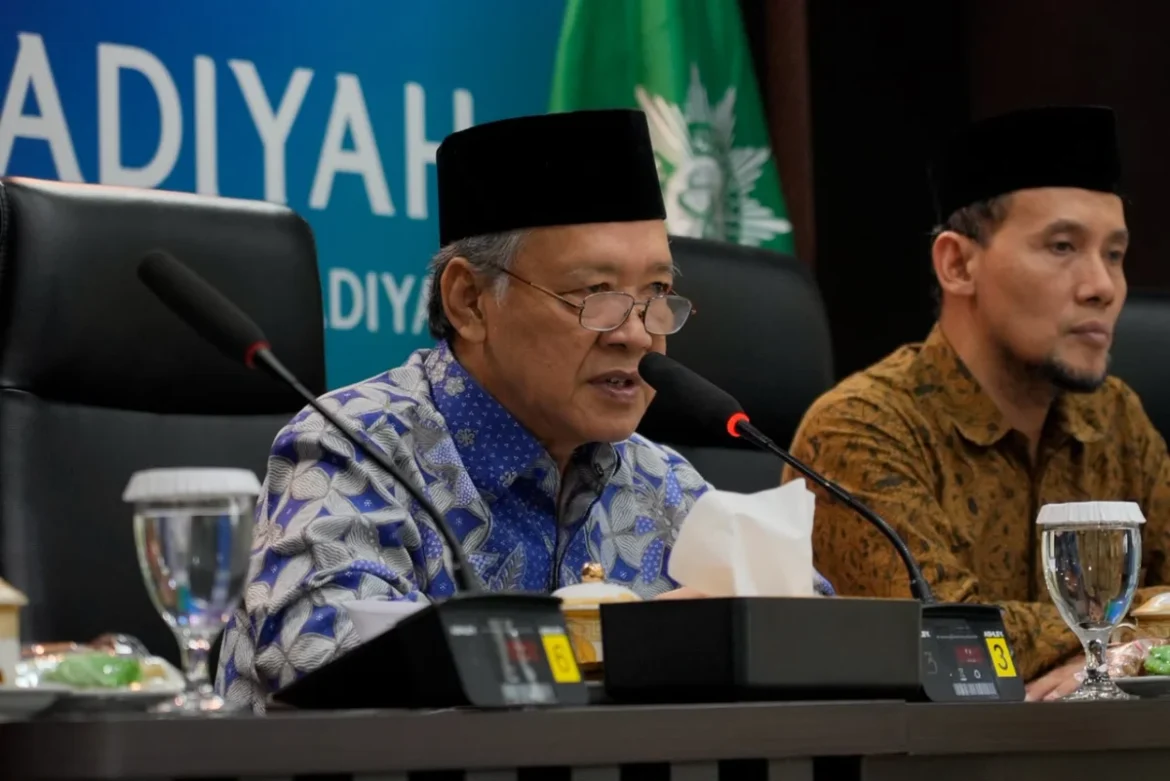
Reflecting on these global shifts, Syamsul Anwar, Chairperson of the Central Board of Muhammadiyah, offered a comprehensive perspective on the undulating nature of human religious sentiment. Speaking during a press briefing held in Yogyakarta ahead of the organization’s major legislative assembly, Anwar articulated that human spiritual development does not follow a strict, linear progression toward absolute secularization or absolute piety.
"At one point, people can experience a deep longing for religion, while at another time, people can also feel a sense of fatigue toward religion. Thus, it has fluctuated back and forth since ancient times," Anwar stated during the conference.
Anwar contextualized this fluctuating behavior through the lens of civilizational history, tracing the pendulum swing from medieval religious hegemony to modern secular rationality. Despite the heavy secularizing pressures of the 19th and 20th centuries, Anwar pointed out a noticeable resurgence of interest in religious frameworks as humanity navigates the complexities of the 21st century. This counter-trend suggests that even in highly technological and rationalized societies, existential questions continue to drive individuals back toward spiritual paradigms, a phenomenon mirrored in contemporary intellectual discourse often referenced through works exploring the re-emergence of faith-based hypotheses in modern science and philosophy.
Despite these cyclical revivals, the contemporary landscape continues to foster skepticism. In response, Muhammadiyah underscores that maintaining a steadfast commitment to the divine is vital not only for individual spiritual health, but also for preserving the ideological integrity of the Indonesian state.
"For a community like the people of Muhammadiyah, belief in God is essential. Moreover, as the Indonesian nation, our very first Pancasila principle is Belief in the Almighty God, which implies that our nation inherently believes in the Almighty God," Anwar emphasized.
The Institutional Response: Formulating the Risalah Akidah Islam
Recognizing the necessity of providing clear theological guidance amidst ideological plurality, Muhammadiyah is proactively addressing these modern intellectual challenges through systematic theological scholarship. A primary vehicle for this endeavor is the Tarjih and Tajdid Council of the Muhammadiyah Central Board, which has dedicated significant scholarly resources to formulating a comprehensive doctrinal text known as the Risalah Akidah Islam (Treatise on Islamic Creed).
The formulation of this treatise serves a dual purpose: to firmly establish the foundational principles of Islamic faith for modern believers, and to clearly delineate between core doctrinal absolutes (qath’i) and secondary theological matters where scholarly interpretation (ijtihad) allows for diverse opinions among Islamic jurists. By establishing these clear boundaries, the organization aims to equip its members and the broader Muslim community with robust intellectual and spiritual defenses against existential confusion, religious apathy, or ungrounded skepticism.
The development of the Risalah Akidah Islam represents a significant milestone in Indonesian Islamic scholarship. It seeks to bridge classical theological texts with contemporary epistemological challenges, ensuring that Islamic creed remains intellectually coherent, accessible, and resilient in an era defined by rapid information flow and ideological competition.
Roadmap to the 33rd National Tarjih Congress in Surabaya
The culmination of these extensive intellectual preparations will take place at the upcoming 33rd National Congress (Munas) of the Tarjih Council. Scheduled to convene in Surabaya, East Java, from November 5 to November 7, 2026, the high-profile assembly is expected to draw hundreds of Islamic scholars, academics, and organizational leaders from across the archipelago.
The event timeline leading up to the congress involves rigorous regional discussions, focus group sessions, and preliminary reviews of the draft Risalah Akidah Islam. The chronological framework of the congress preparation includes:
- Phase 1: Conceptual Drafting and Scholarly Review (2024–2025): The Tarjih and Tajdid Council compiles preliminary academic papers, addressing modern theological challenges, secular trends, and the philosophical implications of contemporary agnosticism.
- Phase 2: Regional Consultations (Early 2026): Drafts of the Risalah Akidah Islam are distributed to regional branches of Muhammadiyah for feedback, ensuring grassroots religious contexts are integrated into the final document.
- Phase 3: Finalization and National Debate (November 5–7, 2026): Delegates gather in Surabaya for the 33rd Munas Tarjih to formally debate, refine, and ratify the treatise as an official organizational guideline.
Broader Implications for Indonesian Society and Governance
The proactive stance taken by organizations like Muhammadiyah carries significant sociological and political implications for modern Indonesia. As the nation approaches its centurial milestones of independence, maintaining social cohesion requires robust ethical frameworks that transcend purely materialist pursuits.
Experts in Indonesian sociology note that religious civil society organizations play an indispensable buffer role between state ideology and grassroots realities. By reinforcing theological clarity and promoting spiritual resilience through structured intellectual output, organizations help mitigate identity crises among the younger demographic, who are most exposed to global digital secularism and agnosticism.
Furthermore, aligning religious discourse with the foundational tenets of Pancasila reinforces the constitutional commitment to national unity. It demonstrates that religious piety and modern rational thought do not exist in perpetual opposition, but can engage in a constructive dialogue that strengthens both individual morality and collective national identity.
Through the upcoming Munas Tarjih in Surabaya and the implementation of the Risalah Akidah Islam, Muhammadiyah seeks to chart a steady course for its members—navigating the complexities of 21st-century global thought without losing the spiritual anchor that has defined the Indonesian republic since its inception.
