The investigation into the death of Sutrimo, an individual identified as a former head of household (Karumga) for the former Junior Attorney General for Special Crimes (Jampidsus) of the Attorney General’s Office, Febrie Adriansyah, is reaching a critical juncture. Authorities at the Jakarta Metropolitan Police (Polda Metro Jaya) have confirmed that they are preparing to release the final forensic results following an extensive exhumation and secondary autopsy process. This announcement, highly anticipated by legal observers and the public, is expected to clarify the exact cause of death and potentially shed light on circumstances that have remained shrouded in speculation for months.
Director of General Criminal Investigation of Polda Metro Jaya, Commissioner Iman Imanuddin, stated that the final laboratory report is currently undergoing a final verification process in coordination with the Indonesian National Police’s Forensic Laboratory Center (Puslabfor Polri). The forensic examination, which began following the exhumation on August 12, 2026, has been conducted with rigorous scientific scrutiny to ensure that the findings are legally and medically unassailable.
A Chronology of the Investigation
The legal journey to uncover the truth behind Sutrimo’s passing has been complex, involving multiple jurisdictions and shifting investigative oversight. The case originally surfaced through reports filed with both the Criminal Investigation Agency of the National Police (Bareskrim Polri) and the Banyumas City Police (Polresta Banyumas). Due to the high-profile nature of the victim’s professional background—specifically his association with a senior official within the Attorney General’s Office—the case was eventually centralized under the authority of Polda Metro Jaya.
The trajectory of the investigation is marked by the following key milestones:
- Initial Discovery: Reports of Sutrimo’s death emerged, triggering initial investigations at the local level in Banyumas.
- Transfer of Authority: Recognizing the sensitivity and potential complexities of the case, leadership within the National Police transferred the case file to the Jakarta Metropolitan Police.
- Elevation to Investigation: The case status was formally upgraded from an inquiry to a full-scale criminal investigation, indicating that investigators found sufficient preliminary evidence of a potential crime.
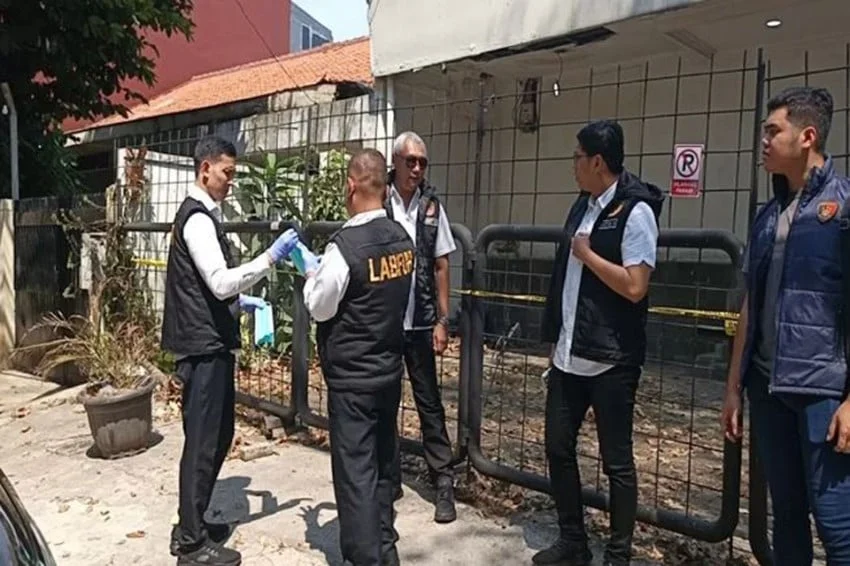
- Exhumation Day (August 12, 2026): A multi-disciplinary team, including forensic pathologists from the Indonesian Association of Forensic and Medicolegal Doctors (PDFMI), experts from Puslabfor Polri, and academic consultants, performed the exhumation. The procedure lasted approximately three and a half hours, commencing at 09:30 AM and concluding in the early afternoon.
- Forensic Analysis Phase (August – September 2026): Following the exhumation, biological samples were transported to advanced laboratory facilities for toxicology, histology, and other forensic tests.
The Science of Forensic Exhumation
Forensic experts note that exhumations are rarely straightforward, especially when considerable time has elapsed between the original burial and the secondary examination. The process involves more than just the recovery of remains; it requires a meticulous environmental assessment of the burial site, an analysis of the decomposition process, and the preservation of tissue samples that may hold traces of toxins or physical trauma that were potentially missed during the initial post-mortem.
Commissioner Iman explained that the duration of the investigation was dictated by the necessity of scientific precision. "The samples taken were numerous and required highly specific testing protocols," Iman stated. "We have prioritized the integrity of the evidence to ensure that the final determination is something that can be held up in a court of law with absolute scientific confidence."
The involvement of the PDFMI underscores the importance of the case. By incorporating independent academic and professional bodies, the police are attempting to mitigate public skepticism and ensure that the final autopsy report is perceived as an objective, non-partisan assessment of the facts.
Context and Implications
The case of Sutrimo has drawn significant attention due to his proximity to Febrie Adriansyah, a prominent figure in the Indonesian judicial landscape. The position of "Karumga" (Head of Household) involves managing the security and logistics of a high-ranking official’s private residence. Consequently, any investigation involving such an individual inevitably attracts scrutiny regarding the potential for external interference or threats related to the official’s work on sensitive corruption cases.
While no suspects have been named to date, the transition of the case to the investigation phase suggests that the police are looking beyond a natural cause of death. Legal analysts have pointed out that the findings of the forensic report will be the primary pivot point for the investigation. If the autopsy reveals evidence of foul play—such as chemical poisoning, blunt force trauma, or signs of struggle that were previously obscured—the investigation will likely shift toward identifying perpetrators and establishing a motive.
The Role of Puslabfor and Independent Oversight
The role of the Puslabfor Polri is paramount in this investigation. As the primary forensic arm of the Indonesian police, their findings carry significant legal weight. However, the inclusion of external academic partners serves as a safeguard. In cases where the victim has ties to the law enforcement or judicial system, the perception of "conflict of interest" can often undermine public trust. By inviting external experts, the Polda Metro Jaya is attempting to demonstrate a commitment to transparency.
The public expectation for this announcement is high. For the family of the deceased, the results represent a search for closure. For the legal community, the outcome will serve as a test of the police’s ability to conduct an impartial investigation when the subject matter touches upon the internal operations of the Attorney General’s Office.
Challenges in Forensic Pathological Investigations
Forensic pathology in Indonesia faces several logistical challenges, particularly regarding the preservation of evidence in tropical climates and the availability of specialized testing for rare substances. The delay in announcing the results, as noted by investigators, is a standard feature of high-stakes investigations. Modern toxicology, for instance, requires sophisticated equipment to detect synthetic compounds or rare toxins that may have been administered long ago.
Furthermore, the "chain of custody" for evidence collected during the August 12 exhumation must be flawless. Any breach in the handling of these samples could render the evidence inadmissible in court. Investigators have emphasized that every step of the process has been documented to meet the standards required by the judiciary.
Future Outlook and Legal Ramifications
As the Polda Metro Jaya prepares to make its findings public, the legal implications are twofold. First, if the forensic report concludes that the death was a result of a criminal act, it will necessitate an immediate expansion of the investigative team to pursue suspects. This could involve subpoenaing associates, analyzing communication records, and reconstructing the events leading up to the date of death.
Second, if the findings indicate that the death was due to natural causes, the police must then manage the narrative to ensure that the public understands the scientific basis for this conclusion. Given the high profile of the parties involved, a conclusion of "natural causes" will likely face rigorous questioning from media and advocacy groups, requiring the police to be as transparent as possible with their methodology.
The upcoming announcement will likely serve as the definitive marker for the direction of the case. Whether it leads to the identification of suspects or provides closure regarding a tragic natural death, the investigation into Sutrimo’s passing remains a significant case study in the intersection of forensic science, criminal justice, and public accountability in Indonesia.
As the nation waits for the official statement from Polda Metro Jaya, the legal community remains focused on the upcoming findings. The rigorous standard applied to this exhumation reflects a broader attempt by the police to modernize their investigative techniques and maintain credibility in an era of heightened public scrutiny. The final report is not merely a summary of medical findings; it is a critical piece of evidence that will ultimately determine the future of this complex and sensitive case.