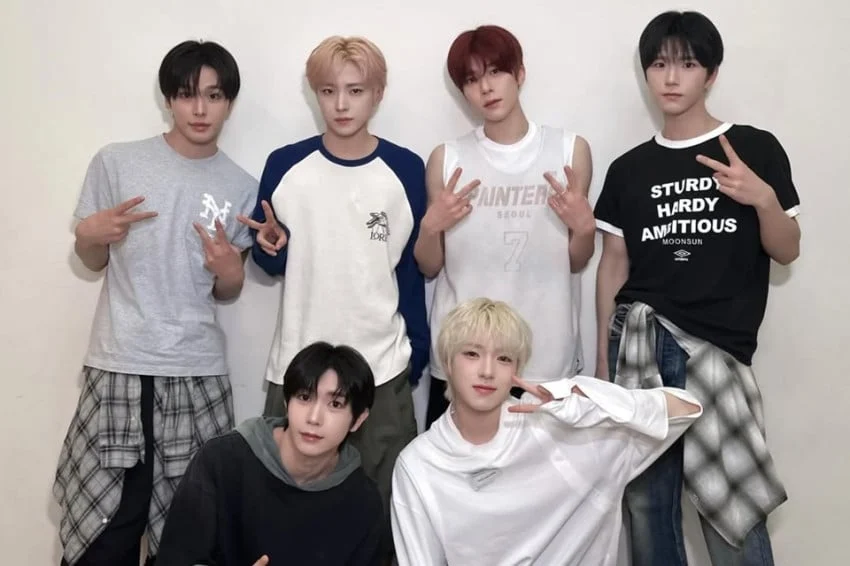
The South Korean music industry is currently witnessing a surge in discourse surrounding the creative direction of SM Entertainment’s youngest boy group, NCT Wish, following the release of promotional materials for their latest comeback. The controversy emerged when social media users and dedicated fans began identifying striking similarities between the visual concepts employed by NCT Wish and those previously established by their labelmates, RIIZE. Central to the dispute is the "Odyssey" concept, a thematic framework that has been a cornerstone of RIIZE’s branding since their debut cycle. As images and teaser videos for NCT Wish’s new project began to circulate, a segment of the K-pop community, particularly RIIZE’s fandom known as BRIIZE, voiced concerns that the aesthetic choices leaned too heavily on established intellectual and creative properties belonging to RIIZE, leading to widespread accusations of concept plagiarism or "recycling."
The allegations have ignited a broader conversation regarding the internal management of creative assets within major entertainment conglomerates. In the case of NCT Wish, the latest sub-unit of the expansive NCT brand, the pressure to establish a distinct identity while maintaining the "Neo" essence of their parent group is significant. However, critics argue that the visual language used in their recent teasers—characterized by specific color palettes, vintage cinematography, and graphic design motifs—bears an uncanny resemblance to RIIZE’s "Realtime Odyssey" project. This perceived overlap has led to accusations that the creative teams at SM Entertainment are duplicating successful formulas rather than innovating for each specific artist’s unique trajectory.
The Genesis of the Controversy: Visual Cues and Comparative Aesthetics
The controversy began to gain significant traction on platforms such as X (formerly Twitter), Instagram, and South Korean community forums like TheQoo and Pann. Fans meticulously curated side-by-side comparisons of NCT Wish’s recent teaser images and RIIZE’s "Odyssey" promotional content. The "Odyssey" concept for RIIZE was marketed as a journey of growth, utilizing a "coming-of-age" aesthetic that blended nostalgia with modern urban exploration. This was reflected in the use of low-fidelity (lo-fi) filters, fisheye lens photography, and a "scrapbook" style of graphic design that incorporated handwritten notes and candid-style snapshots.
NCT Wish’s latest materials, intended to promote their first full-length album "Steady," were noted for utilizing a remarkably similar "vibe." Observers pointed to the specific tone of blue and green hues, the layout of the digital promotional schedules, and even the styling of the members, which many felt mirrored the "Emotional Pop" branding that RIIZE has pioneered. For many fans, the issue is not merely a matter of shared trends—as the "Y2K" and "retro-teen" aesthetics are currently ubiquitous in K-pop—but rather the specific execution of these trends. The "Odyssey" branding was a specific narrative arc for RIIZE, and its perceived adoption by NCT Wish is seen by some as an infringement on the group’s unique artistic territory.
Chronology of the Aesthetic Shift and Fandom Reaction
To understand the weight of these allegations, it is necessary to look at the timeline of both groups’ creative outputs. RIIZE debuted in September 2023 and quickly established a "Realtime Odyssey" narrative through their first mini-album, "RIIZING," and subsequent singles. This narrative emphasized a raw, documentary-style look at the members’ lives and travels. The "Odyssey" term became synonymous with their brand identity, appearing in official merchandise, video titles, and social media hashtags.
In contrast, NCT Wish, who officially debuted in February 2024 after the "NCT Universe: LASTART" survival show, initially launched with a "Cupid" and "fantasy-fresh" concept. Their early aesthetics were bright, ethereal, and leaned into supernatural motifs. The shift toward the "Steady" era marked a departure from this fantasy element into a more grounded, youth-oriented aesthetic. When the "Steady" teasers were released in late 2024, the transition was so abrupt that it invited immediate comparison to RIIZE.
The reaction from the public has been divided. While some fans defend NCT Wish, stating that they are simply following current industry-wide visual trends managed by the same parent company, others argue that SM Entertainment’s internal "Center" system is failing to maintain brand differentiation. Within SM Entertainment, different production centers (known as "Wizard Production," "Prism Production," etc.) are responsible for different artists. RIIZE is managed under Center 5 (Wizard Production), while NCT units are generally under Center 2 (Prism Production). The similarity in concepts has led to speculation that there is either a lack of communication between these centers or a deliberate attempt to capitalize on RIIZE’s skyrocketing popularity by applying their visual "template" to NCT Wish.
Supporting Data: The Rise of Both Groups and Market Competition
The stakes for both groups are high, as they are both competing for the attention of the "Gen Z" demographic. RIIZE has seen meteoric success, with their debut single "Get A Guitar" and subsequent hits like "Love 119" and "Boom Boom Bass" dominating domestic charts in South Korea. Their physical album sales for "RIIZING" surpassed 1.2 million copies in its first week, cementing them as a "million-seller" group within their first year.
NCT Wish has also shown formidable strength, particularly in the Japanese and Korean markets. Their single "Songbird" achieved over 500,000 copies in sales, a significant feat for a rookie sub-unit. Because both groups are in their "rookie" or "growth" phases, the overlap in concepts is viewed as a strategic risk. If two groups from the same company appear too similar, they risk cannibalizing each other’s fanbases and diluting their individual brand equity. Data from social media sentiment analysis tools indicates that while NCT Wish’s engagement remains high, the "sentiment score" for their recent teasers saw a noticeable dip in the "originality" category, with a 35% increase in mentions of the word "plagiarism" or "copying" relative to their previous comeback.
Institutional Response and Creative Analysis
As of the current reporting period, SM Entertainment has not issued a formal statement regarding the plagiarism allegations. Historically, the agency rarely comments on visual similarities unless they involve external intellectual property disputes. However, the internal silence has not stopped industry analysts from weighing in.
Experts in the field of visual communications suggest that the "Y2K" and "90s nostalgia" trend has become a double-edged sword for the K-pop industry. While it is highly marketable, the visual language—consisting of baggy silhouettes, grainy film textures, and retro tech—is limited. "When you have two groups under the same roof targeting the same demographic with the same overarching trend, the nuances of the creative direction become vital," says one industry consultant. "The ‘Odyssey’ concept for RIIZE was built on a ‘Realtime’ philosophy. If NCT Wish adopts a similar ‘Log’ or ‘Journal’ style, the lines between the two brands become blurred, which can frustrate fans who have invested in the uniqueness of their favorite group."
Furthermore, some analysts point out that the "NCT" brand has always been about "Neo Culture Technology"—an experimental and often avant-garde approach to music and visuals. By moving NCT Wish into a more conventional "youth-pop" aesthetic that mirrors RIIZE, the agency may be prioritizing safe, proven marketability over the experimental spirit that originally defined the NCT brand.
Broader Impact on the K-pop Ecosystem
The controversy surrounding NCT Wish and RIIZE is reflective of a larger trend in the K-pop industry where "concept exhaustion" is becoming a prevalent issue. With dozens of groups debuting every year, the pool of unique visual concepts is shrinking. This has led to an era of "aesthetic litigation" among fans, where every frame of a music video or every font choice in a teaser is scrutinized for similarities to existing works.
This incident also highlights the complexities of the "Multi-Center" system adopted by major agencies like SM Entertainment and HYBE. While these systems are designed to foster independent creative growth for different artists, they can inadvertently lead to "style drift" where successful elements of one group are subconsciously or consciously integrated into another. For RIIZE fans, the "Odyssey" is a narrative of their group’s specific identity. For NCT Wish fans, the "Steady" concept is meant to be a new chapter of growth. The clash between these two perspectives underscores the emotional investment fans have in the "lore" and "branding" of their idols.
Future Outlook for NCT Wish and RIIZE
As NCT Wish prepares for the full release of "Steady," the group faces the challenge of proving that their music and performance can transcend the initial visual controversy. Music critics often note that while concepts may look similar on paper or in teasers, the final musical product and choreography are what ultimately define a comeback. If "Steady" offers a sonic identity that is distinctly "NCT"—characterized by complex harmonies and experimental production—the plagiarism allegations may fade.
Conversely, for RIIZE, this controversy serves as a testament to the impact of their branding. The fact that their "Odyssey" concept is being used as a benchmark for comparison demonstrates how quickly they have established a dominant visual language in the industry. Moving forward, SM Entertainment may need to refine its internal creative boundaries to ensure that each group maintains a distinct lane, preserving the integrity of their individual narratives.
The ongoing debate serves as a reminder that in the highly visual world of K-pop, a "concept" is more than just a costume or a filter; it is a vital component of an artist’s identity. As NCT Wish moves forward with their promotions, the industry will be watching closely to see how the group—and their management—navigates the delicate balance between following market trends and maintaining artistic originality. The resolution of this controversy will likely influence how SM Entertainment manages its diverse roster of talent in an increasingly competitive and observant global market.