
The Indonesian television landscape continues to offer high-octane entertainment for film enthusiasts as Trans TV schedules the 2022 action-thriller Memory to lead its prime-time programming. Scheduled to air at 21:00 WIB on Wednesday, April 15, 2026, the film brings together a powerhouse cast including Liam Neeson, Guy Pearce, and Monica Bellucci. This broadcast is part of the long-running "Bioskop Trans TV" segment, which has become a staple for domestic audiences seeking international cinematic experiences from the comfort of their homes. Following the conclusion of Memory, the network will continue its thriller-themed night with a screening of The Desperate Hour at 23:00 WIB, ensuring a continuous block of suspenseful storytelling for late-night viewers.
Memory serves as a significant entry in the later stage of Liam Neeson’s career, characterized by his transition into the "elder statesman of action" archetype. Directed by Martin Campbell, the veteran filmmaker behind the James Bond classics GoldenEye and Casino Royale, the film is an American reimagining of the 2003 Belgian film De Zaak Alzheimer (The Memory of a Killer). Both films are based on the acclaimed novel by Jef Geeraerts. The narrative weaves a complex web of morality, cognitive decline, and the dark underbelly of human trafficking, setting it apart from standard "revenge" thrillers through its focus on a protagonist who is losing his most vital tool: his mind.
The Narrative Core: A Hitman’s Final Stand
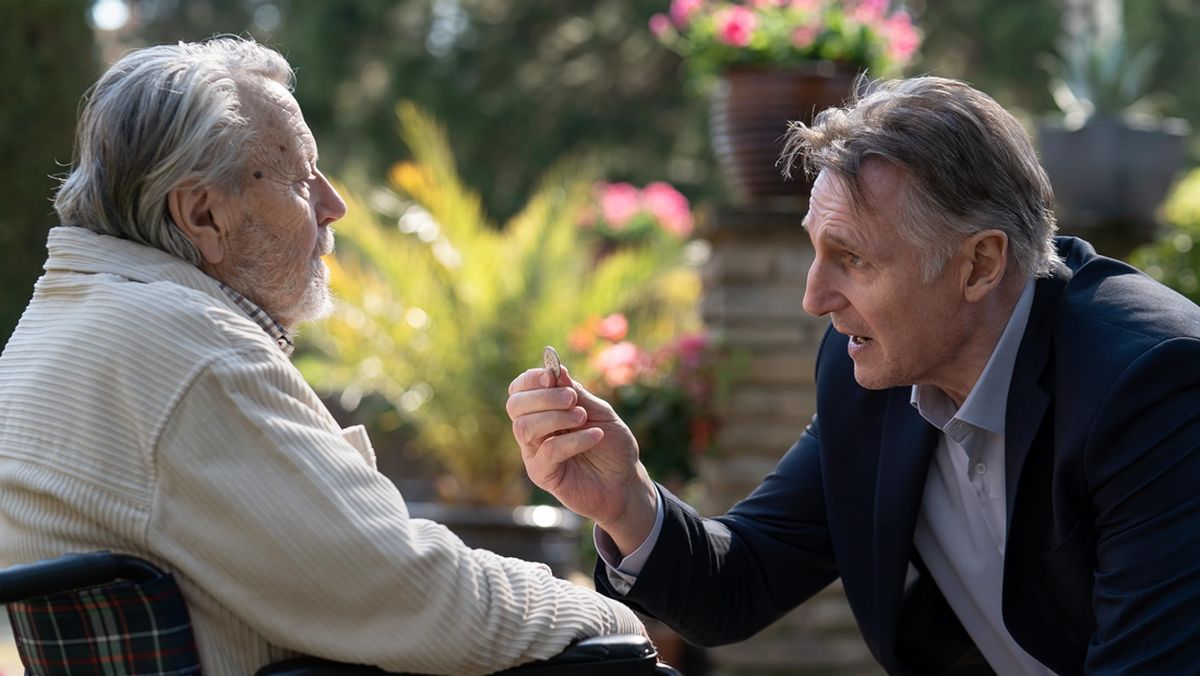
The story follows Alex Lewis (portrayed by Liam Neeson), an expert assassin operating in Mexico who is beginning to show the early, debilitating symptoms of Alzheimer’s disease. This condition is not merely a plot device but a central antagonist that mirrors the physical threats Lewis faces. The stakes are personal for Lewis; his brother is already institutionalized in a nursing home suffering from advanced dementia, providing a grim preview of Alex’s own inevitable future. Despite his deteriorating mental state, Lewis is tasked with a new contract by Davana Sealman (Monica Bellucci), a wealthy and ruthless real estate mogul with deep connections to the criminal underworld.
The assignment requires Lewis to travel to El Paso, Texas—the city where he grew up—to eliminate a construction worker named Ellis Van Camp (Scot Williams). While Lewis successfully executes the first part of his mission, he discovers a secondary target that crosses his strictly maintained ethical line: a young girl named Beatriz (Mia Sanchez). Beatriz is a key witness in a human trafficking investigation and has already suffered immense trauma at the hands of powerful men. Lewis, adhering to a personal code that "children are off-limits," refuses to complete the contract. This act of defiance sets him on a collision course with both his employers and a dedicated FBI task force led by Agent Vincent Serra (Guy Pearce).
Parallel Investigations and the Failure of Justice
While Lewis wages a private war against his former employers, Agent Vincent Serra operates within the legal framework of the FBI’s Child Exploitation Task Force. Serra is portrayed as a man frustrated by a system that often protects the wealthy and influential while failing the most vulnerable victims. His path crosses with Lewis when Beatriz, the girl Lewis refused to kill, is eventually murdered by another hitman named Mauricio.
The film explores the unconventional and involuntary partnership between the lawman and the outlaw. As Lewis’s memory begins to fracture, he leaves behind clues for Serra, hoping the FBI can finish the job he started—dismantling the trafficking ring protected by Davana Sealman. The tension of the film is derived from this race against time; Lewis must use his fading lucidity to exact justice before his mind completely betrays him or the authorities close in on his location.
Production Background and Cinematic Context
The decision to remake the Belgian original for an American audience was driven by the timeless nature of its themes. Martin Campbell’s direction brings a gritty, noir-inspired aesthetic to the Texas-Mexico border setting. Unlike the more stylized action seen in the Taken franchise, Memory leans into the physical and psychological toll of violence. The cinematography emphasizes the isolation of the characters, using the stark landscapes of El Paso to reflect the emptiness Alex Lewis feels as his memories vanish.
The casting of Monica Bellucci as the primary antagonist was a notable departure from her typical roles. As Davana Sealman, Bellucci portrays a chillingly pragmatic villain who views human lives as mere obstacles to her corporate and personal interests. Guy Pearce provides a grounded counterpoint to Neeson’s rogue assassin, representing the moral fatigue of a public servant who realizes that the law and justice are not always synonymous.
Chronology of Key Events in the Film
To better understand the pacing of the 114-minute thriller, the following chronology outlines the pivotal moments that define the narrative:
- The Mexico Introduction: Alex Lewis is introduced as an efficient but aging hitman. He completes a job but shows the first signs of memory loss, forgetting where he left his car keys.
- The El Paso Contract: Lewis is hired by Davana Sealman’s associates. He travels to Texas and successfully assassinates Ellis Van Camp, recovering a flash drive containing sensitive data.
- The Moral Refusal: Lewis discovers his second target is the young Beatriz. He breaks into the facility where she is held but decides to spare her life, officially breaking his contract.
- The FBI Intervention: Agent Vincent Serra’s undercover operation goes wrong, leading to the death of a trafficking kingpin but leaving Beatriz vulnerable.
- The Murder of Beatriz: Despite Lewis’s efforts to protect her by threatening the Sealman organization, Beatriz is killed by Mauricio, a rival assassin.
- The Retaliation: Lewis begins a systematic hunt for everyone involved in Beatriz’s death, despite his worsening cognitive state. He frequently forgets his mission or his location, relying on notes written on his skin.
- The Climax: A final confrontation involving Lewis, the FBI, and the Sealman security detail reveals the depth of the corruption within the local government and law enforcement.
Supporting Data and Critical Reception
Upon its initial theatrical release in April 2022, Memory received mixed reviews from critics but found a dedicated audience on streaming platforms and cable television. On the review aggregator Rotten Tomatoes, the film maintains a critic score that reflects the "action-fatigue" some felt toward the genre, yet audience scores remained higher, praising Neeson’s vulnerability and the film’s darker tone.
Financially, the film was produced with an estimated budget of $30 million. While its domestic box office performance was modest, earning roughly $14 million worldwide during its initial run, its longevity has been proven through international licensing deals. Its broadcast on Trans TV in 2026 highlights the enduring popularity of Liam Neeson in the Southeast Asian market, where his "tough-guy" persona remains a significant draw for television ratings.
Thematic Analysis: Memory, Guilt, and Redemption
At its core, Memory is a meditation on the nature of identity. If a man’s identity is the sum of his experiences and memories, what remains when those memories disappear? For Alex Lewis, the loss of memory is both a curse and a strange form of mercy. It forces him to live in a perpetual present where his only guiding light is a fading sense of right and wrong.
The film also serves as a critique of institutional corruption. By placing the villainous Davana Sealman in a position of high social standing, the story suggests that the most dangerous criminals are often those who operate in plain sight, protected by legal teams and political influence. The frustration felt by Guy Pearce’s character, Agent Serra, mirrors a real-world sentiment regarding the difficulties of prosecuting high-level human trafficking cases.
Broader Implications for the Action Genre
Memory represents a shift in the "aging hero" subgenre. Unlike films that portray older protagonists as indestructible, Memory acknowledges the reality of biological decline. This vulnerability adds a layer of suspense that is often missing from contemporary action cinema. When Alex Lewis forgets his medication or fails to recognize a contact, the audience feels a sense of genuine peril that transcends the typical choreographed shootout.
For Trans TV, the inclusion of such titles in their "Bioskop" program serves a strategic purpose. By airing films that blend action with complex social themes, the network caters to a demographic that enjoys spectacle but also appreciates narrative depth. The pairing of Memory with The Desperate Hour (a film starring Naomi Watts that deals with a school shooting) suggests a curated evening of "Social Thrillers," focusing on individuals caught in systemic crises.
Conclusion for the Viewer
As Bioskop Trans TV prepares to air Memory tonight at 21:00 WIB, viewers can expect a film that is as much a character study as it is a crime thriller. Liam Neeson’s performance is a poignant reminder of his range, moving beyond the invincible hero to portray a man struggling to hold onto his soul while his mind slips away. For audiences in Indonesia, the film offers not only an evening of entertainment but also a grim look at the complexities of justice in a world where the lines between the "good guys" and "bad guys" are increasingly blurred.
With its strong supporting cast, veteran direction, and a story that tackles heavy themes of exploitation and cognitive illness, Memory remains a standout title in the 2020s thriller landscape. Viewers are encouraged to tune in early to catch the beginning of Lewis’s journey, a path that leads from the shadows of the criminal underworld to a final, desperate attempt at redemption.