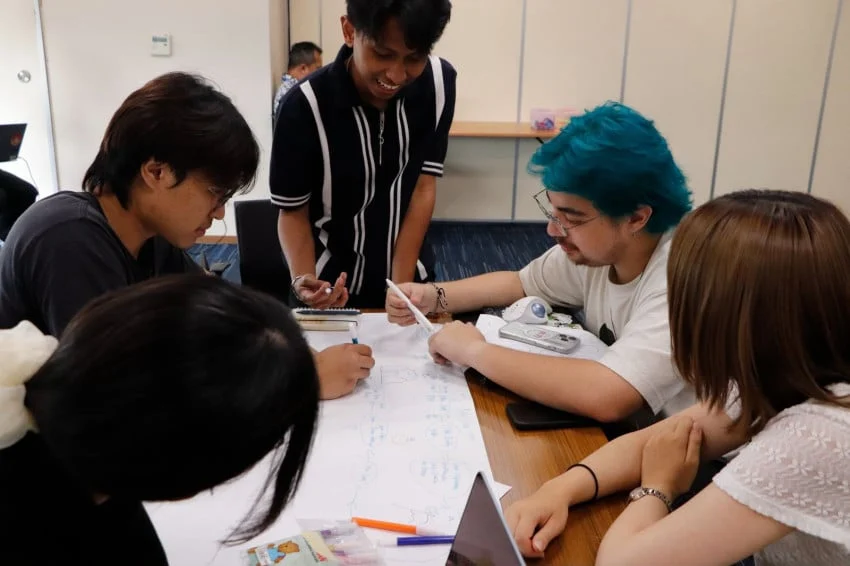
In a landmark collaboration aimed at addressing pressing environmental challenges through technological ingenuity, a consortium of students from Indonesia and Japan has unveiled two groundbreaking circular economy initiatives. Developed under the Building Entrepreneurial Mindset for Sustainable Technology and Society (BESTS) program, these projects transform discarded fishing nets and plastic waste into valuable economic assets, offering a potential blueprint for sustainable industrial practices in remote regions like the Tanimbar Islands.
The initiative, a joint venture between Sampoerna University and the Institute of Science Tokyo, represents a significant shift in academic pedagogy, moving beyond theoretical frameworks to provide hands-on solutions for real-world environmental degradation. By integrating cross-border knowledge exchange with practical engineering, the program addresses the dual challenges of marine pollution and energy scarcity in Indonesia’s outer islands.
The Genesis of the BESTS Program
The BESTS 2026 program was conceived as a response to the growing global mandate for sustainability. With the increasing urgency of the climate crisis, higher education institutions are under pressure to produce graduates who are not only technically proficient but also socially and environmentally conscious. The collaboration between Sampoerna University and the Institute of Science Tokyo was designed to bridge the gap between academic research and market-ready solutions.
According to Farid Triawan, Dean of the Faculty of Engineering and Technology at Sampoerna University, the program serves as a bridge for students to step out of the classroom. "BESTS provides students with the critical opportunity to observe how sustainability issues permeate both local communities and the global industrial landscape," Triawan noted. The inclusion of industry stakeholders, such as INPEX Masela Ltd., has been pivotal in ensuring that these academic projects are aligned with actual industry requirements and logistical realities.
Circular Economy for Marine Ecosystems: The Tanimbar Project
The Tanimbar Islands, located in the Maluku province of Indonesia, rely heavily on fishing as a primary economic driver. However, the accumulation of "ghost gear"—discarded or lost fishing nets—has become a significant threat to marine biodiversity. These non-biodegradable synthetic nets continue to trap marine life, leading to a phenomenon known as "ghost fishing," which severely depletes fish stocks and damages coral reefs.
A student team comprising Chintya Ramadhani, Keyzia Ariola Putri, Stivan Delon Sahertian, Tsukui Shun, and Mardo Malawau developed the project titled "A Circular Economy Business for Fishing-Net Waste in Tanimbar." Their methodology focuses on the systematic recovery and chemical recycling of these nets. By processing the discarded nylon and polyethylene nets, the team aims to create a closed-loop system where waste is repurposed into raw materials for new, durable, and environmentally friendly fishing equipment.
This project is not merely an environmental endeavor but an economic one. By creating a supply chain for waste collection, the students aim to incentivize local fishermen to participate in the recovery process, effectively turning a hazardous waste product into a source of secondary income for coastal communities.
Transforming Plastic Waste into Energy: The Eco-Fuel Initiative
While the Tanimbar project targets marine waste, the Eco-Fuel initiative addresses the challenge of terrestrial plastic pollution and energy poverty. Led by students Harsen Ramadhan, Luthfi Ahmad, Nona Brillyanti, Koki Nakazaki, and Hiroki Nozaki, this team explored the application of pyrolysis technology to manage non-recyclable, low-value plastic waste.
Pyrolysis, a thermochemical decomposition process, involves heating plastic waste in an oxygen-free environment to break down polymers into liquid fuel. The team’s goal is to convert plastic trash—which often clogs drainage systems or ends up in landfills—into an alternative fuel source for agricultural machinery.
The implications for rural Indonesian farmers are significant. High fuel costs frequently cut into the profit margins of small-scale agricultural operations. By providing a decentralized, localized method of producing fuel from waste, the Eco-Fuel project seeks to alleviate both the waste management burden and the financial pressure on farmers. This model of "distributed energy production" could serve as a template for other regions in Southeast Asia struggling with similar infrastructural limitations.
Data and Environmental Context
To understand the significance of these projects, one must look at the scale of the waste problem in Indonesia. According to data from the Ministry of Environment and Forestry, Indonesia produces approximately 67 million tons of waste annually, with a significant percentage being plastic that is either mismanaged or dumped into the ocean.
The Tanimbar region, being an archipelago, is particularly vulnerable to the accumulation of marine debris. The impact of ghost nets on local fisheries is estimated to contribute to a loss of approximately 5-10% of annual catch in specific coastal regions due to the degradation of the underwater habitat. By addressing this, the student-led initiatives align with Indonesia’s National Action Plan for Marine Plastic Debris, which targets a 70% reduction in marine plastic waste by 2025.
Furthermore, the pyrolysis project addresses the energy sector’s transition toward renewables. While plastic-to-fuel is not a carbon-neutral solution, it is classified as a "waste-to-energy" transition technology that reduces the need for virgin fossil fuel extraction and addresses the immediate environmental impact of plastic pollution.
The Role of Industry Partnerships
The involvement of INPEX Masela Ltd. underscores the importance of the private sector in supporting university-led innovation. Industry partners bring the necessary capital, technical expertise, and operational guidance to scale laboratory projects into pilot programs.
In the context of the BESTS 2026 program, INPEX Masela Ltd. provided the students with insights into the regulatory frameworks of the Indonesian energy sector, as well as the logistical challenges of operating in the Tanimbar region. This synergy ensures that the solutions developed by the students are not only theoretically sound but also commercially viable and legally compliant.
Implications for Future Engineering Education
The success of the BESTS 2026 program signals a potential shift in how engineering curricula are structured globally. The emphasis on cross-disciplinary and cross-border collaboration is essential in a world where environmental problems do not respect national boundaries.
By engaging Japanese and Indonesian students in a shared project, the program facilitates the exchange of technological expertise. Japan, with its advanced waste management and recycling infrastructure, provides a model for high-efficiency processing, while Indonesian students provide critical context regarding the socio-economic conditions and logistical hurdles of implementing these technologies in a developing nation.
Challenges and Future Outlook
Despite the promise shown by these initiatives, scaling them remains a challenge. For the fishing-net recycling project, the logistics of collecting and transporting bulky waste from remote islands to a processing facility present a significant financial barrier. Similarly, the pyrolysis process requires rigorous safety standards and consistent feedstock quality to produce fuel that will not damage agricultural equipment.
However, the student teams remain optimistic. The next phase for these projects involves creating scalable prototypes and engaging with local government bodies in Tanimbar to secure the necessary support for pilot implementation. If successful, these initiatives could pave the way for a more sustainable, circular economy in Indonesia, where waste is treated as a resource rather than a liability.
The BESTS 2026 program is a testament to the power of youth-led innovation. As global leaders continue to negotiate climate goals, it is often the localized, practical solutions developed by the next generation of engineers that will drive the most meaningful change. By turning "trash into treasure," these students are proving that with the right mindset and collaborative spirit, the barriers to a sustainable future can be dismantled, one discarded fishing net and one piece of plastic at a time.