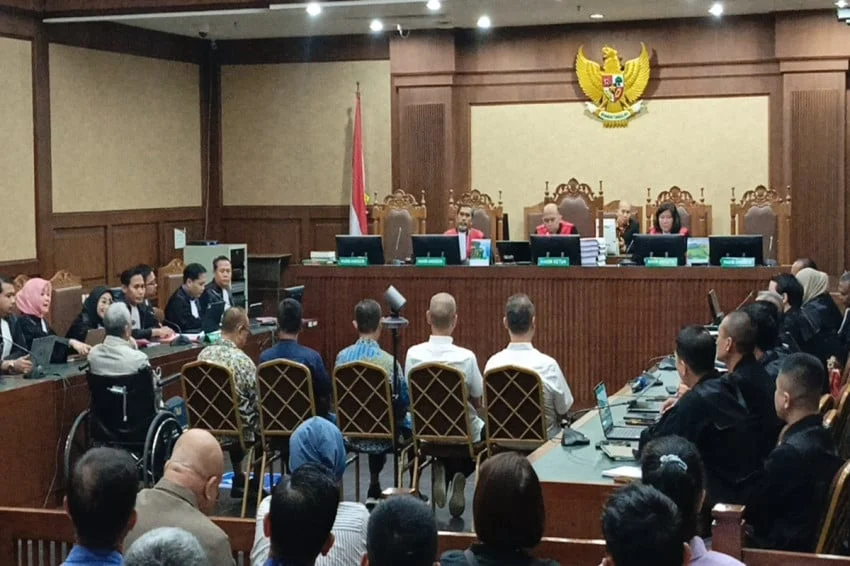
The corruption trial surrounding the mismanagement of crude oil procurement and refinery products at Pertamina Energy Trading Ltd (Petral) officially commenced at the Jakarta Corruption Court on Friday, November 27, 2026. The proceedings mark a pivotal moment in Indonesia’s ongoing efforts to clean up state-owned enterprises (SOEs) involved in the strategic energy sector. Prosecutors have formally indicted six former high-ranking officials for their roles in a scheme that allegedly caused a staggering financial loss of approximately IDR 6.1 trillion (USD 544.89 million) to the Indonesian state.
The defendants standing trial include Bambang Irianto, the former President Director of Pertamina Energy Trading Ltd (Petral); Agus Bactiar, the former Head of Trading at Pertamina Energy Services Pte Ltd (PES); Mulyono, the former Senior Trader at PES; Nurdin Prayitno, the former Crude Trading Manager at PES; Tafkir Husni, the former Vice President of the Integrated Supply Chain (ISC) at PT Pertamina (Persero); and Irawan Prakoso, the former Director of Global Energy Resources Ltd. These individuals are accused of orchestration and systemic abuse of power that allowed for the misappropriation of funds through manipulated procurement channels.
The Anatomy of the Alleged Corruption Scheme
According to the indictment read by the prosecution, the six defendants operated in coordination with Muhammad Riza Chalid, a prominent figure in the energy sector who currently remains a fugitive. Riza Chalid is identified as the beneficial owner of several corporate entities—Global Energy Resource Private Limited, Gold Manor International Limited, and Veritail Oil Limited—all of which were allegedly utilized to facilitate the illicit procurement activities.
The core of the accusation centers on the manipulation of the crude oil supply chain. By circumventing standard procurement procedures and favoring specific suppliers linked to the Riza Chalid-controlled companies, the defendants allegedly inflated costs and siphoned off profits that should have accrued to the state. The prosecution detailed that the total financial damage, calculated at IDR 6,124,949,287,377.5, represents a significant drain on the state’s fiscal capacity, specifically impacting the operational efficiency and financial health of PT Pertamina (Persero) during the period in which these activities took place.
Chronology and the Path to Prosecution
The investigation into Petral—a subsidiary previously based in Singapore and Hong Kong—has been long-standing. For years, Petral was the subject of public scrutiny and political discourse regarding its opacity and the influence of "oil mafias" on Indonesia’s energy imports.
- Historical Context (Pre-2015): Petral held a monopoly on Pertamina’s crude oil and petroleum product imports. Critics frequently argued that the lack of transparency in its tender process led to inflated pricing.
- Dissolution (2015): The Indonesian government officially disbanded Petral in 2015 as part of a wider reform effort to improve the governance of the national oil and gas sector. The dissolution was intended to cut off the intermediaries that had long been accused of price gouging.
- Extended Investigation (2016–2025): Following the dissolution, auditors and law enforcement agencies, including the Corruption Eradication Commission (KPK) and the Attorney General’s Office, conducted extensive forensic audits. The complexity of offshore financial transactions and international corporate structures significantly slowed the investigation.
- The Fugitive Status (2025): The Attorney General’s Office officially declared Muhammad Riza Chalid a wanted person (DPO) in 2025 after he failed to respond to multiple summonses regarding the case. His absence from the current trial highlights the challenges in prosecuting high-profile individuals with international reach.
- Indictment (November 2026): The formal reading of the indictment in late November 2026 serves as the culmination of years of evidence gathering, marking the transition from investigation to formal litigation.
Financial and Operational Implications
The scale of the loss—IDR 6.1 trillion—is substantial, even by the standards of large-scale corruption in Indonesia. Economists and energy analysts have noted that such losses do not merely represent a theft of cash; they represent an artificial increase in the cost of energy production and procurement. When state-owned companies are forced to pay inflated prices for raw materials, the financial burden is often passed on to the public in the form of higher fuel prices or the need for increased government subsidies to cover the deficit.
Furthermore, the Petral case has long been viewed as a symbol of the "institutional capture" that plagued Indonesia’s energy sector for decades. The involvement of multiple layers of management—from the Director level down to trading managers—suggests that the corruption was not an isolated incident but a systemic failure of internal controls and oversight mechanisms within both Pertamina and its overseas subsidiaries.

The Legal Strategy and Defense
While the defense teams for the six defendants have yet to present their full counter-arguments, preliminary indications from their legal representatives suggest they will contest the calculations of the "state loss" and argue that the procurement decisions were made in accordance with the business judgment rule, albeit within a highly volatile global oil market.
Legal experts observing the case point out that the primary hurdle for the prosecution will be proving the "illicit intent" behind the transactions. Given the nature of international commodity trading, where prices fluctuate rapidly, the defense may attempt to argue that the losses were market-driven rather than the result of criminal collusion. However, the prosecution is banking on the documented relationship between the defendants and the shell companies owned by the fugitive Riza Chalid as evidence of a pre-meditated scheme to defraud the state.
Broader Impact on State-Owned Enterprises
The Petral trial is being closely watched by the Ministry of State-Owned Enterprises (BUMN) as it continues to push for transparency and good corporate governance (GCG) across all state entities. The case serves as a stark reminder of the risks associated with overseas subsidiaries that operate with limited oversight from domestic regulatory bodies.
Since the scandal first broke, Pertamina has undergone significant restructuring. The current administration has implemented stricter audit protocols, digitized the procurement process to ensure competitive bidding, and consolidated its supply chain operations back into the main entity in Jakarta to minimize the influence of offshore intermediaries.
The trial is expected to last for several months, with dozens of witnesses, including current and former Pertamina executives, likely to be called to the stand. The outcome of this trial will be a bellwether for the judiciary’s ability to handle complex, transnational white-collar crimes. If the prosecution successfully secures convictions, it will provide a sense of closure to a saga that has tainted the reputation of Indonesia’s energy sector for over a decade.
Conclusion
The corruption trial of the six former Petral and Pertamina officials represents a significant milestone in Indonesia’s battle against systemic graft. By bringing this case to the Jakarta Corruption Court, authorities are signaling that no amount of time or complexity will prevent the investigation of past wrongdoing.
As the trial progresses, the public and international investors alike will be looking for transparency and a fair legal process. The ultimate impact of the verdict will transcend the individuals on trial; it will be an evaluation of Indonesia’s commitment to upholding the rule of law within its most vital economic sectors. The pursuit of the fugitive Riza Chalid remains a critical component of this legal effort, and his eventual apprehension could provide the final missing pieces of the puzzle regarding the full extent of the Petral corruption network. For now, the legal proceedings in Jakarta stand as a cautionary tale of the dangers of unchecked power and the vital necessity of rigorous, transparent, and accountable management in the nation’s energy infrastructure.