
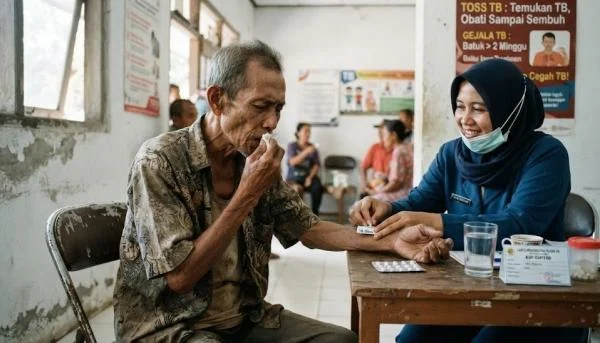
The fight against tuberculosis (TBC) in Indonesia’s capital, Jakarta, has entered a critical phase as health authorities shift their strategic focus from reactive treatment to proactive prevention. While the city has historically prioritized the clinical management of symptomatic patients, current public health data indicates that the most significant bottleneck in eliminating the disease lies in the systemic failure to identify and treat individuals who have had close contact with active TBC patients. Recent figures from the Ministry of Health (Kemenkes) reveal a notable, albeit insufficient, increase in the administration of Tuberculosis Preventive Therapy (TPT), a measure designed to stop latent infections from manifesting into active, contagious disease.
The Shift Toward Prophylactic Intervention
For decades, Indonesia’s TBC strategy was centered on the "Detect and Treat" model. This approach focused on diagnostic screening and ensuring that those identified as suffering from the disease completed their full course of antibiotic treatment. While this remains essential, the Ministry of Health has increasingly emphasized that this approach alone is mathematically incapable of ending the epidemic.
According to Deputy Minister of Health Dr. Benjamin Paulus Octavianus, the core challenge currently facing the healthcare infrastructure is the "prevention gap." In an official statement issued this past Friday, Dr. Benjamin highlighted that while the country has demonstrated competence in clinical recovery rates for those already ill, the rate of infection transmission remains high because the pool of people exposed to the bacterium—the "close contacts"—is not being adequately addressed.
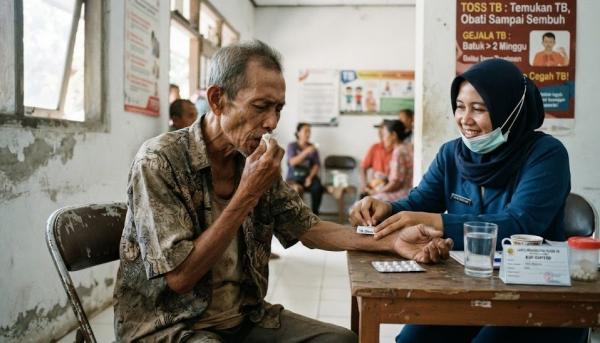
The administration of TPT is the cornerstone of this new, aggressive strategy. TPT is a course of medication administered to individuals who have been exposed to Mycobacterium tuberculosis but do not yet show symptoms of active disease. By killing the bacteria while they are in a latent state, the medical system can effectively prevent a potential future patient from ever becoming sick or infectious.
Statistical Progress and Current Gaps
The most recent data from the Ministry of Health indicates that the coverage of TPT in Jakarta has climbed to approximately 26 percent. While this figure is a marked improvement from the mere 5 percent recorded between 2021 and 2023, health analysts suggest it remains significantly lower than what is required for effective population-level control.
The increase, which represents a five-fold improvement in just two years, is attributed to a renewed emphasis on community-level healthcare centers (Puskesmas). These centers have been tasked with more rigorous documentation of household contacts whenever a new case of TBC is diagnosed. However, the 26 percent figure implies that nearly three-quarters of individuals identified as "close contacts" are still not receiving the necessary preventive care. This leaves a massive reservoir of potential future cases within the community, perpetuating the cycle of transmission in densely populated urban environments like Jakarta.
Historical Context and Chronology of TBC Control in Indonesia
The evolution of TBC policy in Indonesia has been marked by several distinct phases. During the early 2000s, the national strategy was almost entirely focused on DOTS (Directly Observed Treatment, Short-course). This was a major success in global health, significantly reducing mortality rates across the archipelago.

However, by the mid-2010s, it became evident that simply treating the sick was not lowering the incidence rate of new infections. The World Health Organization (WHO) began pushing for the "End TB Strategy," which explicitly included the scaling up of preventive therapy. Indonesia’s adoption of these guidelines was initially sluggish due to budgetary constraints and the complexity of contact tracing in a nation with a highly mobile, urbanized population.
The year 2024 marked a turning point, where the Ministry of Health launched a digital integration initiative to link diagnostic data from hospitals directly to local community health workers. This allowed for real-time alerts when a patient was diagnosed, enabling teams to be dispatched for contact tracing within 48 to 72 hours. The jump to 26 percent TPT coverage is largely a result of this digital integration and the prioritization of screening family members of those diagnosed with pulmonary TBC.
The Anatomy of Contact Tracing Challenges
Contact tracing in a city as dense as Jakarta faces unique sociocultural and logistical hurdles. Health officials have identified several factors that impede the efficacy of the TPT program:
- Social Stigma: Despite extensive public awareness campaigns, TBC remains a heavily stigmatized disease in many parts of Indonesia. Many individuals identified as "close contacts" fear that undergoing screening or starting preventive medication will label them or their families as "infected," leading to social isolation or workplace discrimination.
- Adherence and Duration: TPT regimens can be lengthy and often involve side effects that discourage patients from completing the course. Ensuring that a person who feels perfectly healthy continues taking preventative medication for months requires a high level of patient education and follow-up, which strains the limited human resources of local health clinics.
- Logistical Barriers: Many close contacts are members of the informal workforce. The requirement to visit a clinic during standard operating hours often conflicts with their employment, leading to high rates of "lost to follow-up" among the target population.
Clinical Implications and Future Projections
The implications of failing to reach a higher percentage of TPT coverage are significant. TBC is an airborne disease; a single untreated case can infect 10 to 15 people in a year. If the current rate of contact tracing and prevention does not accelerate, Indonesia risks a stagnation in its TBC incidence rates, potentially fueling the emergence of multidrug-resistant TBC (MDR-TBC), which is significantly more expensive and difficult to treat.

The Ministry of Health’s current trajectory aims to reach at least 50 percent TPT coverage by the end of 2027. To achieve this, the government is exploring public-private partnerships to increase the availability of shorter, more tolerable TPT regimens, such as the 3HP regimen (a combination of rifapentine and isoniazid taken once weekly for three months), which has shown higher completion rates compared to traditional daily medication.
Analysis of the Policy Response
The statement by the Wamenkes, Dr. Benjamin, signals a shift in the government’s rhetoric from "managing the epidemic" to "targeting the transmission chain." By framing the issue as a failure of prevention rather than a failure of medicine, the Ministry is essentially admitting that the clinical infrastructure is ready, but the public health outreach remains the weakest link.
For the policy to succeed, it must move beyond simply providing medication. It requires an integrated approach that includes:
- Decentralized Testing: Bringing diagnostic tools closer to the community, including mobile X-ray units in high-density, low-income neighborhoods.
- Incentivization: Providing nutritional support or financial assistance to those who are undergoing preventive treatment, thereby reducing the economic burden of the disease.
- Enhanced Surveillance: Strengthening the electronic reporting systems so that every "index case" (the initial patient) automatically triggers an investigation into the household, workplace, and social circle.
Conclusion
As Jakarta continues to grapple with the complexities of urban health, the success of its TBC program will serve as a bellwether for the country’s broader public health goals. The increase in TPT coverage to 26 percent is a clear indicator that the system is improving, yet the remaining gap underscores the immense challenge that lies ahead. The path to eliminating TBC in Jakarta will not be found in the isolation of a hospital ward, but in the systematic, persistent, and compassionate tracing of every individual at risk, ensuring that they are shielded from the disease before it has the chance to take hold. The Ministry of Health’s current commitment to this strategy suggests a promising, albeit difficult, road toward a TBC-free future for the capital.