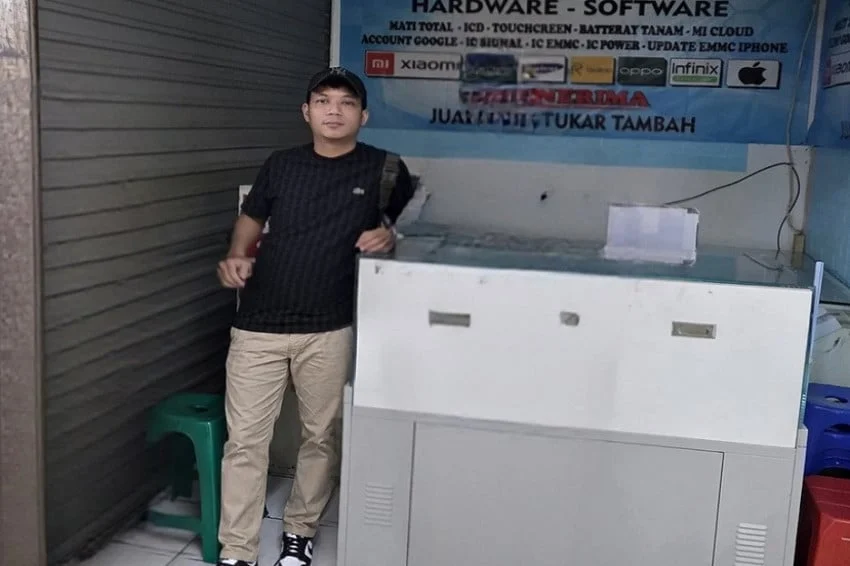
The bustling corridors of Pasar Kebayoran Lama in South Jakarta serve as more than just a center for commerce; for 25-year-old Raihandy, these narrow walkways acted as a formative classroom that shaped his trajectory from a child of market vendors to a burgeoning entrepreneur in the retail and gadget sector. Born in Jakarta on February 13, 1999, Raihandy’s story reflects the resilience and adaptability characteristic of Indonesia’s urban youth, who increasingly leverage digital transformation to bridge the gap between traditional market roots and modern consumer expectations.
The Formative Years: Lessons from the Market Floor
Raihandy’s introduction to the mechanics of supply and demand began long before he reached primary school. While most children were occupied with playground games, Raihandy spent his formative years observing the daily rhythm of Pasar Kebayoran Lama. The environment—a cacophony of vendor cries, vehicle horns, and the constant flux of thousands of shoppers—provided a masterclass in human psychology and transactional negotiation.
According to economic sociologists, individuals raised in trade-centric environments often develop a heightened sense of "commercial intuition." For Raihandy, this manifested as an early understanding of inventory turnover and customer relationship management. By the time he reached his middle school years, the passive observation of his parents’ business had evolved into an active desire for financial independence. This drive was not born of necessity alone, but of a burgeoning ambition to define his own path within the competitive landscape of Jakarta’s informal economy.
Chronology of a Digital Transformation
The transition from a traditional market observer to a tech-savvy business owner can be traced through several distinct phases:
- Early Childhood (1999–2005): Exposure to the daily operations of a family-run kiosk in Pasar Kebayoran Lama. Fundamental understanding of customer service and price negotiation established.
- Middle and High School Years (2010–2017): Raihandy begins his foray into independent entrepreneurship. During this period, he recognized the limitations of brick-and-mortar limitations and began experimenting with digital platforms.
- The Digital Shift (2013–2017): Utilizing zero-capital strategies, Raihandy leveraged the internet to act as a middleman, facilitating transactions between wholesalers and buyers. This phase was critical for building his initial network and capital.
- Vocational Training and Scaling (2017–2018): Upon completing his studies at a vocational high school (SMK), Raihandy formally transitioned his side hustles into a structured business entity.
- Post-Vocational Growth (2018–Present): The establishment of a dedicated retail and gadget kiosk, supported by a small team of employees, marking his transition from a solopreneur to a business manager.
The Rise of Digital Micro-Entrepreneurship in Indonesia
Raihandy’s journey coincides with a broader shift in the Indonesian retail landscape. Data from the Indonesian E-commerce Association (idEA) indicates that the country’s digital economy has seen exponential growth over the past decade. As of 2023, the Indonesian digital economy was valued at approximately $82 billion, with projections suggesting it could reach $130 billion by 2025.
Much of this growth is driven by the "bottom-up" approach exemplified by Raihandy. By utilizing social media platforms and e-commerce marketplaces, young Indonesians are effectively bypassing traditional barriers to entry that previously required significant physical capital. For Raihandy, the internet was not merely a tool for communication, but a foundational asset that allowed him to operate without the burden of overhead costs during his formative years.
Analysis: The Integration of Traditional and Modern Commerce
Market analysts often point to the "omnichannel" approach as the future of retail. Raihandy’s model is a practical embodiment of this theory. By maintaining a physical presence in a traditional market while utilizing digital channels for marketing and customer acquisition, he captures both the local, walk-in traffic of Kebayoran Lama and the broader, digital-savvy demographic of Jakarta.
This hybrid approach addresses several challenges inherent in the Indonesian market:
- Trust: The physical kiosk serves as a touchpoint for verification, which remains vital in the high-value gadget industry.
- Reach: Digital platforms allow for a broader customer base, enabling the business to remain profitable even when foot traffic in the physical market fluctuates.
- Adaptability: The ability to pivot inventory based on real-time data from online platforms allows small businesses to minimize losses from stagnant stock.
Perspectives on Youth Entrepreneurship
The success of young entrepreneurs like Raihandy has garnered attention from local observers and community leaders. Mentors in the retail sector often emphasize that the "market-first" upbringing provides a competitive edge that cannot be taught in a traditional classroom.
"The ability to read a room, understand a customer’s hesitation, and close a deal is an art form," says a local retail consultant familiar with the dynamics of South Jakarta markets. "When you combine that street-level expertise with a proficiency in digital tools, you create a very potent business model. Raihandy is part of a generation that is successfully bridging the gap between the ‘pasar’ legacy and the modern digital era."
Broader Implications for the Workforce
The trajectory of Raihandy’s career also highlights the evolving role of Vocational High Schools (SMK) in Indonesia. With a focus on practical skills, the vocational education system is increasingly aligning with the needs of the informal and small-to-medium enterprise (SME) sectors.
The growth of such businesses has a direct impact on local employment. By evolving his operation to include employees, Raihandy is contributing to the local labor market, demonstrating that SME growth is a vital engine for economic stability in urban centers like Jakarta. Furthermore, his reliance on self-taught skills and digital agility serves as a case study for policy makers interested in promoting youth employment and reducing the reliance on traditional corporate job markets.
Challenges and Future Outlook
Despite his success, the path remains fraught with challenges. The retail gadget sector is notoriously volatile, characterized by thin profit margins and rapid technological obsolescence. Keeping up with market trends, managing supply chain logistics, and maintaining customer loyalty in a saturated digital market requires constant vigilance.
Raihandy’s ability to navigate these challenges will likely depend on his continued willingness to adapt. As he moves forward, the integration of more sophisticated inventory management software and the expansion of his digital footprint will be essential steps.
Ultimately, Raihandy’s story is a testament to the idea that success is not merely a product of capital, but of environment, timing, and the audacity to act. From the busy stalls of Kebayoran Lama to the digital storefronts of the modern web, his experience serves as a microcosm of the changing face of Indonesian commerce.
Conclusion
As Raihandy looks toward the future of his enterprise, his focus remains on growth and sustainability. He views his current success as a baseline for future endeavors, acknowledging that the principles he learned as a child—hard work, resilience, and the value of a strong network—remain the bedrock of his operations.
For many young Indonesians watching his progress, Raihandy provides a tangible roadmap. He represents a generation that is not waiting for opportunities to be handed to them, but is actively carving out space in the economy by blending the time-honored traditions of the Indonesian marketplace with the limitless possibilities of the digital age. As the retail landscape in Jakarta continues to evolve, the ability to synthesize these two worlds will likely remain the defining factor for the next generation of Indonesian entrepreneurs.