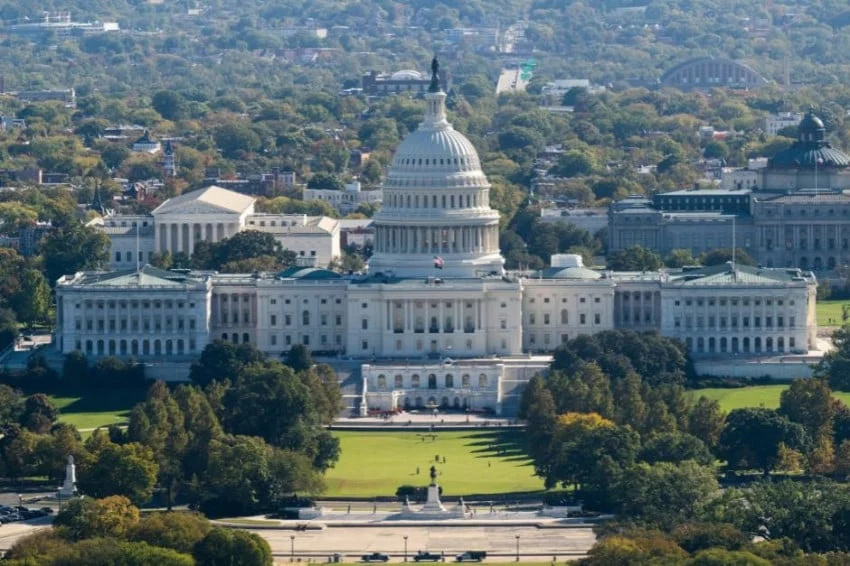
The United States is bracing for what is projected to be the most expensive mid-term electoral cycle in its storied democratic history, with total political advertising expenditures forecasted to reach an astronomical USD11.6 billion, roughly equivalent to IDR 210 trillion. According to comprehensive data released by political media tracking firm AdImpact, this staggering financial projection not only shatters all previous mid-term spending records but is also poised to surpass the monumental outlays witnessed during the fiercely contested 2024 presidential election cycle. As campaigns increasingly rely on digital media, television broadcasts, and targeted messaging to capture voter attention, the sheer volume of capital flooding the American political ecosystem underscores the growing commodification of modern democracy and the immense stakes governing the balance of power in Washington, D.C.
This unprecedented capital infusion is largely driven by a powerful coalition of ultra-wealthy individual donors, secretive political non-profit organizations, and powerful corporate interests. These entities are actively seeking to shape legislative priorities, influence regulatory frameworks, and steer national discourse on critical issues ranging from economic policy to national security. Much of this funding navigates through complex, opaque networks of multiple intermediary organizations—often referred to in American political lexicon as "dark money" networks—before ultimately being deployed into aggressive media campaigns designed to sway public opinion in pivotal swing states and competitive congressional districts across the nation.
The Mechanics of Modern American Campaign Finance: Understanding Super PACs
To fully comprehend the sheer magnitude of the USD11.6 billion advertising boom for the 2026 mid-term elections, one must examine the legal and institutional framework governing American campaign finance. While federal law imposes strict limits on direct contributions to candidate campaigns—permitting individuals to donate up to USD3,500 per election for federal candidates during the 2025–2026 electoral cycle—the landscape of independent political spending is virtually boundless. This dynamic was fundamentally transformed in 2010 following landmark judicial rulings, most notably the Supreme Court’s decision in Citizens United v. Federal Election Commission, alongside a crucial federal appeals court ruling in SpeechNow.org v. FEC.
These legal milestones paved the way for the creation of Super PACs—formally known as Independent Expenditure-Only Committees. Unlike traditional political action committees, Super PACs are legally authorized to raise and spend unlimited sums of money from corporations, labor unions, associations, and wealthy individuals. Their primary objective is to advocate for or against specific political candidates, predominantly through heavy investments in television, radio, and digital advertising. The sole statutory restriction governing Super PACs is that they are legally prohibited from coordinating their spending strategies directly with the official candidates or their designated campaign teams. Despite this nominal firewall, Super PACs have evolved into the dominant financial engines of modern American politics, regularly outspending the official campaigns they support and defining the primary narratives of election seasons.
Analyzing the Top Donors: The 2026 Mid-Term Financial Breakdown
As the 2026 mid-term elections draw closer, tracking data reveals a striking concentration of financial power among the nation’s elite tier of contributors. A detailed analysis of the top 50 donors and political organizations highlights the immense disparities in fundraising and investment capabilities across the political spectrum. Collectively, these top 50 contributors have already poured an astounding USD2.77 billion into the 2026 mid-term electoral cycle.
A granular breakdown of this staggering figure exposes profound partisan asymmetries in high-level donor mobilization. Contributors and political action committees officially or unofficially affiliated with the Republican Party account for USD1.67 billion, representing approximately 60 percent of the total contributions among the top 50 donors. In stark contrast, entities and individuals aligned with the Democratic Party have contributed USD832 million, capturing roughly 30 percent of this elite funding pool. The remaining USD264 million—amounting to approximately 10 percent of the total—originates from donors categorized as bipartisan actors or specialized single-issue interest groups. Notably, this latter category includes well-funded advocacy groups representing emerging economic sectors, such as the cryptocurrency industry and legal sports betting enterprises, both of which have aggressively stepped up their lobbying and electoral investments to protect their burgeoning commercial interests from prospective federal regulation.
While the average American voter is legally capped at modest donation limits for direct candidate support, figures within the top 50 donor tier routinely inject hundreds of millions of dollars into the political bloodstream. By channeling these vast fortunes through Super PACs and allied advocacy networks, these mega-donors effectively bypass traditional contribution caps, securing an outsized influence over the strategic direction of congressional and senatorial races nationwide.
Chronology and Escalation of Campaign Spending Trends
The trajectory of American political advertising expenditures over the past two decades reveals a steep, almost exponential upward curve. Understanding the context of the 2026 mid-term projections requires looking back at how campaign financing has evolved in the post-Citizens United era.
During the 2010 mid-term elections—the first cycle following the legalization of Super PACs—total political advertising and independent expenditures hovered at a fraction of today’s figures. As political polarization intensified and the strategic value of control over the House of Representatives and the Senate became increasingly paramount, spending escalated dramatically with each subsequent election cycle. The 2014 and 2018 mid-terms shattered previous benchmarks, driven largely by intense legislative battles over healthcare reform, judicial appointments, and economic policy.
By the 2020 presidential election cycle, total political expenditures across all media channels crossed historic thresholds, fueled by the intense national polarization surrounding the presidency of Donald Trump. However, the subsequent 2022 mid-term elections proved that off-year congressional elections could rival presidential cycles in financial intensity, generating multi-billion-dollar outlays as abortion access, inflation, and democratic norms emerged as galvanizing wedge issues.
The 2024 presidential election cycle set a new all-time high water mark for aggregate political spending in United States history. Yet, industry analysts at AdImpact note that the projected USD11.6 billion price tag for the 2026 mid-terms is unprecedented precisely because it is expected to surpass even that monumental 2024 presidential benchmark. This anomaly is driven by several compounding factors: historically narrow congressional majorities that leave both chambers permanently up for grabs, an increasingly fragmented media landscape that drives up the cost of effective voter reach, and the relentless proliferation of well-capitalized Super PACs seeking to influence primary and general election outcomes alike.
Implications for the American Democratic Process and Policy Formulation
The projection that the 2026 United States mid-term elections will reach an unprecedented USD11.6 billion in advertising expenditures carries profound implications for the health of American democracy, the nature of governance, and the legislative priorities of future congresses.
From a structural perspective, the reliance on astronomical sums of money to finance competitive campaigns fosters a political environment where candidates must spend an exorbitant amount of time fundraising rather than engaging directly with constituents or attending to legislative duties. Critics and campaign finance reform advocates argue that this dynamic creates an inherent conflict of interest, wherein elected officials may feel a greater sense of accountability to their wealthiest mega-donors and powerful corporate patrons than to the everyday voters who elect them. This phenomenon, often described by political scientists as the donor-class feedback loop, risks sidelining populist concerns related to wage stagnation, affordable healthcare, and infrastructure development in favor of issues prioritized by elite contributors.
Furthermore, the flood of capital into political advertising inevitably transforms the informational ecosystem during election cycles. With billions of dollars pouring into television slots, streaming platforms, and social media feeds, political discourse frequently becomes saturated with hyper-partisan, highly polarizing, and occasionally misleading messaging designed to trigger emotional responses rather than foster nuanced debate. Super PACs and dark money groups, operating independently of official campaigns, are uniquely positioned to launch aggressive, unmitigated attack ads without the direct accountability traditionally borne by candidate committees.
Conversely, defenders of the current campaign finance regime argue that unlimited independent spending is a protected form of free speech under the First Amendment. From this viewpoint, advertising expenditures represent an essential mechanism for disseminating political information, holding incumbent politicians accountable, and ensuring that diverse ideological viewpoints—including those championed by emerging industries like cryptocurrency and alternative energy—receive a robust hearing in the public square. Proponents of current laws contend that attempts to restrict campaign spending inevitably infringe upon fundamental constitutional liberties and merely drive political money further underground into clandestine channels.
As the United States marches toward the 2026 mid-term elections, the unfolding financial arms race serves as a stark reminder of the immense economic power underpinning modern political power struggles. With control of the legislative branch hanging in the balance, political stakeholders on both sides of the aisle are leaving no financial stone unturned, ensuring that the upcoming electoral cycle will be defined not only by the ballots cast at the voting booth, but by the historic torrent of capital driving the airwaves.