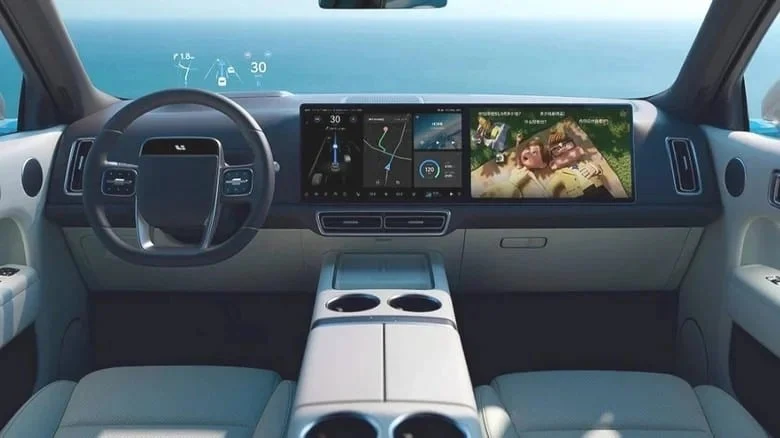
Beijing is preparing to implement a comprehensive overhaul of its automotive interior regulations, signaling a major potential shift for the world’s largest and most fiercely competitive electric vehicle market. Driven by mounting concerns over driver distraction and ergonomic safety, the Chinese government is weighing strict limitations on oversized dashboard displays, complex voice-activation systems, and reclining passenger seats. The proposed regulatory framework reflects a growing anxiety among safety authorities who fear that the relentless race toward digital opulence in modern cabins has compromised basic vehicular safety.
According to preliminary policy documents reviewed by industry insiders and reported by automotive publications, the Ministry of Industry and Information Technology (MIIT) is spearheading the regulatory review. For years, domestic and international automakers operating in China have engaged in a high-stakes technology race, outfitting vehicles with panoramic entertainment screens that stretch across the entire dashboard, eliminating physical buttons in favor of digital menus, and introducing futuristic comforts borrowed from the aerospace industry. While these innovations have successfully attracted tech-savvy consumers, regulatory bodies argue that the functional integration of such features has outpaced safety evaluations. Under the newly drafted proposals, interior automotive hardware will face rigorous scrutiny before receiving certification for mass production and public sale.
The Evolution of the Regulatory Crackdown
The tightening of regulatory oversight in China’s automotive sector does not represent an isolated policy shift, but rather the continuation of a systematic effort by Beijing to rein in potential safety hazards associated with rapid technological adoption. Over the past five years, the Chinese automotive landscape has transformed dramatically, transitioning from traditional mechanical layouts to software-defined vehicles characterized by minimalist interiors dominated by glass panels and digital interfaces.
The chronology of this regulatory pivot began in earnest alongside the proliferation of electronic door handles and advanced driver-assistance systems (ADAS). As automakers experimented with hidden handles and flush designs to improve aerodynamic efficiency, safety incidents involving rescue access during collisions prompted initial government warnings. Building upon these concerns, the focus of the Ministry of Industry and Information Technology gradually expanded toward the human-machine interface inside the cabin.
In late 2023 and early 2024, traffic safety authorities noted a statistical correlation between complex infotainment navigation tasks and a rise in distracted driving incidents. Rather than allowing the market to self-regulate, policymakers determined that mandatory technical standards were necessary. The current proposals being reviewed by the MIIT represent the culmination of these deliberations, moving from informal advisory warnings to concrete regulatory hurdles that could fundamentally alter vehicle cockpit architecture by 2026 and beyond.
Detailed Scope of Proposed Restrictions
Should the proposed regulations take effect in their current form, several defining features of contemporary automotive design will face immediate regulatory bottlenecks or outright bans.
Touchscreens and Display Technology
Under the evaluation framework, massive infotainment screens, head-up displays (HUDs), and digital instrument clusters will be subjected to mandatory evaluations concerning driving safety, impact resistance, and operational reliability under extreme environmental conditions. Regulators intend to evaluate whether the sheer luminosity and positioning of these screens create hazardous glare or draw the driver’s gaze away from the road for unacceptable durations. Furthermore, display designs deemed overly distracting will face immediate rejection for commercial use. Notably, regulatory authorities are also considering a preemptive ban on foldable in-car screens—a technology that, while not yet widely commercialized in the automotive sector, has been previewed by several futuristic concept vehicles.
Zero-Gravity Seating and Passenger Ergonomics
Another focal point of the regulatory review involves advanced seating configurations, specifically the popularized "zero-gravity" seats. These designs allow occupants to recline into deeply angled postures with integrated leg rests to simulate weightlessness during long journeys. While comfortable during autonomous transit or while parked, the MIIT proposal suggests that the use of these fully reclined modes will be strictly prohibited while the vehicle is in motion. Safety engineers point out that standard three-point seatbelts and airbag deployment geometries are optimized for upright or slightly angled seating positions; fully reclined postures drastically increase the risk of submarining—where a passenger slips beneath the seatbelt during a frontal collision, leading to severe abdominal and spinal trauma.
Voice Controls and Exterior Lighting
The regulatory scope extends beyond screens and seating to encompass driver-vehicle interaction modalities. The MIIT is evaluating restrictions on voice-activation systems, proposing that their functionality be curtailed to essential operational commands. Under this guideline, complex menu navigation executed via voice could be restricted, limiting voice assistants to critical safety and mechanical functions such as activating headlamps, unlocking doors, or opening the hood. Additionally, the proposal targets exterior aesthetics, aiming to tighten standards surrounding daytime running LED lights that feature complex or unconventional geometric designs which may confuse other road users or fail to meet standardized illumination benchmarks.
Industry Implications and Economic Fallout
The introduction of these stringent regulatory proposals has sent ripples through the Chinese automotive manufacturing ecosystem, forcing both domestic giants and foreign joint ventures to reassess their product pipelines. For years, the selling point of a new energy vehicle (NEV) in China relied heavily on the interior "wow factor." Startups and legacy brands alike invested billions of dollars in developing proprietary operating systems, multi-screen configurations, and immersive cabin experiences to capture market share in a hyper-competitive environment.
If large screens and complex digital interfaces are restricted, automakers will be forced to pivot their marketing and engineering strategies toward areas less vulnerable to regulatory pushback, such as chassis dynamics, battery efficiency, acoustic insulation, and tactile physical ergonomics. This transition could lead to increased production costs in the short term as manufacturers redesign dashboards to incorporate safer, physically segregated control buttons alongside moderated digital displays.
Furthermore, the potential prohibition of motion-enabled zero-gravity seating configurations impacts a lucrative segment of luxury vehicle customization. Suppliers specializing in advanced seat mechanisms and interior actuation motors may experience a contraction in demand for reclining mechanisms linked to dynamic driving modes. Conversely, suppliers of traditional physical switches, mechanical redundancy systems, and safety-certified glass coatings may find themselves positioned for renewed relevance as the industry is compelled to recalibrate toward ergonomic pragmatism.
Comparative Global Context
China’s proactive stance on regulating interior digital distractions places it at the forefront of a global regulatory conversation. While regulatory bodies in Europe and North America have increasingly scrutinized the safety implications of touchscreen-heavy interiors—prompting entities like Euro NCAP to announce that vehicles must feature physical controls for basic functions to achieve top safety ratings by 2026—few jurisdictions have proposed measures as sweeping or legally binding as those currently under consideration by Beijing.
International automakers that export vehicles manufactured in China to global markets may find themselves navigating a fragmented regulatory landscape. Vehicles engineered to comply with stringent domestic Chinese standards regarding screen sizes and seating configurations may require localized interior modifications for overseas markets, or conversely, Chinese domestic standards could serve as a de facto template that other regional regulators choose to adopt as distracted driving becomes a global policy priority.
As the Ministry of Industry and Information Technology continues its technical review and gathers feedback from industry stakeholders, the final version of the regulations will likely be shaped by compromise between safety advocates and commercial interests. Nevertheless, the era of unbridled digital expansion inside the automobile cabin appears to be reaching a definitive regulatory turning point, signaling a return to a safety-first design philosophy where human cognition and physical ergonomics take precedence over digital novelty.