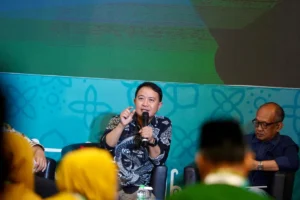
The Central Leadership of Muhammadiyah, one of Indonesia’s most influential Islamic organizations, has issued a definitive stance regarding international events, cultural performances, and commercial activities that indirectly or directly endorse the Israeli occupation of Palestine. Speaking with a firm and uncompromising tone, Prof. Dr. Syafiq A. Mughni, a senior leader of Muhammadiyah, emphasized that all forms of propaganda disguised as art, sports, or commerce must be actively resisted by the global and domestic community. This declaration arrives amid heightened public discourse surrounding international tours, high-profile concerts, and geopolitical alignments that intersect with the ongoing humanitarian crisis in the Gaza Strip and the broader Palestinian territories.
The statement was originally broadcast during an episode of the public discussion program Ruang Publik TVMu, titled Tiada Panggung bagi Pendukung Zionis (No Stage for Zionist Supporters). The discourse brought together prominent religious scholars, cultural leaders, and civil society advocates to dissect the complex intersections of global entertainment, economic consumerism, and geopolitical ethics. Syafiq underscored that Muhammadiyah’s institutional commitment to the Palestinian cause is rooted not only in religious solidarity but also in foundational constitutional principles and universal human rights. As civil society movements across the globe increasingly scrutinize the corporate and cultural sponsorships of entities tied to geopolitical conflicts, Indonesian organizations are stepping up efforts to guide public consciousness on ethical spending and cultural consumption.
Background and Context of the Controversy
The debate that prompted Muhammadiyah’s recent intervention centers on the cultural boycott movement and the scrutiny faced by international artists who hold public stances or maintain affiliations perceived as supportive of the Israeli state. In recent months, public sensitivity in Indonesia—a nation with a predominantly Muslim population and a historically staunch foreign policy supporting Palestinian independence—has reached a fever pitch. Citizens and advocacy groups have closely monitored commercial events, brand partnerships, and international entertainment acts entering the domestic market, demanding greater accountability regarding where ticket sales and corporate revenues ultimately flow.
During the television program, the discussion specifically touched upon the controversies surrounding upcoming international performances, including those of renowned Italian tenor Andrea Bocelli. While artistic appreciation traditionally transcends political boundaries, civil society groups and religious organizations argue that in times of severe humanitarian crises, cultural events can inadvertently become instruments of normalization or financial pipelines for entities supporting military occupations. Syafiq’s remarks served to frame this specific cultural debate within the broader canvas of anti-colonial resistance and global justice.
The Chronology of Muhammadiyah’s Advocacy for Palestine
Muhammadiyah’s involvement in the Palestinian cause is not a recent development, but rather a long-standing pillar of its international humanitarian and diplomatic engagements. The chronology of the organization’s advocacy spans decades, marked by sustained institutional efforts:
- Historical Alignment with Indonesian Independence: From its inception, Muhammadiyah has aligned its worldview with the preamble of the 1945 Constitution of the Republic of Indonesia, which explicitly mandates that independence is the inherent right of all nations and that colonialism must be eradicated from the face of the earth as it violates humanity and justice.
- Humanitarian Mobilization: Following successive escalations of conflict in the Middle East, particularly the severe humanitarian emergencies in Gaza, Muhammadiyah—through its humanitarian wing, the Muhammadiyah Disaster Management Center (MDMC) and Lazismu—has consistently funneled millions of dollars in aid, medical supplies, educational support, and infrastructural assistance to refugees and victims in Palestine.
- Policy Interventions and Public Education: Throughout late 2023 and 2024, the Central Leadership of Muhammadiyah organized a series of national symposia, academic lectures, and media campaigns aimed at educating the Indonesian public on the mechanics of global Zionism, economic boycotts of complicit corporations, and the ethical dimensions of international trade.
- The TVMu Forum (October 2024): The culminating point of the recent discourse occurred when senior leadership formalized the stance on cultural and artistic boycotts, warning citizens against patronizing events whose proceeds or ideological backings align with the occupation.
Economic Implications and the Ethics of Consumerism
A core argument presented by Syafiq A. Mughni during the program revolved around the economic anatomy of entertainment and consumer spending. In modern globalized economies, cultural performances, sports tournaments, and commercial goods are rarely isolated from corporate sponsorships, government subsidies, or institutional affiliations. Syafiq cautioned the Indonesian public to evaluate the final destination of every rupiah spent, noting that financial contributions—no matter how seemingly trivial—can aggregate into systemic support for geopolitical agendas.
“Any money we spend, no matter how small, to support propaganda in the form of artistic performances, concerts, and so forth, is something that cannot be justified,” Syafiq stated during the broadcast. This perspective aligns with the principles of the Boycott, Divestment, Sanctions (BDS) movement, which seeks to exert economic pressure on Israel to comply with international law. By targeting the entertainment and cultural sectors, civil society leaders aim to close off avenues through which international public opinion is shaped or manipulated in favor of occupying powers.
Insights from Co-Panelists and Allied Organizations
The Ruang Publik TVMu program featured a panel of distinguished experts who expanded upon Syafiq’s assertions from various institutional angles, reinforcing a unified front among Indonesian civil society organizations.
Dr. Sudarnoto Abdul Hakim, Chairman of the Indonesian Ulema Council (MUI) for Foreign Relations and International Cooperation, emphasized that diplomatic and religious institutions must maintain constant vigilance against normalization efforts that bypass the core issue of Palestinian sovereignty. Sudarnoto argued that cultural and sports diplomacy are frequently utilized by state actors to launder reputations and distract international audiences from ongoing human rights violations on the ground.
Meanwhile, Gunawan Budianto, Chairman of the Arts and Culture Bureau of the Central Leadership of Muhammadiyah, addressed the moral responsibility of artists, performers, and cultural curators. He noted that art should inherently serve the cause of human liberation and dignity rather than act as a commercial vehicle for oppression. According to Gunawan, the Indonesian cultural scene possesses a rich heritage of anti-colonial resistance and must remain true to these values by refusing platforms to artists or sponsors linked to apartheid or military occupation.
Adding a generational and gender-focused perspective, Dwi Setyowati, Head of Advocacy, Wisdom, and Public Policy for the Central Leadership of Nasyiatul Aisyiyah (Muhammadiyah’s young women’s wing), highlighted the role of youth and families in navigating consumer choices. She stressed the importance of fostering critical media literacy among younger generations so they can discern between benign international entertainment and culturally packaged geopolitical propaganda.
Broader Socio-Political Implications for Indonesia
The firm stance articulated by Muhammadiyah carries significant socio-political weight in Indonesia, a country where religious organizations wield considerable moral authority and influence over public policy and grassroots sentiment. While the Indonesian government maintains an official foreign policy of non-alignment alongside a steadfast refusal to establish diplomatic relations with Israel until Palestinian independence is achieved, civil society organizations play an indispensable role in maintaining domestic pressure.
By explicitly drawing a line against cultural and artistic events perceived as supportive of Zionism, Muhammadiyah is shifting the boundaries of public discourse from purely political lobbying to everyday lifestyle choices. This democratization of activism empowers ordinary citizens to participate in international solidarity through conscious consumerism, ethical investing, and cultural discernment.
Furthermore, this position tests the resilience of event organizers, promoters, and venue managers in Indonesia who rely on international talent. As public scrutiny intensifies, promoters are increasingly compelled to vet the political backgrounds, funding sources, and ideological alignments of international acts before securing contracts. Failure to do so risks severe public backlash, reputational damage, and potential boycotts that could render such commercial ventures financially unviable in the Indonesian market.
Conclusion and Future Outlook
As the humanitarian situation in the Middle East continues to command global attention, the directives issued by Muhammadiyah through leaders like Syafiq A. Mughni signal that Indonesian civil society will maintain an uncompromising posture toward all forms of complicity in colonialism and occupation. By addressing not only political and military dimensions but also cultural, artistic, and economic channels of influence, Muhammadiyah has broadened the strategic scope of Palestinian solidarity work in Southeast Asia.
The ongoing discourse serves as a reminder to the international community that cultural diplomacy and entertainment are not neutral spaces exempt from moral judgment. For millions of Indonesians inspired by their nation’s constitutional mandate and religious values, the message remains clear: true peace and artistic expression cannot be divorced from universal justice, human rights, and the immediate cessation of oppression against the Palestinian people.