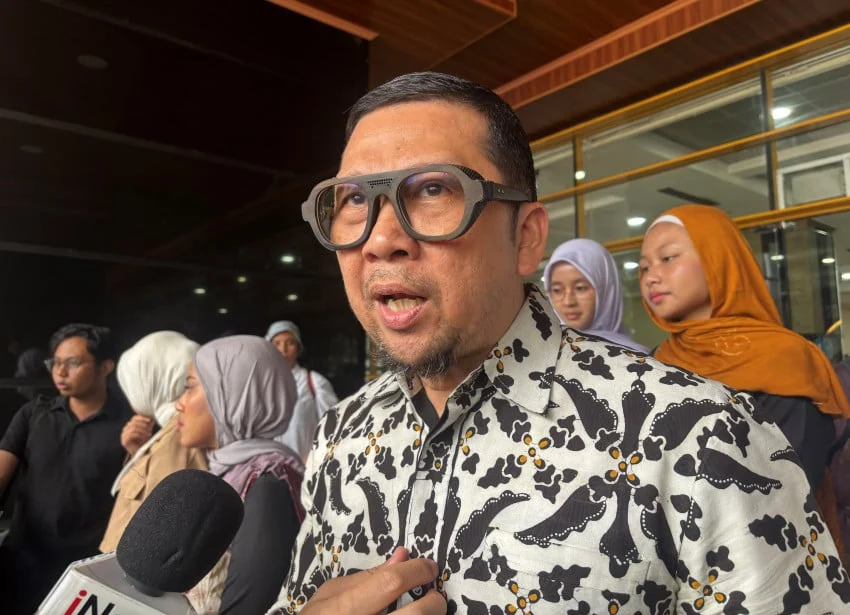
JAKARTA — Commission II of the House of Representatives (DPR RI) has formally agreed to accelerate the deliberation process for the upcoming Election Bill (RUU Pemilu), prioritizing an aggressive timeline that pushes legislative activity directly into the parliamentary recess period. According to senior lawmaker Ahmad Doli Kurnia Tandjung, the Panitia Kerja (Panja) or Working Committee tasked with drafting the crucial electoral legislation is slated to convene its inaugural official meetings starting November 2, 2026.
The decision to fast-track the legislative agenda stems from a concerted push within Commission II to finalize the foundational academic text (naskah akademik) and the comprehensive draft of the Election Bill before the conclusion of the 2026 calendar year. By refusing to pause operations during the designated recess window, the committee aims to establish a robust framework early, setting the stage for subsequent extensive debates among political factions and government stakeholders in the subsequent legislative sessions.
Speaking on the sidelines of an engagement at the Ministry of Primary and Secondary Education in Jakarta on Monday, October 26, 2026, Doli underscored the uncompromising timeline adopted by the committee. "To accelerate that process, we have agreed to begin our work without waiting for the recess period to officially conclude. The plan is for the Working Committee to commence operations on November 2, with a firm target of having the academic text and the Election Bill draft completed by the end of December," stated Doli, a prominent politician from the Golkar Party.
Prioritizing Meaningful Public Participation
A critical dimension of the initial phase of the Panja’s mandate involves a deliberate separation from government entities during the preliminary stages of drafting. Doli clarified that when the committee initiates its meetings on November 2, representatives from the executive branch of government will not immediately be invited to the negotiating table. Instead, Commission II intends to dedicate the initial weeks of deliberation exclusively to absorbing feedback, grievances, and strategic recommendations from a diverse array of public elements.
This strategy is deliberately designed to institutionalize the principle of meaningful public participation (meaningful participation) as mandated by constitutional principles and prior rulings by the Constitutional Court regarding the formulation of laws. Rather than crafting legislation behind closed doors within political enclaves, the committee aims to build the foundation of the electoral architecture upon direct input from civil society, academic institutions, electoral watchdogs, and demographic organizations.
To operationalize this inclusive approach, Commission II has already compiled a comprehensive database comprising approximately 120 societal groups, non-governmental organizations, academic institutions, and relevant stakeholders. These entities have been earmarked for direct consultation. The mechanics of this extensive outreach will be executed through a combination of formal Public Hearings (Rapat Dengar Pendapat or RDP) held within the parliamentary complex in Senayan, Jakarta, alongside targeted direct field visits conducted by specialized teams within the Panja.
Background Context of the Election Bill Deliberations
The urgency surrounding the 2026 Election Bill discussions is deeply rooted in the structural evolution of Indonesia’s democratic landscape. Following the complex simultaneous execution of the legislative and presidential elections in 2024, followed closely by the nationwide regional head elections (Pilkada) held later that same year, electoral experts, political parties, and state organizers identified numerous administrative, regulatory, and systemic bottlenecks.

Issues ranging from the overwhelming workload borne by polling station workers (KPPS), the synchronization of national and regional electoral schedules, the complexity of vote-counting technologies, to the financial burdens of campaigning have consistently dominated public discourse. Consequently, revising the overarching legal framework governing elections has transformed from a routine legislative task into a national imperative to safeguard the integrity, efficiency, and sustainability of future democratic contests.
Historically, electoral laws in post-reform Indonesia have undergone frequent revisions ahead of each electoral cycle, often leading to protracted political compromises that critics argue favor established political parties at the expense of substantive democratic deepening. By initiating the drafting process significantly ahead of the next scheduled election cycle, Commission II of the DPR seeks to mitigate last-minute legislative rush jobs, which have historically compromised the quality of electoral laws and induced legal uncertainty for election organizers such as the General Elections Commission (KPU) and the Election Supervisory Agency (Bawaslu).
Chronology and Timeline to the End of 2026
The unfolding timeline for the Election Bill underscores a high-stakes legislative sprint designed to maximize productivity before external political pressures mount ahead of future electoral cycles.
- Late October 2026: Commission II internal consolidation meetings finalize the consensus to accelerate the deliberation process, opting to bypass a total suspension of activities during the parliamentary recess.
- October 26, 2026: Senior lawmaker Ahmad Doli Kurnia publicly announces the concrete commencement date of the Working Committee and outlines the foundational strategy prioritizing public absorption.
- November 2, 2026: The Election Bill Working Committee (Panja RUU Pemilu) officially begins its working sessions, initiating the phase dedicated strictly to absorbing inputs from civil society and pre-selected stakeholder groups.
- November through December 2026: Execution of intensive Public Hearings (RDP) and direct civic engagements involving the pre-mapped roster of approximately 120 societal organizations and academic institutions.
- Late December 2026: Projected target deadline for the completion of the comprehensive academic text draft and the primary structural framework of the RUU Pemilu by Commission II.
- Early 2027 and Beyond: Anticipated transition into formal tripartite discussions involving the DPR, the government, and relevant state electoral organizers to debate contentious political thresholds, system designs, and operational modalities.
Strategic Implications and Political Analysis
The decision to commence Panja meetings during the recess period carries profound implications for executive-legislative dynamics and civil society engagement in Indonesia. By intentionally sidelining the government during the initial formulation of the academic text, the DPR is attempting to assert legislative independence and shape the foundational narrative of the bill before bureaucratic interests and inter-party political bargaining heavily dilute civil society inputs.
However, political analysts caution that while front-loading public participation is a commendable democratic gesture, the true test of the RUU Pemilu will emerge once the draft transitions from the academic drafting phase into the realm of high-stakes political compromise. Major contentious issues—such as the parliamentary threshold (ambang batas parlemen), the presidential threshold, the electoral system model (whether to retain open-list proportional representation, shift to closed-list, or explore mixed systems), and the structural independence of electoral administration bodies—invariably trigger intense friction among political factions represented in the parliament.
Furthermore, compressing the timeline to produce a comprehensive draft and academic text by December 2026 places an immense administrative burden on the secretariat of Commission II and the participating civil society organizations. Ensuring that the voices of 120 distinct groups are genuinely reflected in the academic text within a span of less than two months requires rigorous coordination, transparent reporting, and robust data synthesis to avoid accusations of tokenism in public consultation.
Looking Ahead
As November 2, 2026, approaches, all eyes within the national political sphere will be fixed on the House of Representatives. The success or failure of this early legislative sprint will likely set the tone for the entire trajectory of Indonesia’s electoral reform agenda for the coming decade. If Commission II can successfully balance accelerated procedural targets with genuine, meaningful public engagement, the resulting Election Bill may provide a stable, credible, and forward-looking institutional foundation for the nation’s future democratic exercises. Conversely, any perception of rushed deliberation or closed-door political maneuvering could reignite controversies that have historically undermined public trust in the country’s electoral legal framework.