The geopolitical landscape of the Middle East has undergone a fundamental transformation that precludes any return to the pre-conflict status quo, according to senior Iranian leadership. Following the escalation of hostilities involving Iran, the United States, and Israel that reached a critical inflection point on February 28, 2026, Tehran has signaled that its strategic posture—particularly regarding the security and navigation of the Strait of Hormuz—has been permanently altered.
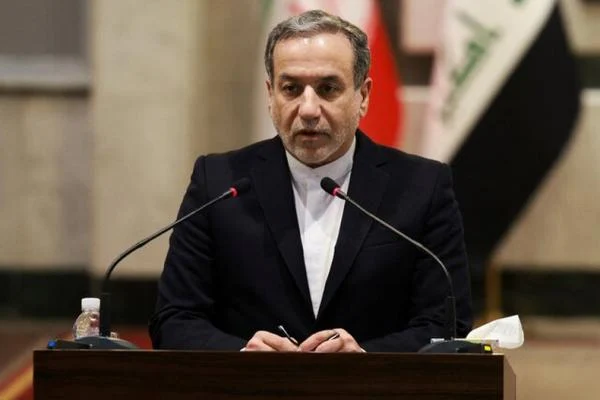
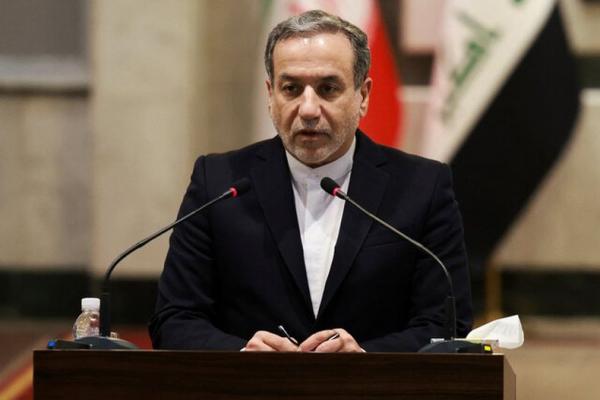
Iranian Minister of Foreign Affairs, Abbas Araghchi, articulated this stance during a recent address at the Ministry of Foreign Affairs in Tehran. He emphasized that the current regional reality is defined by a new set of parameters that render previous diplomatic and maritime arrangements obsolete. As the world watches the evolving situation, the implications of this shift extend far beyond regional borders, threatening to reshape the global energy market and the established security order in the Persian Gulf.
A New Regional Reality
Minister Araghchi’s remarks represent a significant departure from traditional Iranian rhetoric, which often framed regional instability as a temporary phase. By stating that "the war has changed everything," Araghchi acknowledges that the structural foundations of Middle Eastern security have been irrevocably disrupted. This admission follows months of heightened tension, during which the United States and its regional allies, particularly Israel, have intensified their efforts to contain Iranian influence through direct military engagement and stringent economic pressure.
Analysts suggest that this "new reality" refers to the abandonment of previous non-aggression norms that had governed the Persian Gulf for decades. The reliance on indirect proxies has increasingly given way to direct state-on-state confrontations, forcing nations in the region to re-evaluate their defense priorities and alliance structures.
The Strategic Significance of the Strait of Hormuz
At the heart of the Iranian warning is the Strait of Hormuz, a narrow waterway that serves as the world’s most vital oil chokepoint. Approximately 20% of the world’s total petroleum liquids consumption passes through the strait daily, according to data from the U.S. Energy Information Administration (EIA). Any disruption in this corridor has historically led to immediate spikes in global energy prices and prompted international naval interventions.
Araghchi’s assertion that the management of these waters will not be the same as before suggests that Iran may be moving toward a more assertive, unilateral control of maritime traffic. Historically, international navigation through the strait has been protected by the principle of "transit passage" under international law, often enforced by the U.S. Fifth Fleet. However, Tehran’s current stance indicates that it no longer recognizes the traditional frameworks that facilitated this Western-led oversight. If Iran proceeds to impose new regulatory hurdles or security protocols on tankers transiting the strait, the economic repercussions for global markets—particularly in Asia and Europe—could be severe and long-lasting.
Chronology of Escalation: February 2026 to Present
The origins of this shift can be traced back to the events of February 28, 2026, when a series of direct military exchanges between Iranian forces and the U.S.-Israel coalition shattered existing deterrence models.
- February 28, 2026: A major kinetic engagement occurs, involving significant aerial and naval components. This event is widely viewed by military analysts as the catalyst for the current breakdown in regional diplomatic relations.
- March 2026: Following the February clash, international energy markets experienced extreme volatility, with Brent crude futures surging as stakeholders anticipated a total closure of the Persian Gulf.
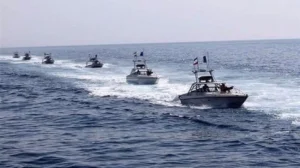
- June 2026: Diplomatic channels between Tehran and Washington effectively stall. During this period, Iran intensified its enrichment programs and expanded its naval presence in the Gulf, citing the need for "defensive sovereignty."
- October 2026: The current period is marked by heightened rhetoric from the United States, with leadership expressing dissatisfaction with the results of previous strikes and threatening further action unless specific conditions regarding nuclear development and regional proxy support are met.
Reactions and International Implications
The international community has reacted with significant concern to the hardening of Tehran’s position. Washington’s current administration, led by President Donald Trump, has maintained a policy of "maximum pressure," which has now been exacerbated by the failure of previous limited strikes to curb Iranian military expansion.
Observers in the European Union and the Gulf Cooperation Council (GCC) have called for an urgent resumption of diplomatic dialogue, fearing that any miscalculation in the Strait of Hormuz could lead to an uncontrollable regional conflict. However, Iran’s insistence that security must be managed exclusively by regional actors—excluding the United States—presents a significant diplomatic impasse.
From the Iranian perspective, the inclusion of foreign powers in security discussions is viewed as the root cause of the current instability. By demanding an "all-regional" approach, Tehran is effectively attempting to decouple the security of the Persian Gulf from the interests of Western powers, seeking to establish a regional security pact that it would likely dominate.
Economic and Security Implications
The transition to this "new reality" carries profound risks. Economically, the uncertainty surrounding the Strait of Hormuz forces shipping companies to reconsider their routes or pay exorbitant insurance premiums, which are inevitably passed on to the consumer. For nations that rely heavily on Persian Gulf oil, such as China, Japan, and South Korea, this creates an existential economic threat that may force them to seek alternative security guarantees or engage in unconventional diplomacy with Tehran.
From a security perspective, the region is witnessing an arms race. The normalization of direct conflict means that neighboring countries are rapidly upgrading their missile defense systems and investing in autonomous naval technologies to counter potential Iranian threats. This arms proliferation, while intended to create a balance of power, inherently increases the risk of accidental escalation.
Analytical Perspective: The End of Containment?
A fact-based analysis of the situation suggests that the policy of containment, which has guided U.S. strategy in the Middle East since the early 2000s, is facing a moment of truth. If Iran succeeds in unilaterally changing the rules of engagement in the Strait of Hormuz, it will mark the first time in the post-World War II era that a single nation has successfully challenged the freedom of navigation in this critical corridor without a countervailing response from the global maritime community.
Furthermore, Iran’s pivot to regional-only security negotiations is a strategic bid to consolidate its influence. By attempting to marginalize Western intervention, Tehran is capitalizing on a perceived "fatigue" in Washington regarding Middle Eastern commitments. Whether this move is a tactical bluff or a genuine shift in doctrine remains to be seen, but the rhetoric coming from the Iranian Ministry of Foreign Affairs indicates that they are operating under the assumption that the U.S. is either unwilling or unable to commit to another full-scale conflict.
Conclusion: A Volatile Path Forward
The coming months will likely be characterized by a high-stakes standoff. As Iran formalizes its "new reality," the international community must weigh the risks of further military escalation against the dangers of accepting a regional security order that challenges the long-standing principles of international maritime law.
Minister Araghchi’s declaration is not merely a statement of policy; it is a signal of intent. By explicitly stating that the status quo is dead, Tehran has set the stage for a period of extreme volatility. As the global community monitors the situation, the focus remains on whether any diplomatic off-ramp can be found to prevent the "new reality" from descending into an even deeper, more catastrophic cycle of conflict. The future of global energy security and the stability of the Middle East now hinge on the fragile interactions between regional actors and the world’s remaining superpowers in a landscape that has been irrevocably altered.