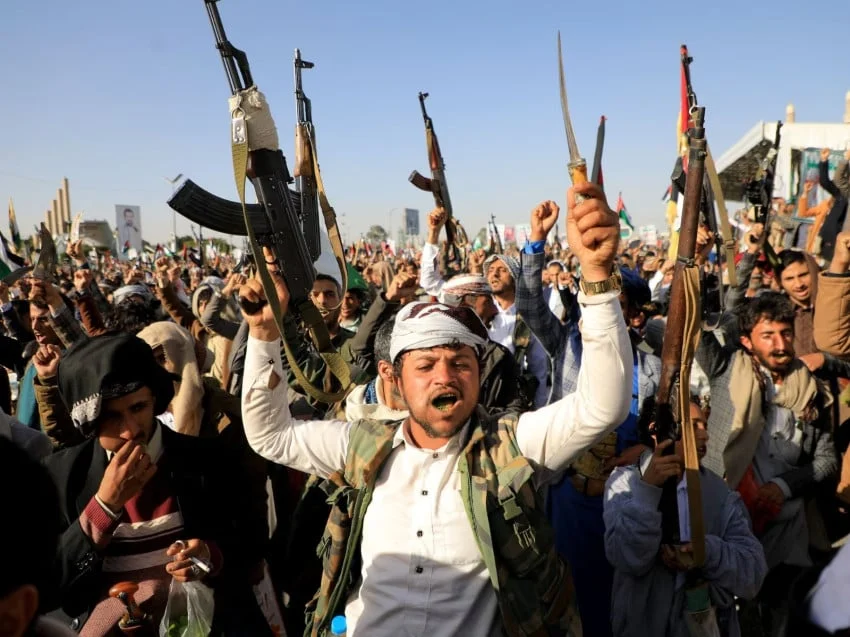
The involvement of the Houthi movement, formally known as Ansar Allah, in the regional geopolitical theater has increasingly come under scrutiny as international observers identify a clear pattern of strategic alignment between the Yemeni group and the Islamic Republic of Iran. While the Houthis maintain a distinct local agenda rooted in Yemen’s internal political landscape, their military capabilities, operational doctrine, and tactical deployment of assets mirror the "Axis of Resistance" model pioneered and supported by Tehran. By functioning as a strategic "wild card," the Houthis have effectively expanded the reach of Iranian influence, turning the Red Sea and the Bab al-Mandeb Strait into theaters of asymmetric warfare that challenge global maritime security and regional stability.
The Evolution of the Iran-Houthi Nexus
The relationship between Iran and the Houthis is not merely ideological; it is deeply rooted in the transfer of advanced military technology and tactical expertise. Over the past decade, the Houthis have evolved from a localized rebel militia into a sophisticated paramilitary force capable of striking targets hundreds of kilometers away. Defense analysts, including Alexandru Hudisteanu, have highlighted that while the Houthis retain a degree of operational autonomy, their inventory—specifically regarding long-range ballistic missiles and Unmanned Aerial Vehicles (UAVs)—is heavily reliant on Iranian-designed components and technical guidance.
This tactical evolution is often categorized by military experts as the "prototyping" of asymmetric warfare. By using the Houthi front, Iran has been able to test the efficacy of its drone swarms and precision-guided munitions in real-world combat scenarios against modern air defense systems, such as the U.S.-made Patriot batteries deployed in Saudi Arabia and the United Arab Emirates. This data-gathering process has allowed Tehran to refine its own military doctrines while simultaneously exerting pressure on regional adversaries without direct military engagement.
Strategic Pillar I: The Proliferation of Drone and Missile Technology
The most visible manifestation of this alignment is the Houthi reliance on low-cost, high-impact drone technology. Much like the IRGC (Islamic Revolutionary Guard Corps) in Iran, the Houthis have prioritized the development of "suicide drones" or loitering munitions. These systems are difficult to detect via traditional radar due to their low-altitude flight paths and small radar cross-sections.
Data from the United Nations Panel of Experts on Yemen has consistently documented the presence of Iranian-origin components in Houthi weaponry. The "Samad" series of UAVs, for instance, exhibits striking similarities in design and propulsion to Iranian models. By deploying these assets, the Houthis have successfully disrupted international shipping lanes and attacked energy infrastructure. The tactical doctrine is simple yet devastating: overwhelm sophisticated air defense systems with a high volume of inexpensive drones, forcing defenders to expend costly interceptor missiles on targets that represent a fraction of the cost.
Strategic Pillar II: Economic Warfare and Maritime Chokepoints
The Houthi strategy in the Bab al-Mandeb Strait mirrors the Iranian threats to close the Strait of Hormuz. By targeting the maritime flow of energy and goods, the Houthis exert leverage that extends far beyond the borders of Yemen. The significance of this cannot be overstated; the Bab al-Mandeb is a vital artery for global trade, through which a substantial portion of the world’s petroleum and commercial goods pass daily.
Recent intelligence reports indicate that the Houthis have adopted a doctrine of "economic attrition." By targeting the East-West Pipeline in Saudi Arabia and threatening commercial tankers, the group aims to increase insurance premiums and shipping costs, effectively weaponizing the global supply chain. This reflects a calculated alignment with Tehran’s regional objective: if international stakeholders feel the pain of regional instability, they may be pressured to facilitate diplomatic concessions or lift sanctions on Iran.
Strategic Pillar III: Attacking the Heart of Defense Infrastructure
Beyond the maritime theater, the Houthis have demonstrated a persistent ability to strike deep into the territory of their opponents. Riyadh, the Saudi capital, has been a frequent target for ballistic missile strikes. These attacks are not intended to achieve total military victory but rather to create psychological pressure and demonstrate the inadequacy of existing security umbrellas.
The tactical methodology involves the use of long-range cruise missiles, such as the Quds-1 and Quds-2, which are believed to be derived from Iranian designs like the Soumar. These strikes, often synchronized with drone attacks, are designed to penetrate deep into Saudi territory, striking critical infrastructure, including oil refineries and airports. This forces the Saudi-led coalition to divert significant financial and military resources toward domestic defense, complicating their efforts to maintain a presence in the Yemeni theater.
Strategic Pillar IV: Asymmetric Signaling and Diplomatic Leverage
The fourth tactical pillar is the use of military action as a signaling tool in diplomatic negotiations. Whenever Iran faces increased international pressure, or when negotiations regarding its nuclear program reach a stalemate, there is often a corresponding increase in Houthi activity. This "tit-for-tat" escalation serves as a reminder to the international community that Iran possesses the means to ignite multiple fronts simultaneously.
By maintaining a persistent threat posture, the Houthis provide Tehran with a "plausible deniability" mechanism. Because the Houthis operate as an independent political entity within Yemen, Iran can maintain that it is not directly involved in the attacks, even as evidence of technical and logistical support becomes increasingly undeniable.
Chronology of Escalation
- 2014–2015: The Houthis seize control of Sanaa, leading to the intervention of a Saudi-led coalition.
- 2017: The first major Houthi missile strike on Riyadh signals the shift toward long-range ballistic capabilities.
- 2019: The Abqaiq-Khurais attack on Saudi oil facilities demonstrates a high degree of precision and coordination, drawing strong accusations of Iranian involvement.
- 2021–2022: Houthi attacks expand to include the United Arab Emirates, utilizing a mix of cruise missiles and long-range drones.
- 2023–2024: The Houthi campaign intensifies in the Red Sea, targeting commercial vessels under the guise of supporting Gaza, further disrupting global maritime security and necessitating international naval responses like Operation Prosperity Guardian.
International Reactions and Global Implications
The international community, particularly the United States and the European Union, has expressed grave concerns regarding the Houthi-Iran nexus. The United Nations has repeatedly called for an end to the illicit transfer of arms to the Houthis, citing violations of UN Security Council resolutions.
The U.S. Department of Defense has frequently released declassified evidence showing the seizure of illicit arms shipments in the Arabian Sea, many of which contain Iranian-made guidance systems and drone parts intended for the Yemeni front. Meanwhile, Saudi Arabia has consistently argued that the Houthi threat is a regional security challenge that requires a unified international response to ensure the security of energy supplies and international trade routes.
Analysis: The Path Forward
The implications of the Houthi-Iran alignment are profound. The Houthis have effectively transitioned from an insurgent force to a regional player capable of altering the strategic calculus of global powers. The integration of Iranian military technology into Houthi operations suggests that the model of proxy warfare is evolving into a more dangerous, decentralized form of conflict.
Moving forward, the stability of the Red Sea and the safety of the Arabian Peninsula will likely depend on how the international community addresses the supply lines of these asymmetric weapons. Military deterrence alone may be insufficient; diplomatic efforts to stabilize the internal Yemeni conflict, coupled with stringent monitoring of maritime smuggling routes, are required to break the cycle of violence. As long as the tactical, technological, and logistical alignment between Tehran and the Houthis remains intact, the "wild card" strategy will continue to pose a significant challenge to the international order, forcing a re-evaluation of how regional security is maintained in an era of drone-led, decentralized warfare.
In conclusion, the Houthis’ tactical reliance on Iranian methods is not a sign of weakness, but rather a deliberate strategic choice that has yielded significant results in the form of regional influence and military disruption. The synchronization of these tactics—drones, economic warfare, deep-strike capabilities, and diplomatic signaling—represents a new paradigm of asymmetric conflict that will continue to shape Middle Eastern security dynamics for the foreseeable future.