When global technology discourse typically centers around innovations originating from Silicon Valley in the United States or high-tech manufacturing hubs in China, Indonesia holds a domestic powerhouse that has quietly defied international dominance for over half a century. Based in the heart of Kudus, Central Java, Polytron has spent the last 51 years evolving from a modest regional assembler of cathode-ray tube televisions into an undisputed titan of the Indonesian home appliance and consumer electronics sector. Today, the brand commands a staggering market share across multiple categories, proving that domestic manufacturing can not only survive intense global competition but ultimately lead the local market through continuous adaptation, localized R&D, and deep consumer affinity.
The milestone of five decades and one year of operation was officially commemorated through the vibrant Polytron Fest 51st Anniversary, held at the South Parking Lot of Gelora Bung Karno in Jakarta. Spanning two days, the festival served as more than just a public celebration of corporate longevity; it functioned as a strategic cultural platform. During the event, Polytron rolled out its latest national branding campaign titled "Bangga Terus Melangkah" (Proudly Stepping Forward), executed in collaboration with renowned Indonesian musical act Maliq & D’Essentials, which will be further amplified through an upcoming high-production music video designed to resonate with generations of Indonesian families who have grown up alongside the brand.
Main Facts and Market Dominance

Polytron’s grip on the Indonesian consumer electronics landscape is quantified by robust retail auditing data. According to market research figures compiled by GfK as of June 2025, Polytron maintains an overwhelming leadership position in the national audio sector, capturing an extraordinary 64 percent market share. This dominance in audio is not a recent phenomenon; the company has maintained at least a 50 percent share of the domestic audio market since as early as 1980, driven by legendary speaker systems and sound systems tailored to Indonesian acoustic preferences.
Beyond audio, Polytron has successfully diversified its product footprint to challenge multinational giants on home turf. In the competitive refrigerator segment, Polytron holds a solid second place with 27 percent of the national market share—a substantial leap from its historical 20 to 30 percent baseline. Similarly, the company secures the second position in LED televisions with 16 percent of the market, while claiming third place in the washing machine category with 15 percent. Though its footprint in the air conditioning (AC) market is still emerging at 4 percent, the rapid rollout of smart, voice-activated cooling solutions signals aggressive growth strategies aimed at capturing a larger slice of the climate-control segment.
Chronology and Evolution: From Kudus to the Global Stage
The corporate journey of Polytron began on September 18, 1975, laying down roots in Kudus, Central Java. Initially operating under modest industrial conditions, the company achieved its first major manufacturing milestone in 1978 with the commercial production of 20-inch black-and-white televisions. Recognizing the rapid shift in consumer preferences toward color broadcasting, Polytron swiftly introduced 22-inch and 26-inch color television sets just a year later in 1979.

As domestic manufacturing capabilities matured, Polytron set its sights on international validation. In 1992, the company successfully breached the highly regulated European market by exporting Indonesian-made color televisions, proving that local engineering could meet stringent international quality and safety standards. Innovation remained at the core of its corporate strategy throughout the turn of the millennium. In 2001, Polytron introduced television sets equipped with proprietary, patented Zeppelin Speaker technology, followed in 2010 by the release of the Nano Hifi audio system, which secured four distinct technological patents.
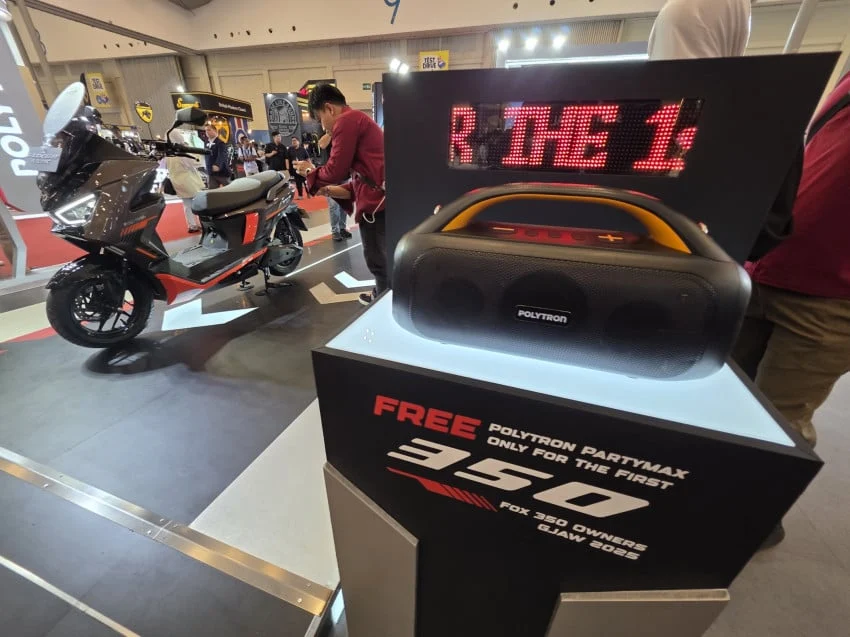
By 2017, the cumulative output across Polytron’s primary manufacturing hubs in Kudus and Sayung, Demak, reached an impressive 10 million units per year. Over the decades, the product portfolio expanded far beyond television and audio systems to encompass a comprehensive ecosystem of household appliances—including refrigerators, electric ovens, water dispensers, and washing machines—while concurrently pushing into modern technology frontiers such as laptops, computer monitors, electric motorcycles, and electric vehicles (EVs).
Pioneering Mobile Technology and Local Content
A defining chapter in Polytron’s history of calculated risk-taking occurred in 2011, when the company made the bold decision to enter the ultra-competitive mobile phone sector, a market heavily guarded by entrenched global smartphone manufacturers. Despite the fierce competition, Polytron’s homegrown mobile lines—specifically the Prime, Zap, and Rocket series—carved out a loyal consumer base by offering feature-rich technology at accessible price points.
.jpg)
A historic milestone was achieved in 2015 with the launch of the Zap 5, widely recognized as the first 4G LTE smartphone manufactured in Indonesia to successfully comply with the government’s strict Domestic Component Level (Tingkat Komponen Dalam Negeri / TKDN) regulations. Building upon this hardware achievement, Polytron released its proprietary operating system, FIRA OS, in 2016. This ecosystem-building approach demonstrated the company’s ambition not merely to assemble foreign parts, but to foster homegrown software and hardware integration tailored specifically to the digital habits of Indonesian mobile users.
Broader Impact and Industry Implications
Polytron’s 51-year survival and market dominance carry profound economic and industrial implications for Indonesia. In an era where many developing nations struggle to maintain domestic manufacturing bases against the onslaught of cheap imports and global conglomerates, Polytron stands as a rare success story of industrial resilience, local job creation, and technological transfer. By continuously reinvesting in research and development, securing domestic patents, and expanding into sustainable sectors such as electric mobility and smart home appliances, the company has transformed itself from a traditional electronics maker into an adaptive technology ecosystem.
As Polytron looks beyond its fifth decade, the brand’s ability to pivot toward voice-activated smart appliances, electric vehicles, and digitally integrated home solutions indicates that its growth trajectory is far from plateauing. By maintaining its emotional connection with generations of Indonesian consumers while aggressively modernizing its product lines, Polytron continues to define the benchmark for national industrial capability and self-reliance in Southeast Asia’s largest economy.