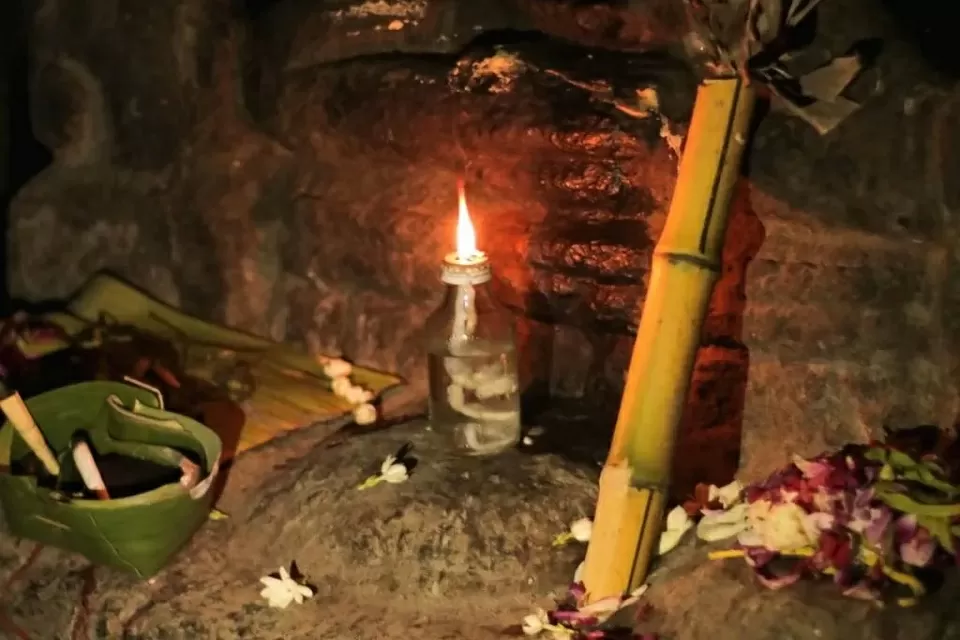
In the digital age, the pursuit of financial prosperity has increasingly migrated to online platforms, where the allure of "instant wealth" is marketed with alarming frequency. Amidst economic pressures and the psychological desire for rapid upward mobility, search queries and social media discourse regarding "pesugihan"—a traditional practice involving occult rituals to gain wealth—have seen a notable resurgence. This phenomenon has prompted religious scholars and sociologists to weigh in on the spiritual, ethical, and societal consequences of attempting to bypass conventional labor in favor of supernatural intervention.
Defining the Phenomenon of Pesugihan
At its core, pesugihan refers to a set of ritualistic practices, deeply rooted in certain cultural traditions, which are performed with the specific intent of acquiring wealth through the assistance of supernatural entities, such as jinn, spirits, or other occult forces. These rituals often involve the use of offerings, amulets, specific incantations, or the adherence to strict, often harrowing, taboos.
The psychological foundation of pesugihan rests on the premise that wealth is a finite resource that can be "summoned" or "transferred" through pacts with the unseen world. While proponents of these practices claim that they offer a shortcut to financial stability, the reality—as documented by religious authorities and law enforcement—is often far more grim. The practice is fundamentally based on the belief that human agency is insufficient to achieve high-level financial success, leading individuals to abandon traditional work ethics in favor of reliance on metaphysical entities.
The Islamic Theological Stance: A Proscription Against Shirk
In the Islamic tradition, the acquisition of wealth is governed by the principles of halal (permissible) and haram (forbidden). The consensus among mainstream Islamic scholars, including figures such as KH Yahya Zainul Ma’arif Jamzuri, commonly known as Buya Yahya, is unequivocal: pesugihan is strictly prohibited.
The prohibition is not merely a matter of ritualistic preference but a fundamental tenet of tauhid (the oneness of God). In Islam, Allah is the sole Provider (Ar-Razzaq). By seeking assistance from jinn, demons, or spirits to procure sustenance, a practitioner commits shirk—the act of associating partners with God. This is considered the gravest sin in Islamic theology.
As articulated in the Quran, specifically in Surah An-Nisa verse 48: "Indeed, Allah does not forgive association with Him, but He forgives what is less than that for whom He wills." By turning to the occult, an individual effectively displaces their reliance on the Creator and places it on created, often malevolent, beings. This shift in allegiance is what renders the act of pesugihan spiritually devastating to the practitioner.
Historical Context and Modern Evolution
The practice of seeking supernatural wealth is not a new phenomenon; it has existed on the fringes of society for centuries, often manifesting in rural contexts where folklore and traditional animism intersected with religious life. Historically, these practices were often shrouded in secrecy, conducted by local "shamans" or practitioners who claimed to have mastery over the spirit realm.
However, the 21st century has introduced a dangerous evolution: the "democratization" of the occult via the internet. In the past decade, social media platforms and unverified online forums have provided a global stage for those selling "instant wealth solutions." This digital transformation has removed the geographic barriers that once limited the spread of such practices. Now, an individual in an urban center can access instructional videos, purchase "blessed" amulets, or contact self-proclaimed occult masters with a single click.
This digital shift has significantly increased the exposure of younger, financially vulnerable populations to these ideas. Data from digital trends monitoring suggests that during periods of economic downturn or high inflation, search volume for terms related to "quick ways to get rich" often spikes, indicating a correlation between financial anxiety and the search for "magical" solutions.
Supporting Data and Societal Implications
While empirical data on the exact number of participants in pesugihan is difficult to verify—given the secretive nature of the practice—the socioeconomic implications are well-documented. Law enforcement agencies in various regions have frequently encountered cases where individuals, having failed to achieve wealth through legitimate business, fall victim to financial scams disguised as occult services.
These "occult frauds" typically follow a predictable pattern:
- The Promise: A charismatic "practitioner" promises guaranteed wealth in exchange for a "startup fee" or "ritual material costs."
- The Ritual: The victim is instructed to perform elaborate, time-consuming, or physically demanding tasks.
- The Escalation: Once the initial payment is made, the practitioner claims the ritual requires more expensive materials or a higher payment to "appease the spirits," trapping the victim in a cycle of financial loss.
- The Departure: Once the victim has exhausted their savings, the practitioner disappears, leaving the victim in a state of financial ruin and often psychological distress.
Beyond the immediate financial loss, the societal impact includes the erosion of trust in the value of hard work and education. When a community begins to perceive that wealth is a matter of luck or mystical favor rather than merit, innovation and labor productivity often decline.
Official Responses and Counter-Narratives
The response from religious institutions and community leaders has been to emphasize the "work-ethic" inherent in Islamic teachings. Islamic labor theory posits that wealth is a test from Allah, and the path to achieving it must be through honest trade, investment, and skill development.
Buya Yahya’s outreach through the Al Bahjah institution serves as a critical counter-narrative. By utilizing modern media channels—such as YouTube and social media—to debunk the myths of pesugihan, these leaders are directly challenging the misinformation found online. The core message is consistent: if a shortcut appears to bypass the laws of nature and the commands of God, it is inherently fraudulent and spiritually dangerous.
Moreover, mental health professionals have noted that the belief in pesugihan often correlates with feelings of hopelessness. They suggest that instead of seeking mystical shortcuts, individuals experiencing financial distress should seek professional financial counseling or vocational training. The transition from a "supernatural" mindset to a "rational-economic" mindset is considered a vital step in the holistic rehabilitation of those who have been seduced by these practices.
The Ethical Imperative
From a broader ethical standpoint, the rejection of pesugihan is not merely a religious injunction but a safeguard for societal integrity. Practices that rely on the deception of others, the exploitation of human fear, and the abandonment of reality-based decision-making are inherently corrosive to the social contract.
When a society prioritizes the pursuit of wealth through the occult, it devalues the dignity of labor. The ethical imperative for any functioning society is to encourage its members to find prosperity through innovation, industry, and service to others. By exposing the fallacies and the spiritual dangers of pesugihan, religious and secular leaders alike are working to steer the public toward a more sustainable and honest path to development.
Conclusion
The resurgence of interest in pesugihan in the digital age is a symptom of a larger, global struggle with economic anxiety and the desire for instant gratification. However, the Islamic perspective remains clear: there is no shortcut to true prosperity. The reliance on the supernatural for material gain is not only a rejection of the foundational principles of faith—leading to the grave status of shirk—but also a practical path to financial and psychological ruin.
As the digital landscape continues to evolve, the challenge for religious and civic institutions is to provide robust, accessible, and credible alternatives. By fostering a culture that values patience, hard work, and reliance on God through legitimate means, society can insulate its members from the false promises of the occult. Wealth, when pursued through ethical and transparent means, serves as a blessing; when sought through the exploitation of fear and the occult, it becomes a burden that destroys both the individual and the community. The path forward is not found in the shadows of ritual, but in the light of honest endeavor and unwavering faith in the natural order established by the Creator.