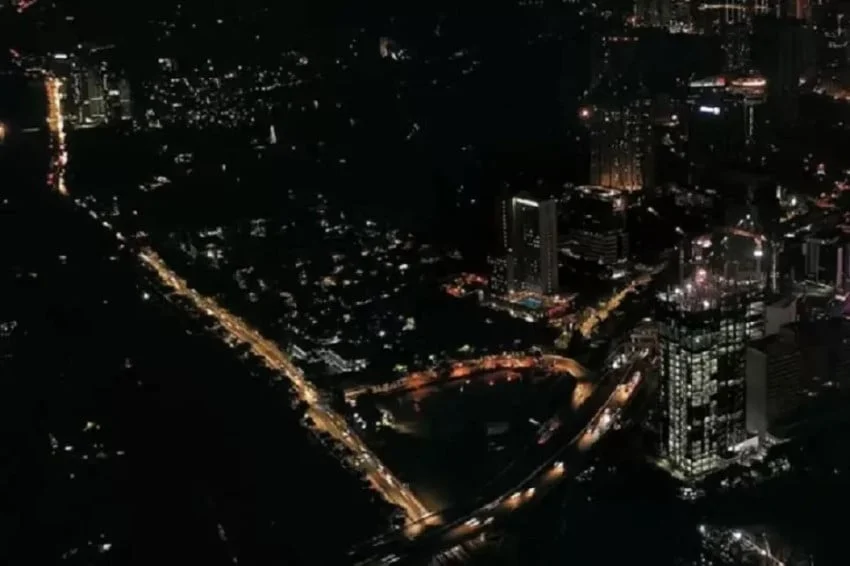
The Jakarta Provincial Government has officially announced a sweeping initiative to combat climate change and celebrate World Ozone Day, urging residents and commercial entities across the capital to participate in a synchronized one-hour blackout. Scheduled for Saturday, September 19, 2026, the campaign will require households, office buildings, and public facilities to turn off non-essential lights and electrical appliances for sixty minutes. This symbolic yet impactful measure aims to significantly reduce carbon emissions, lower energy consumption temporarily, and raise public awareness regarding the critical state of the Earth’s stratospheric ozone layer.
As one of Southeast Asia’s most densely populated and rapidly developing metropolitan areas, Jakarta frequently grapples with severe environmental challenges, particularly high levels of air pollution and elevated greenhouse gas emissions. By plunging the city into a brief, coordinated darkness, local authorities hope to underscore the urgent need for long-term sustainability practices. The initiative is not merely an aesthetic gesture but part of a broader, ongoing strategy by the provincial administration to curb the urban heat island effect, promote energy efficiency, and foster a culture of environmental stewardship among Jakarta’s millions of residents.
Background and Context of World Ozone Day
World Ozone Day, officially designated by the United Nations General Assembly as the International Day for the Preservation of the Ozone Layer, is commemorated globally on September 16 each year. The date marks the signing of the landmark Montreal Protocol on Substances that Deplete the Ozone Layer in 1987. This international environmental treaty was designed to phase out the production and consumption of numerous substances responsible for ozone depletion, such as chlorofluorocarbons (CFCs) and halons, which previously threatened to create massive holes in the atmospheric shield that protects life on Earth from harmful ultraviolet radiation.
Although the global community has made remarkable progress under the Montreal Protocol—with scientific assessments indicating that the ozone layer is steadily healing—environmental degradation has evolved to encompass broader systemic crises, most notably climate change. In urban centers like Jakarta, the accumulation of carbon dioxide and other greenhouse gases traps heat, exacerbates global warming, and deteriorates local air quality. Consequently, local environmental observances have expanded to address these interconnected crises. The Jakarta Provincial Government utilizes World Ozone Day as an annual focal point to mobilize citizens, linking the protection of the atmospheric ozone layer with immediate local actions aimed at reducing energy-related carbon footprints.
Chronology of the Initiative and Implementation Details
The decision to implement the upcoming one-hour blackout was finalized following extensive consultations between the Jakarta Environmental Agency (Dinas Lingkungan Hidup), state-owned electricity provider PT PLN (Persero), and various urban planning stakeholders. Preparations began months in advance, involving rigorous mapping of power grids to ensure that the partial shutdown of non-essential lighting would not disrupt critical infrastructure, hospitals, emergency services, or vital transportation systems.
According to official guidelines released by the Jakarta Provincial Government via its official communication channels, the blackout will take place simultaneously across all five administrative municipalities—Central Jakarta, South Jakarta, East Jakarta, West Jakarta, and North Jakarta—along with the Thousand Islands regency.
The precise timeline for the event on Saturday, September 19, 2026, is structured as follows:
- 19:00 – 20:00 Western Indonesia Time (WIB): The designated sixty-minute window during which participating residents, commercial establishments, and municipal authorities are requested to switch off non-essential indoor and outdoor lighting.
- Pre-Event Phase (Early September 2026): Local sub-district offices (kecamatan and kelurahan) conduct social outreach programs, distributing informational pamphlets and digital notices to residential associations (RT/RW) to encourage maximum participation.
- Post-Event Phase (Late September 2026): Environmental agencies evaluate energy consumption data provided by PT PLN to measure the exact drop in electricity demand and carbon emission reduction achieved during the hour.
Strategic Scope and Affected Areas
The scope of the upcoming blackout is comprehensive, encompassing both residential zones and major commercial corridors. While critical public infrastructure will remain illuminated to ensure public safety and security, prominent architectural landmarks, municipal office buildings, major thoroughfares, and commercial billboards are expected to go dark.
Key locations slated to participate in the initiative include:
- Major arterial roads such as Jalan MH Thamrin and Jalan Jenderal Sudirman.
- Iconic public landmarks, including the National Monument (Monas) area and surrounding government complexes.
- Commercial shopping districts, office towers, and high-rise residential apartments across the capital.
- Neighborhood community centers and residential housing clusters participating on a voluntary basis.
Municipal authorities have emphasized that the blackout is designed to be safe and controlled. Street lighting required for traffic safety and police checkpoints will remain operational, ensuring that commuters and pedestrians are not placed at risk during the event.

Supporting Data: Energy Consumption and Emission Metrics in Jakarta
To understand the environmental significance of a one-hour blackout in Jakarta, it is necessary to examine the capital’s baseline energy consumption and emission profiles. Jakarta consumes vast amounts of electrical energy, the majority of which is generated by coal-fired and natural gas power plants located in and around the greater metropolitan area.
Data from previous environmental campaigns and municipal energy audits indicate that a city-wide reduction in lighting and non-essential electrical usage can yield measurable temporary relief for the local grid. During similar symbolic actions held in previous years, energy providers recorded noticeable dips in electrical load. For instance, past switch-off initiatives spanning major arterial roads and prominent buildings successfully reduced electricity demand by several megawatts within the affected zones, corresponding to a temporary abatement of hundreds of tons of carbon dioxide equivalent ($CO_2e$) emissions during that single hour.
While a one-hour reduction in electricity use represents a modest fraction of the city’s annual carbon output, environmental economists and urban planners view its primary value as psychological and educational. By visualizing the collective impact of turning off unnecessary lights, citizens are prompted to reflect on their daily energy consumption habits, paving the way for sustained behavioral changes such as adopting energy-efficient appliances, utilizing public transportation, and reducing standby power usage in homes and offices.
Official Responses and Stakeholder Perspectives
The initiative has garnered widespread attention and diverse reactions from government officials, environmental organizations, and the general public.
The Jakarta Provincial Government has framed the event as a testament to the city’s commitment to global environmental treaties and sustainable urban development. In a statement released alongside the official announcement, municipal leaders stressed that climate action requires a dual approach: large-scale structural reforms by policymakers and grassroots participation by everyday citizens. "Protecting our ozone layer and mitigating climate change cannot be achieved by government policy alone," a provincial spokesperson noted. "It requires a collective awakening. Turning off our lights for one hour is a powerful symbol of our shared responsibility toward the Earth."
Environmental non-governmental organizations (NGOs) have generally welcomed the campaign, praising its effectiveness in raising public awareness. However, many advocates have also urged the administration to complement symbolic gestures with binding, long-term regulatory measures. Representatives from urban environmental watchdogs noted that while blackouts create valuable educational moments, the city must accelerate its transition toward renewable energy sources, expand green open spaces, and enforce stricter emission standards for both industrial facilities and private vehicles.
PT PLN (Persero), as the primary electricity distributor, has expressed full cooperation with the municipal government. Utility officials confirmed that their engineering teams are fully prepared to manage the localized load fluctuations safely. PLN reassured the public that the temporary drop in demand will be seamlessly managed by the grid control centers without posing any technical risks to the broader power supply network.
Broader Impact, Economic Implications, and Future Outlook
Analyzing the broader implications of Jakarta’s World Ozone Day initiative reveals a complex interplay between symbolic environmentalism and practical urban management. Critics occasionally question the tangible environmental return of brief, scheduled blackouts, arguing that the energy saved during a single hour is negligible when measured against the city’s total annual carbon footprint. Furthermore, some commercial entities have historically expressed concerns regarding potential disruptions or the administrative burden of coordinating shutdowns across large corporate portfolios.
Nonetheless, urban planning experts counter that the true metric of success for such campaigns lies in public engagement and policy momentum. By anchoring climate discussions to a universally recognized observance like World Ozone Day, the Jakarta administration maintains public consciousness regarding environmental degradation. This sustained awareness creates a receptive political environment for more ambitious future policies, such as the expansion of the city’s electric vehicle fleets, the retrofitting of municipal buildings for energy efficiency, and the implementation of congestion pricing or low-emission zones.
As September 19, 2026, approaches, anticipation is building across the Indonesian capital. The success of the upcoming event will ultimately depend on the active participation of Jakarta’s residents and businesses. If executed as planned, the capital will spend sixty minutes in a rare, reflective quietude—a brief pause in the relentless pace of urban life intended to remind millions of citizens of their vital connection to the global environment and the fragile atmosphere that sustains them.