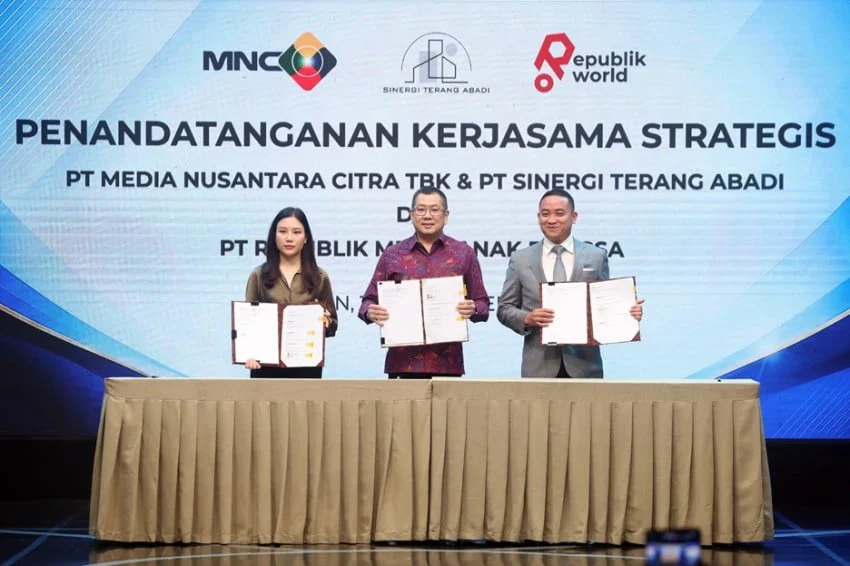
The landscape of the Indonesian media industry is undergoing a profound transformation, driven by the rapid integration of artificial intelligence and the persistent challenge of verifying digital content. In a move to fortify its position within this shifting ecosystem, PT Media Nusantara Citra Tbk (MNCN), a cornerstone of Indonesia’s media conglomerate, has entered into a strategic partnership with the Republikorp Group. This collaboration, formalized on Monday, September 14, 2026, at the iNews Tower in Jakarta, aims to pool resources, technology, and intellectual capital to address the multifaceted threats and opportunities presented by the modern information age.
The agreement involves key stakeholders from both organizations, including Executive Chairman of MNC Group Hary Tanoesoedibjo, Founder and Chairman of Republikorp Norman Joesoef, and CEO of iNews Media Group Angela Tanoesoedibjo. The synergy between MNCN, PT Sinergi Terang Abadi, and PT Republik Media Anak Bangsa is designed to build a robust, integrated media ecosystem that can withstand the volatility of global digital trends.
The Strategic Vision for Media Integrity
During the signing ceremony, Angela Tanoesoedibjo emphasized that the partnership is not merely a corporate expansion but a tactical necessity. As the CEO of iNews Media Group, Angela has been at the forefront of navigating the digital transition. She identified the dual pressures of technological disruption and the proliferation of misinformation as the primary catalysts for this alliance.
"The industry is currently navigating a landscape where the velocity of information often outpaces the velocity of verification," Angela noted. "By collaborating with Republikorp, we are positioning ourselves to utilize AI as a tool for efficiency rather than allowing it to be a vehicle for disinformation. This partnership allows us to leverage shared technology and data insights to ensure that our media outlets remain the primary source of truth for the Indonesian public."
The collaboration addresses a critical gap in the domestic media market: the need for advanced verification mechanisms that can identify AI-generated content or "deepfakes" before they reach the mass audience. By integrating Republikorp’s technological capabilities with MNC Group’s extensive distribution network, the parties aim to set a new standard for media literacy and ethical reporting in the region.
The Chronology of an Integrated Ecosystem
The buildup to the September 14 announcement followed months of rigorous negotiations and structural planning. Analysts view this development as the logical culmination of MNC Group’s long-term digital transformation strategy, which has sought to consolidate its dominance across traditional television, digital streaming, and news portals.
- Phase One (Q1 2026): Initial explorations between MNC Group and potential technology partners to address digital infrastructure challenges.
- Phase Two (Q2 2026): Due diligence and evaluation of Republikorp’s proprietary media technology, specifically focusing on their AI-driven analytical capabilities.
- Phase Three (July-August 2026): Drafting of the memorandum of understanding (MoU) regarding the integration of PT Sinergi Terang Abadi and PT Republik Media Anak Bangsa into the broader MNC digital framework.
- Phase Four (September 14, 2026): Official signing ceremony at iNews Tower, cementing the commitment to a unified media architecture.
This timeline reflects a strategic shift in the Indonesian media sector, where traditional media houses are increasingly adopting "tech-first" methodologies to remain relevant against global social media platforms.
Data-Driven Challenges in the Indonesian Media Market
To understand the gravity of the MNCN-Republikorp partnership, one must examine the broader industry data. According to industry reports from 2025, over 70% of news consumption in Indonesia occurs via mobile devices, with social media algorithms acting as the primary curators of information. However, this convenience has come at a high price: the rise of "infodemic" trends, where unverified claims gain more traction than vetted journalism.

Current market research suggests that the proliferation of generative AI in content creation has lowered the barrier to entry for malicious actors looking to spread disinformation. Statistics from the national telecommunications authority indicate a 40% increase in reports related to manipulated digital media over the last 18 months.
For MNC Group, which reaches tens of millions of viewers daily, the risk of reputational damage through misinformation is significant. By partnering with a technologically adept group like Republikorp, MNCN is effectively investing in a "defensive shield"—a set of protocols and automated systems designed to flag inaccuracies in real-time, thereby protecting the integrity of their newsrooms.
Insights from the Leadership
Executive Chairman Hary Tanoesoedibjo, whose leadership has been central to MNC Group’s growth, framed the partnership as an investment in the future of the nation’s democratic discourse. "A media organization is only as strong as the trust it maintains with its audience," he stated during the event. "This collaboration is about building the infrastructure that supports that trust. We are not just creating content; we are creating a reliable ecosystem."
Norman Joesoef, representing the Republikorp Group, echoed this sentiment, highlighting the technical synergy between the two entities. "The integration of Republikorp’s R&D capabilities with the reach of the MNC Group creates a unique multiplier effect. We are looking at creating proprietary solutions that can identify the provenance of digital information, which is a game-changer for the Indonesian media landscape."
Broader Implications for the Industry
The implications of this collaboration are expected to ripple across the Indonesian media landscape for several reasons:
- Setting Industry Standards: The MNCN-Republikorp partnership may serve as a blueprint for other media conglomerates in the region. It signals a move toward consolidation of technological resources, moving away from fragmented, siloed digital efforts.
- AI as a Protective Measure: While much of the global narrative surrounding AI in media focuses on job displacement, this partnership focuses on AI as a verification tool. This could pivot the national conversation toward "Responsible AI" usage.
- Enhanced Audience Engagement: By providing more accurate and verified content, the collaboration aims to recapture audiences that have drifted toward unregulated social media channels.
- Economic Resilience: The pooling of resources between MNCN, STA, and RMAB provides a buffer against the fluctuating advertising market. A more efficient, integrated ecosystem allows for more targeted advertising and better data monetization, which are vital for sustainable media operations.
Looking Ahead: The Future of Verified News
As the partnership moves into the implementation phase, the industry will be watching closely to see how the proposed technologies are deployed. The challenge will lie in balancing the speed required for modern news cycles with the meticulous nature of verification.
Angela Tanoesoedibjo’s emphasis on "collaboration as a strategy" suggests that this is only the first of many steps. As the digital frontier continues to expand, the ability of media houses to maintain their role as "gatekeepers of truth" will depend entirely on their agility in adopting new technologies. By aligning with Republikorp, MNCN has signaled that it is not merely reacting to the future, but actively attempting to shape it.
The success of this venture will likely be measured by the public’s continued trust in MNC-affiliated platforms. In an era where "fake news" can influence everything from public health to national elections, the work being done at the iNews Tower is of critical importance. The alliance between MNCN and Republikorp is more than just a business deal; it is an acknowledgment that in the digital age, the most valuable currency is, and always will be, the truth. As the integration process unfolds, the media industry will undoubtedly look to this collaboration as a case study in how legacy giants can successfully navigate the complexities of the 21st-century information landscape.