JAKARTA — The Indonesian Ministry of Primary and Secondary Education has officially outlined its strategic framework for the national school revitalization program slated for 2026. The sweeping infrastructure initiative aims to address deep-seated infrastructural inequities across the archipelago by prioritizing three specific categories of educational institutions: schools impacted by natural disasters, facilities categorized as severely damaged, and those situated in Indonesia’s outermost, underdeveloped, and frontier regions, commonly known as the 3T regions.
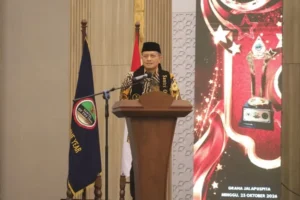
Minister of Primary and Secondary Education Abdul Mu’ti formally detailed the priorities during a media briefing in Jakarta. According to the minister, the upcoming fiscal year’s revitalization roadmap targets tens of thousands of educational units nationwide, marking one of the most comprehensive infrastructure overhauls in the country’s recent history. The systematic intervention seeks to bridge the stark gap in educational facility standards between major urban centers and remote territories, ensuring that every Indonesian student has access to safe, conducive, and modern learning environments.
Core Priorities of the 2026 Infrastructure Strategy
The urgency of the 2026 revitalization program stems from a comprehensive evaluation of Indonesia’s vast educational landscape, which spans thousands of islands and diverse geographical terrains. Many schools, particularly those built decades ago or located in disaster-prone seismic and meteorological zones, suffer from chronic structural vulnerabilities.
Minister Mu’ti emphasized that the government has stratified its intervention targets to maximize impact where the need is most critical. The primary tier focuses on educational facilities devastated by natural calamities such as earthquakes, floods, landslides, and volcanic eruptions—events that frequently disrupt the academic calendar and leave communities stripped of basic public infrastructure.
The second tier addresses schools enduring severe structural degradation. These are facilities where roofs are collapsing, walls are severely cracked, and foundational integrity has been compromised to the point of endangering students and teachers.
The third tier encompasses the 3T regions (Tertinggal, Terdepan, dan Terluar). Schools in these areas often grapple with logistical isolation, limited access to stable electricity and clean water, and acute shortages of standard educational hardware. By directing resources to these fronts, the administration aims to uphold the constitutional mandate of delivering equitable, quality education to all citizens regardless of their geographic location.
Implementation Scale and Chronology of the Project
The nationwide educational infrastructure overhaul is already underway in phases. Ministry data indicates that physical development has commenced across 11,744 educational units. Of this initial wave, more than 1,000 schools have successfully completed their revitalization processes, signaling tangible early progress on the ground.
Building upon this initial momentum, the government is preparing to scale up operations through additional funding mechanisms, notably utilizing the Additional Expenditure Budget (Anggaran Belanja Tambahan or ABT). When factoring in all designated allocations and multi-ministerial coordination efforts, the central government plans to execute revitalization projects on a massive scale, targeting a total of 71,744 educational units throughout the 2026 calendar year.
Furthermore, officials project that this aggregate figure could increase as the program progresses. The potential for expansion lies in the implementation efficiency achieved through a decentralized construction framework known as the community-based self-management system (swakelola), which directly empowers local school committees and administration boards to oversee building operations.
Advantages of the Community-Based Self-Management System
A pivotal component of the 2026 revitalization initiative is the reliance on the swakelola or self-management execution model. Rather than depending exclusively on centralized, large-scale third-party contractors, the ministry is delegating project management responsibilities directly to the respective schools and local communities.
Minister Mu’ti outlined several profound benefits associated with this approach. Foremost among them is financial efficiency. By cutting out intermediary bureaucratic layers and large commercial contractor overheads, the allocated state funds stretch significantly further, allowing the administration to repair a higher volume of classrooms per rupiah spent.
Beyond cost-effectiveness, the self-management model directly elevates construction quality. Because school principals, teachers, and local stakeholders have a direct, personal stake in the safety and longevity of their facilities, quality control is naturally heightened. Communities are inclined to oversee material selection and labor standards meticulously to ensure the durability of the finished structures.
In addition to infrastructural improvements, the swakelola scheme generates immediate secondary benefits for local economies. Construction materials are preferentially procured from regional suppliers, and laborers are hired from surrounding neighborhoods. This localized economic stimulus transforms school construction sites into micro-economic catalysts, injecting capital directly into grassroots communities and supporting regional livelihoods.
Moreover, this participatory framework creates valuable space for broader community engagement. Numerous private schools have reported receiving significant voluntary contributions (swadaya) from parents and local philanthropists, effectively supplementing state funds to deliver comprehensive institutional upgrades that surpass baseline renovation specifications.
Inclusion of Private Educational Institutions
A notable policy direction of the 2026 revitalization program is its inclusive scope. While state-run public schools remain a primary focus, the Ministry of Primary and Secondary Education has explicitly mandated that private educational institutions are eligible for inclusion in the revitalization pipeline.
Minister Mu’ti defended this decision by highlighting the indispensable role that private foundations and community-run schools play in the national education ecosystem. Across Indonesia, tens of thousands of private schools—ranging from Islamic madrasahs and Christian mission schools to independent community academies—educate millions of students, frequently absorbing populations that public institutions cannot accommodate due to capacity constraints.
By extending revitalization grants and structural support to private entities, the government acknowledges that the burden of national educational development cannot be borne by the public sector alone. Ensuring that private schools operating in impoverished or disaster-prone areas meet safety and sanitary standards is viewed as a vital investment in the nation’s human capital development strategy.
Governance, Transparency, and Anti-Corruption Measures
Given the unprecedented financial scale of the 71,744-unit revitalization initiative, the government has placed heavy emphasis on strict administrative oversight, transparency, and anti-corruption measures. The centralization of funds combined with decentralized execution presents inherent governance challenges that the ministry is proactively working to mitigate.
Minister Mu’ti issued an explicit call to action directed at the general public, civil society organizations, and the national media. He urged stakeholders to actively monitor revitalization projects in their respective regions to ensure strict compliance with proper governance principles.
"We request support from the public and our friends in the media to guarantee that the execution of this revitalization is carried out in strict accordance with proper governance principles, ensuring zero leakage and zero misuse of funds," Mu’ti stated.
This call for open surveillance aligns with broader national anti-corruption initiatives, seeking to transform local communities into frontline auditors. By making project budgets transparent and empowering local oversight, the ministry aims to deter the embezzlement of state funds, substandard construction practices, and bureaucratic delays that have historically plagued public infrastructure projects in developing regions.
Broader Socio-Economic Implications and Future Outlook
The launch of the 2026 national school revitalization program carries profound implications for Indonesia’s long-term socio-economic trajectory. Education economists and policy analysts have long argued that physical infrastructure serves as the baseline prerequisite for effective pedagogy. Classrooms lacking roofs, schools without clean sanitation facilities, and remote outposts devoid of basic structural integrity directly impair student attendance, retention, and cognitive development.
By addressing these infrastructural deficits systematically—focusing first on disaster victims, structurally compromised facilities, and marginalized 3T zones—the Ministry of Primary and Secondary Education is effectively laying the foundation for greater educational equity.
As the 71,744-target implementation progresses through the year, the success of the program will ultimately be measured not merely by the volume of disbursed funds or the number of signed contracts, but by the tangible improvement in safety, learning quality, and community resilience. With rigorous public oversight, administrative efficiency driven by the swakelola model, and an inclusive approach bridging both public and private sectors, the 2026 initiative represents a critical stride toward realizing Indonesia’s vision of advanced, equitable human capital development for future generations.