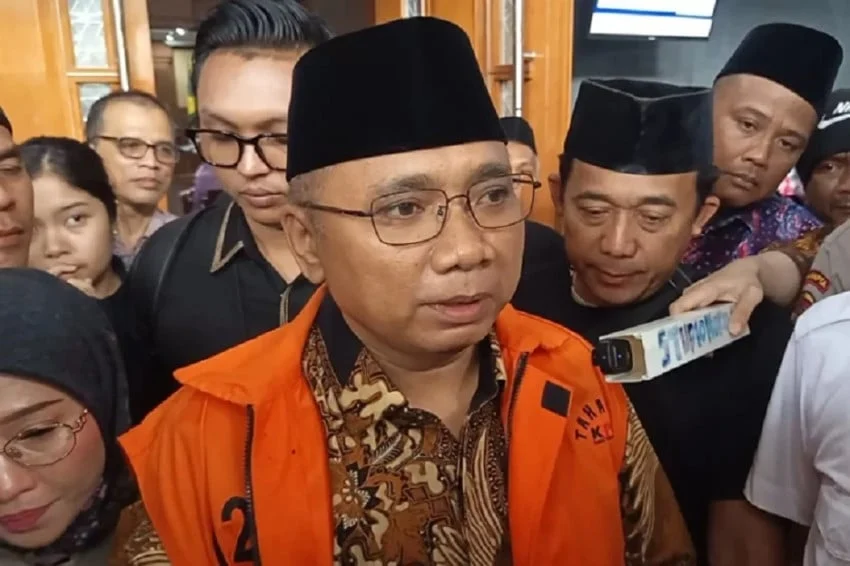
The legal counsel representing former Indonesian Minister of Religious Affairs, Yaqut Cholil Qoumas—widely known as Gus Yaqut—has formally asserted that testimonies delivered under oath by witnesses during open court proceedings carry significantly greater legal weight than the preliminary statements documented in police or investigative reports. This pivotal argument was brought to the forefront during ongoing judicial proceedings at the Jakarta Corruption Court (Pengadilan Tipikor), where the defense scrutinized discrepancies between formal investigative dossiers and live courtroom depositions.
The controversy centers on the high-profile corruption investigation and subsequent trial concerning alleged irregularities in the allocation of additional Hajj quotas. As the judiciary meticulously examines financial trails, ministerial policy decisions, and bureaucratic procedures within the Ministry of Religious Affairs (Kemenag), the evidentiary value of witness statements has emerged as a central battleground between the Corruption Eradication Commission (KPK) prosecution team and the defense counsel.
Core Legal Arguments: Courtroom Testimony Versus Investigative Dossiers
Speaking on the sidelines of the evidentiary hearings at the Jakarta Corruption Court, Mellisa Anggraini, the primary legal counsel for Gus Yaqut, emphasized the stark contrasts observed between the written investigation dossiers—commonly known as Berita Acara Pemeriksaan (BAP)—and the oral testimonies provided by witnesses on the stand. According to the defense team, the judicial process relies fundamentally on the direct, uncoerced statements made before a panel of judges, where witnesses are subject to cross-examination and judicial scrutiny.
"We have observed that the statements contained in the BAP and what these witnesses ultimately testify to inside the courtroom are vastly different, extremely different. Therefore, we will certainly continue to explore these contradictions, and legally speaking, what must be prioritized and extracted as truth is the testimony delivered directly inside the court of law," stated Mellisa Anggraini.
The defense’s focus on this legal principle is anchored in Indonesian criminal procedural law (KUHAP), which prioritizes direct judicial examination to establish material truth. By highlighting variances between preliminary investigative summaries and live testimonies, the defense aims to undermine specific allegations outlined in the public indictment drafted by KPK prosecutors.
Chronology of the Hajj Quota Controversy and Judicial Timeline
The legal troubles facing the former leadership of the Ministry of Religious Affairs did not materialize overnight; they represent the culmination of months of legislative inquiries, investigative audits, and subsequent law enforcement actions.
The controversy traces back to policy decisions surrounding the distribution of additional Hajj quotas granted by the Kingdom of Saudi Arabia. Questions were raised regarding the deviation from the traditional 50-50 percentage split between regular and special Hajj programs, as stipulated by prevailing regulations. Critics and legislative bodies argued that the reallocation favored specific private travel agencies, prompting formal inquiries by the House of Representatives (DPR) and subsequent investigative actions by the KPK.
By late 2024 and throughout 2025, the investigation escalated from administrative audits to formal suspect designations. Investigators examined numerous officials, contractors, and ministerial staff members. By early 2026, the case formally moved to the trial phase at the Jakarta Corruption Court, featuring high-profile witnesses from various sectors of government and private enterprise, including public figures and political actors summoned to clarify procedural anomalies and alleged financial transactions.
Case Study: Contradictions Surrounding Financial Allegations
To substantiate their claims regarding the unreliability of initial investigative dossiers, the defense team pointed to specific testimonies involving mid-level administrative personnel within the ministry. A prime example highlighted by Mellisa Anggraini involved Ridwan Kurniawan, a former non-permanent administrative worker (honorer) at the Ministry of Religious Affairs.
In the initial BAP drafted during the investigative phase, Ridwan Kurniawan reportedly referenced an alleged financial flow amounting to USD 271,500 directed toward Yaqut Cholil Qoumas. However, defense attorneys pointed out that this assertion was subsequently retracted, clarified, or fundamentally altered by Ridwan in subsequent investigative examinations as the inquiry progressed.
Despite these later clarifications by the witness himself, the KPK prosecution team allegedly relied upon the initial, uncorrected BAP entries when formulating the final formal indictment presented to the court. The defense argues that utilizing superseded preliminary statements while ignoring subsequent retractions or clarifications compromises the integrity of the prosecution’s evidentiary foundation. This discrepancy forms a cornerstone of the defense strategy as they seek to dismantle the financial nexus allegedly linking the former minister to illicit funds.
Broader Context of Witness Testimonies and Public Figures
The trial has consistently drawn intense public scrutiny, amplified by the appearance of prominent public figures as witnesses. Among those summoned to testify in connection with the Hajj quota utilization case is Dito Ariotedjo, whose appearance generated widespread media coverage. Observers and legal analysts noted that the inclusion of high-profile political figures underscores the far-reaching political and administrative implications of the judicial proceedings.
When entering the courtroom to fulfill his legal obligation as a witness, Dito Ariotedjo expressed hope that his testimony would contribute constructively to the judicial process and aid in establishing factual clarity. "Hopefully, this can assist the court proceedings and the process of evidentiary proof," he remarked to reporters prior to taking the stand.
The involvement of various external political and administrative figures highlights the systemic nature of the Hajj quota distribution framework. The Ministry of Religious Affairs manages millions of prospective pilgrims annually, representing a massive logistical operation characterized by complex financial streams and stringent regulatory oversight. Any disruption or policy deviation within this apparatus inevitably attracts intense institutional scrutiny.
Fact-Based Analysis of Legal and Institutional Implications
The ongoing debate over the legal hierarchy between BAP records and open court testimonies carries significant implications for the broader Indonesian criminal justice system, particularly in corruption trials handled by the KPK.
- Evidentiary Standards in Corruption Trials: Under Indonesian jurisprudence, judges are tasked with uncovering material truth. While BAP documents serve as vital roadmaps for investigators and prosecutors during the pre-trial phase, their legal standing diminishes if a witness explicitly retracts or modifies their statements under oath during a trial, unless corroborating physical or documentary evidence supports the initial dossier.
- Prosecutorial Strategy and Indictment Integrity: The reliance of prosecutors on preliminary dossiers—even when witnesses alter their accounts in court—frequently sparks intense debate. Defense strategies routinely exploit these gaps to portray investigative overreach or procedural bias, forcing the prosecution to present robust corroborating evidence beyond verbal confessions or disputed preliminary statements.
- Administrative Reform within Kemenag: Beyond the courtroom, the trial serves as a stark reminder of the governance challenges plaguing state management of religious tourism and pilgrimage quotas. The systematic overhaul of quota allocation mechanisms is viewed by institutional reformers as an essential step to restore public trust in the administration of the Hajj, regardless of the ultimate judicial verdict rendered against individual defendants.
Outlook for the Judicial Proceedings
As the Jakarta Corruption Court continues its schedule of hearings, the defense team for Gus Yaqut is expected to maintain its aggressive stance on cross-examining prosecution witnesses. By systematically challenging the contents of investigative dossiers against live testimonies, the defense aims to dismantle the core pillars of the state’s indictment.
Meanwhile, the KPK prosecution team faces the ongoing task of reconciling witness retractions with documented paper trails, financial audits, and corroborating exhibits. The ultimate ruling by the panel of judges will not only determine the legal liability of the former Minister of Religious Affairs but will also set a crucial judicial precedent regarding the evidentiary weight assigned to preliminary investigative reports versus open court testimonies in complex white-collar crime prosecutions.