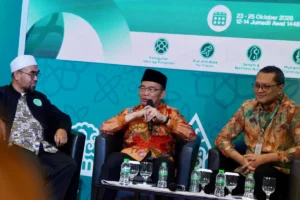
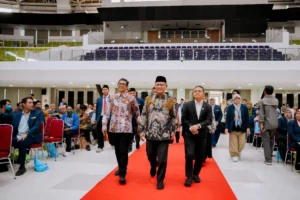
The 21st anniversary of the passing of Nurcholish Madjid, widely revered as Cak Nur, served as a significant platform for former Coordinating Minister for Political, Legal, and Security Affairs, Prof. Mahfud MD, to deliver a profound cultural oration. The event, held to honor the intellectual legacy of one of Indonesia’s most influential reformist thinkers, centered on the critical imperative of "Straightening National Leadership." Mahfud MD utilized the occasion to diagnose the current state of Indonesian governance, drawing parallels between historical power dynamics and the foundational ethics championed by Cak Nur.
The Intellectual Legacy of Nurcholish Madjid
Nurcholish Madjid (1939–2005) was a central figure in the modernization of Islamic thought in Indonesia. As a former Chairman of the Indonesian Islamic Students Association (HMI), his contributions went beyond theology; he was a bridge-builder who advocated for the compatibility of Islam, democracy, and modern nation-statehood. His famous slogan, "Islam, Yes; Islamic Parties, No," underscored his belief that the substance of Islamic values—justice, equality, and human rights—should permeate the nation’s political landscape without being confined to narrow partisan labels.
The 21st Haul, attended by prominent scholars, civil society leaders, and former government officials, acted as a forum to evaluate how far contemporary leadership has drifted from the "Grand Consensus" (Mitsaqan Ghalizha) established by the nation’s founding fathers.
Analytical Framework: The Tri Seloka
In his oration, Mahfud MD synthesized Cak Nur’s complex ideas into a conceptual framework he termed "Tri Seloka." This framework is designed to provide a compass for national leaders navigating the complexities of a diverse, pluralistic Indonesia.
- Ummatan Wahidah (The Unified Community): A recognition that despite religious and ethnic diversity, all Indonesians share a common humanity and origin, fostering an inclusive national identity.
- Kalimatun Sawa’ (The Common Platform): The identification of shared interests and universal values—such as justice, anti-corruption, and environmental protection—that allow citizens of different faiths to collaborate effectively.
- Al-Hanifiyah As-Samhah (The Upright and Tolerant Faith): An interpretation of Islam that emphasizes moderation and rejects the notion that one must alienate others to prove the righteousness of one’s own faith.
Historical Context and the Pitfalls of Power
Mahfud MD juxtaposed Indonesia’s leadership journey with the historical fragmentation of the Indian subcontinent. He highlighted how the 1947 partition of India and Pakistan, and the subsequent 1971 separation of Bangladesh, were fueled by failures to manage primordial identities—specifically religion and regional injustice.

He applied this analysis to Indonesia’s own political history, specifically focusing on the tenures of President Sukarno and President Soeharto. Both leaders, initially hailed as champions of the people, eventually succumbed to the political adage "Power tends to corrupt." Mahfud noted that the transition from a servant-leader to a permanent ruler often involves "al-bithanah"—an inner circle of advisors who insulate the leader from reality, urging them to maintain power for the "sake of the nation."
The chronology of these presidencies demonstrates that even the most revolutionary figures can be eroded by the lack of constitutional limits. By the time the New Order ended in 1998, the systemic corruption had become deeply embedded, necessitating the Reformasi movement to restore democratic checks and balances.
Addressing Contemporary Challenges
A significant portion of the oration focused on the decline of integrity in the political process. Mahfud MD lamented the shift in Indonesian politics from being "vision and mission-oriented" to "transactional-oriented." He introduced the colloquial concept of "visi, misi, peces" (vision, mission, and cash), arguing that money politics has undermined the democratic process.
He specifically criticized the legislative trend of prioritizing short-term financial gains over long-term institutional health. Citing the Financial Action Task Force (FATF) standards, he warned that regulations such as Article 50A of the Law on the Development and Strengthening of the Financial Sector (UU P2SK) risk weakening the country’s anti-money laundering framework. If the origin of funds becomes unscrutinized, the nation risks becoming a haven for illicit financial flows, further widening the gap between the powerful and the common citizen.
The Concept of Mitsaqan Ghalizha
Mahfud MD framed Pancasila not merely as a state ideology, but as a "sacred covenant" (Mitsaqan Ghalizha). Borrowing from the Islamic concept of the marriage contract, he described the state-citizen relationship as a binding commitment to uphold justice, human life, property, and freedom of thought.
He argued that any attempt to alter this covenant must occur through constitutional mechanisms, not through radicalism or unilateral force. The stability of Indonesia since the Reformasi era proves that the majority of the population remains committed to this consensus, effectively rejecting parties or movements that seek to replace the foundational state philosophy.

Policy Implications and the Need for "New Muezzins"
The implications of Mahfud MD’s oration are clear: the Indonesian state is at a crossroads where the defense of institutional integrity is paramount. He asserted that the responsibility to "straighten" the leadership lies with the civil society and the intellectual elite.
He used the metaphor of the "muezzin"—the person who calls the faithful to prayer—to describe the need for new voices in the public square. These "new muezzins" must be brave enough to call the nation back to the core values of justice, transparency, and constitutional adherence.
The analysis concludes that corruption is not a religious issue but a human one, fueled by the unchecked accumulation of power. To honor the legacy of Cak Nur, the nation must shift its focus from the "outward appearance" (mazhar) of religious identity to the "substance" (jauhar) of governance, which requires protecting the vulnerable rather than defending the interests of the elite.
Conclusion: A Call for Institutional Vigilance
As Indonesia navigates its future, the message from the 21st Haul of Cak Nur serves as both a warning and a roadmap. The persistence of systemic issues—such as the selectivity of law enforcement and the influence of money in politics—requires a vigilant citizenry.
The oration by Prof. Mahfud MD emphasizes that the ultimate test of any national leader is their commitment to the "Grand Consensus." Whether through protecting the environment, ensuring fair taxation, or maintaining judicial independence, the goal remains the same: a nation that serves its people according to the high ideals of its founding, rather than a nation that exists to serve its rulers.
The event concluded with a collective reflection, urging attendees to look beyond the political theatrics of the day and engage in the substantive work of nation-building. By returning to the principles of ummatan wahidah and kalimatun sawa’, the nation can hope to navigate its current political turbulence and emerge more resilient, honoring the intellectual spirit of one of its most dedicated architects of democracy, Nurcholish Madjid.