KAI Logistik, a subsidiary of the state-owned railway operator PT Kereta Api Indonesia (Persero), has officially announced its operational performance for the first semester of 2026, revealing a robust total freight volume of approximately 8.7 million tons. This achievement marks a significant milestone for the company as it continues to solidify its position as a cornerstone of Indonesia’s national logistics infrastructure. The performance reflects a steady upward trajectory in the demand for rail-based transportation, which is increasingly viewed by industries as a more efficient, reliable, and sustainable alternative to traditional road-based logistics. This growth is largely attributed to the company’s strategic focus on diversifying its service portfolio while maintaining its dominance in the bulk commodity sector, particularly coal, which remains the primary driver of its operational volume.
According to the data released by the company on Wednesday, July 22, 2026, the 8.7 million tons recorded between January and June represent a comprehensive effort to optimize rail assets and enhance service quality across various business segments. President Director of KAI Logistik, Yuskal Setiawan, emphasized that the first half of the year was characterized by resilience and strategic expansion. He noted that while the energy sector continues to rely heavily on rail for the movement of raw materials, there is a burgeoning trend among manufacturing and retail sectors to shift toward rail to mitigate the risks of road congestion and fluctuating fuel costs. The company’s ability to capture this shifting demand has been pivotal in reaching the mid-year target.
Strategic Dominance of the Coal Segment
Coal remains the undisputed heavyweight in KAI Logistik’s portfolio, contributing roughly 63% of the total volume managed during the first semester of 2026. In numerical terms, the company transported approximately 5.4 million tons of coal during this six-month period. This dominance is not merely a reflection of the volume but also highlights the critical role KAI Logistik plays in the national energy supply chain. Most of this coal is transported across key corridors in Sumatra and Java, feeding power plants and industrial hubs that are essential for the country’s economic stability.
The logistics of coal transportation via rail offer distinct advantages over maritime or road transport, particularly in terms of consistency and environmental impact. By utilizing high-capacity train sets, KAI Logistik can move thousands of tons in a single journey, significantly reducing the carbon footprint per ton-mile compared to trucking. Furthermore, the reliability of rail schedules ensures that power plants maintain adequate stockpiles, preventing energy shortages. The 5.4 million tons recorded in the first half of 2026 suggests that industrial demand for coal remains high, despite the global transition toward renewable energy, as Indonesia continues to utilize its domestic resources for industrial growth.
Rapid Expansion in Container and Retail Services
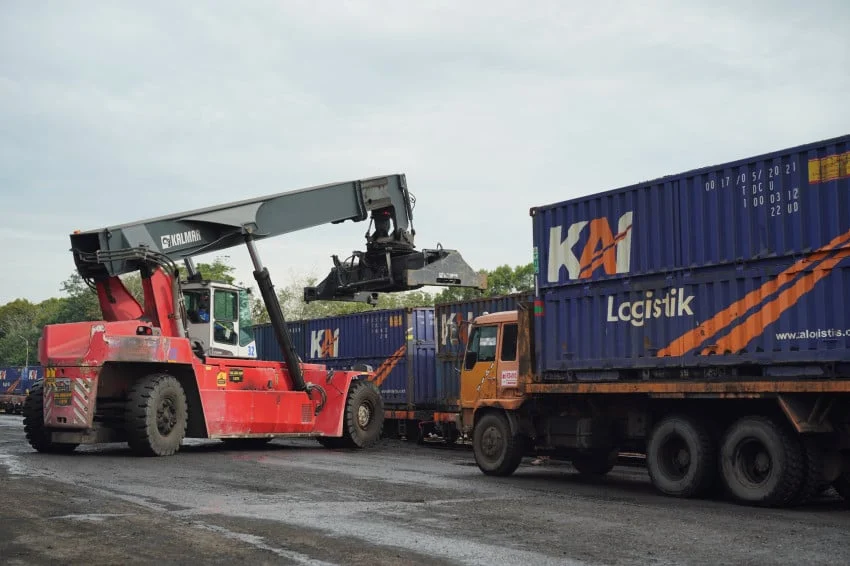
While coal provides the volume baseline, the most dynamic growth was observed in the containerized cargo and retail segments. KAI Logistik reported that container transport volume surged by 27% compared to the same period in the previous year, reaching approximately 1.5 million tons. This double-digit growth is a clear indicator of the success of the company’s "modal shift" strategy, which encourages businesses to move their goods from trucks to trains. The container segment is particularly vital for the manufacturing sector, moving everything from electronics and automotive parts to consumer packaged goods between major industrial estates and seaports.
The retail segment, though smaller in absolute volume, showed even more impressive relative growth. With a 29% increase year-on-year, retail logistics reached approximately 38,000 tons. This growth is closely linked to the booming e-commerce landscape in Indonesia and the increasing demand for "last-mile" delivery solutions that are integrated with "middle-mile" rail transport. Through its Kalog Express brand, the company has enhanced its reach to small and medium enterprises (SMEs), providing them with a cost-effective way to distribute goods across the island of Java. The rise in retail volume suggests that KAI Logistik is successfully penetrating the high-value, time-sensitive cargo market that was previously dominated by courier services and trucking fleets.
Diversified Commodity Portfolio: Fuel, Cement, and Hazardous Waste
KAI Logistik’s operational success in the first half of 2026 was further bolstered by its performance in specialized cargo categories. The transportation of Fuel (BBM) and Special Fuel (BBK) reached approximately 1.5 million tons. This segment is highly regulated and requires specialized rolling stock and stringent safety protocols. The consistent volume in fuel transport underscores the trust placed in KAI Logistik by national energy entities to distribute vital liquid fuels to various regions, ensuring energy security at the local level.
In addition to energy-related commodities, the company moved 191,000 tons of cement during the first semester. The construction industry remains a key client for rail logistics, especially for the long-distance transport of heavy building materials where rail’s cost-efficiency is most apparent. Perhaps most notably from a sustainability perspective, KAI Logistik also managed the transport of approximately 4,000 tons of hazardous and toxic waste (B3). This specialized service is crucial for environmental protection, as rail transport offers a more secure and controlled environment for moving dangerous materials compared to public highways, minimizing the risk of accidents and environmental contamination.
Comparative Growth and Chronology of Performance
To understand the magnitude of the 8.7 million ton achievement, it is helpful to look at the progression of volume throughout the year. As of May 2026, KAI Logistik had reported a cumulative volume of 6.8 million tons. The jump to 8.7 million tons by the end of June indicates that the month of June alone contributed nearly 1.9 million tons to the total. This acceleration in the second quarter suggests that the company’s operational improvements and marketing efforts began to yield higher returns as the year progressed.
Comparing these figures to the previous year, the growth in containers (27%) and retail (29%) outpaces the general economic growth rate of the country, suggesting that KAI Logistik is gaining market share from other modes of transport. This chronology of growth demonstrates a successful execution of the company’s annual work plan (RKAP), which focused on optimizing locomotive utilization and reducing dwell times at logistics terminals. The steady increase from the first quarter through the end of the second quarter sets a positive tone for the remainder of the 2026 fiscal year.
Leadership Perspective and Operational Strategy
President Director Yuskal Setiawan has been vocal about the company’s commitment to digital transformation and infrastructure optimization. In his statements, he highlighted that the growth in various segments is a direct result of increased customer trust. This trust is built on the pillars of "efficiency, reliability, and sustainability." KAI Logistik has invested heavily in digital tracking systems that allow customers to monitor their cargo in real-time, a feature that was once the exclusive domain of premium courier services but is now standard for rail freight.
"The positive growth in our flagship services, particularly container and retail, shows that the public and the business community increasingly recognize the advantages of rail-based logistics," Setiawan stated. He further explained that the company is not just focusing on moving goods from point A to point B, but is also looking at the entire supply chain. By integrating rail terminals with industrial zones and ports, KAI Logistik is reducing the "total cost of logistics," which historically has been one of the highest in the Southeast Asian region.
Broader Implications for the National Economy and Environment
The performance of KAI Logistik carries significant implications for Indonesia’s broader economic goals. The Indonesian government has long aimed to reduce national logistics costs from roughly 23% of GDP to below 15% to improve global competitiveness. The shift toward rail, as evidenced by KAI Logistik’s 8.7 million tons in Semester I, is a critical component of this strategy. Rail transport is inherently more efficient for large volumes over long distances, and its expansion helps reduce the wear and tear on national roads, thereby lowering government spending on road maintenance.
From an environmental standpoint, the success of KAI Logistik contributes to Indonesia’s "Enhanced Nationally Determined Contribution" (E-NDC) targets for carbon reduction. A single freight train can replace dozens of heavy trucks, significantly lowering greenhouse gas emissions and reducing traffic congestion. As more companies adopt Environmental, Social, and Governance (ESG) standards, the demand for "Green Logistics" provided by KAI Logistik is expected to rise. The 2026 data shows that this transition is already well underway, with the container segment leading the charge in sustainable industrial transport.
Future Outlook for the Second Half of 2026
As KAI Logistik moves into the second half of 2026, the company faces both opportunities and challenges. Historically, the third and fourth quarters see a seasonal spike in logistics demand due to end-of-year holidays and increased industrial production. If the current growth trajectory continues, KAI Logistik is well-positioned to exceed its annual targets. The company is expected to continue its focus on the "Multi-modal" approach, strengthening partnerships with trucking companies for the "first and last mile" to provide a seamless door-to-door service.
Furthermore, the ongoing development of new rail-linked industrial ports and the expansion of double-track lines in key regions will likely provide additional capacity for KAI Logistik to exploit. The challenge will lie in maintaining service consistency amidst higher volumes and ensuring that the infrastructure can handle the increased load. However, based on the Semester I performance, the company has demonstrated a high level of operational readiness.
The 8.7 million tons of freight moved by KAI Logistik in the first half of 2026 is more than just a corporate statistic; it is a barometer of Indonesia’s industrial health and a testament to the viability of rail as a modern logistics solution. With coal providing a solid foundation and containers and retail driving future growth, KAI Logistik is effectively navigating the complexities of the modern supply chain while contributing to a more efficient and sustainable national economy.