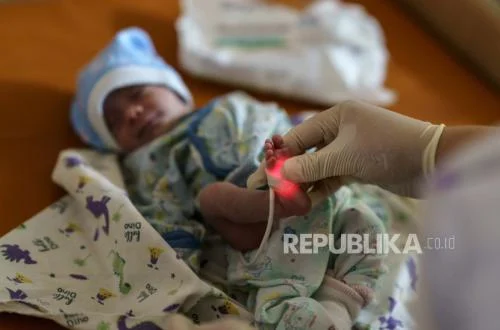
The Indonesian Pediatric Society (IDAI) has issued a critical advisory to parents and healthcare providers regarding the early identification of Congenital Heart Disease (CHD) in infants and children, highlighting that certain physical developmental markers are often the first indicators of underlying cardiac issues. Dr. Rizky Adriansyah, Chairman of the Cardiology Coordination Unit of the IDAI, emphasized during a virtual media briefing that a primary and easily observable symptom of CHD is a child’s persistent difficulty in gaining weight despite adequate nutrition. This revelation comes as part of an ongoing effort to increase public awareness about structural heart defects that are present from birth, which, if left undiagnosed, can lead to severe complications or even mortality.
Congenital Heart Disease refers to a range of structural and functional abnormalities of the heart that develop during fetal growth in the womb. According to Dr. Rizky, these defects can involve the heart walls, valves, or the blood vessels that carry blood to and from the heart. While some cases are mild, others are life-threatening and require immediate surgical intervention. The challenge for many families lies in the fact that the symptoms can often be subtle or easily mistaken for other common childhood ailments, leading to delays in seeking specialized care.
The Correlation Between Cardiac Function and Physical Growth
The most prevalent sign of CHD in pediatric patients is "failure to thrive," a medical term used to describe children who do not meet standard growth benchmarks. Dr. Rizky explained that infants with heart defects often burn more calories just to maintain basic bodily functions because their hearts must work significantly harder to pump blood throughout the body. "The most common and easiest sign of CHD to identify in a child is weight gain that is difficult to achieve," Dr. Rizky stated during the session held on Tuesday, February 14, 2023.
When the heart is inefficient, the body prioritizes survival over growth. This means that even if a baby is feeding regularly, the energy derived from that nutrition is diverted to sustain the overworked cardiac muscle and respiratory system rather than building muscle or fat. Furthermore, babies with CHD often tire quickly during breastfeeding or bottle-feeding—a phenomenon known as "feeding exhaustion"—which further limits their caloric intake. This creates a cycle of malnutrition and physical strain that can only be broken through proper diagnosis and cardiac management.
Distinguishing Heart Disease from Respiratory Ailments
Beyond growth issues, Dr. Rizky pointed out that CHD is frequently misdiagnosed as respiratory conditions such as asthma. Because children with heart defects often experience shortness of breath (dyspnea) and easy fatigue, general practitioners and parents may assume the child has a primary lung issue. "This is where misdiagnosis often occurs," Dr. Rizky noted. "It is frequently thought that children experiencing these symptoms have asthma. While the symptoms are indeed similar, they are often actually signs of CHD or even early-stage heart failure."
The confusion stems from the physiological link between the heart and the lungs. In many types of CHD, such as a Ventricular Septal Defect (VSD) or Patent Ductus Arteriosus (PDA), blood flows abnormally from the left side of the heart to the right side, leading to an over-circulation of blood in the lungs. This "flooding" of the lungs causes congestion, making it difficult for the child to breathe and resulting in wheezing or rapid breathing that mimics asthma.
Additionally, Dr. Rizky highlighted that recurring bouts of pneumonia, chronic coughing, and frequent flu-like symptoms are significant red flags. "Parents may notice the child gets sick, recovers briefly, and then falls ill again with a chest infection. This repetitive cycle of respiratory illness is often a secondary effect of an underlying heart abnormality," he explained. The excess fluid in the lungs caused by heart defects provides a breeding ground for bacteria and viruses, making these children far more susceptible to severe pneumonia than their healthy peers.
Global Context and Statistical Reality
The prevalence of Congenital Heart Disease is a global health concern. While Dr. Rizky cited data from the United States suggesting that at least 35,000 babies are born with CHD annually, global estimates are even more staggering. According to the World Health Organization (WHO) and various international cardiac registries, approximately 1 in every 100 live births is affected by some form of CHD. In Indonesia, with a birth rate of approximately 4.4 to 4.8 million per year, it is estimated that 40,000 to 50,000 infants are born with heart defects every year.
Of these cases, approximately 25% are considered "critical" CHD, meaning the infant will require surgery or a catheter-based intervention within the first year of life to survive. Without early detection, many of these children do not survive past their first birthday, or they develop irreversible pulmonary hypertension that makes later treatment much more risky and less effective.
The Evolution of Diagnostic Technology: From Fetus to Infant
The IDAI emphasizes that medical technology has advanced to a point where many of these defects can be caught even before the child is born. Dr. Rizky explained that screening for CHD should ideally begin during pregnancy. Fetal echocardiography, a specialized ultrasound that focuses specifically on the structure and rhythm of the fetal heart, can be performed as early as the 16th to 18th week of gestation.
"Early detection is absolutely crucial to prevent further damage or death in infants," Dr. Rizky asserted. If a defect is identified in utero, medical teams can prepare for a high-risk delivery, ensuring that neonatologists and pediatric cardiologists are on standby to provide immediate stabilization, such as administering prostaglandins to keep vital blood vessels open or preparing for emergency bedside procedures.
For children already born, the gold standard for diagnosis is the postnatal echocardiogram. This non-invasive procedure uses ultrasonic waves to create a detailed image of the heart’s chambers, valves, and major vessels. It allows doctors to see exactly how blood is flowing and to measure the pressure within the heart. Dr. Rizky urged parents who notice persistent growth issues or respiratory distress in their children to request a referral to a pediatric cardiologist for such a screening.
Socio-Economic Implications and the Path Forward
The impact of undiagnosed or late-diagnosed CHD extends beyond the individual family; it carries significant socio-economic consequences. In Indonesia, the cost of treating advanced heart failure or performing complex corrective surgeries on older children is substantially higher than the cost of early intervention. Furthermore, children with untreated CHD often face neurodevelopmental delays due to chronic low oxygen levels (cyanosis) or the physical toll of chronic illness, which can limit their future educational and economic potential.
The IDAI’s briefing serves as a call to action for the Indonesian government and healthcare infrastructure to improve the distribution of pediatric cardiac services. Currently, many of the specialized facilities capable of performing complex pediatric heart surgeries are concentrated in major urban centers like Jakarta. Expanding screening programs, such as pulse oximetry screening for all newborns before they leave the hospital, could significantly improve the detection rate of critical CHD.
Conclusion: A Vigilant Approach to Pediatric Health
The core message from the IDAI is one of vigilance and proactive screening. While the prospect of a heart defect is frightening for any parent, modern medicine offers high success rates for corrective procedures when the condition is caught early. Dr. Rizky Adriansyah’s insights underscore the necessity of looking beyond the surface symptoms. A child who is "slow to grow" or "always has a cold" may not just have a weak constitution or a picky appetite; they may be fighting a silent battle within their own chest.
By integrating cardiac screening into routine pediatric check-ups and paying close attention to growth charts and respiratory patterns, the medical community and parents can work together to ensure that every child born with a heart defect has the opportunity for a healthy, full life. The technology exists, the expertise is available, and as Dr. Rizky concluded, the window for intervention is most effective when opened as early as possible. Awareness remains the first and most vital step in the journey from diagnosis to recovery.