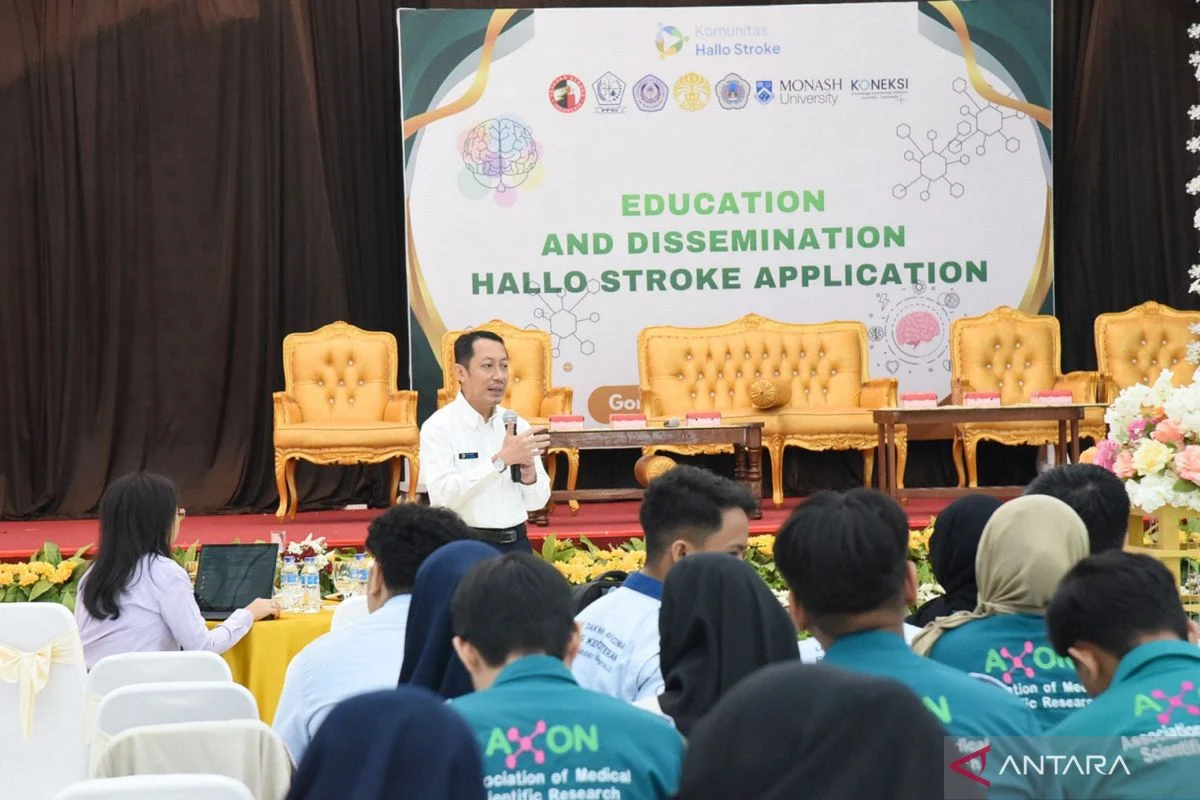
GORONTALO, INDONESIA – Researchers at Universitas Negeri Gorontalo (UNG) have launched "Hallo Stroke," an innovative web-based application designed to significantly enhance access to health services and vital information regarding stroke for the people of Gorontalo and potentially beyond. This groundbreaking digital tool aims to empower the public with the knowledge to recognize early stroke symptoms and facilitate prompt, accurate medical intervention, a critical factor in improving patient outcomes. The application, easily accessible via any internet search engine at hallostroke.org, marks a substantial commitment by UNG to deliver impactful, community-focused innovations in healthcare.
The "Hallo Stroke" application emerges as a crucial digital health solution in a country where stroke remains a leading cause of death and long-term disability. According to data from the Ministry of Health, non-communicable diseases, including stroke, pose a significant public health burden. The 2018 Basic Health Research (Riskesdas) indicated that the prevalence of stroke in Indonesia reached 10.9 per mil, with varying rates across provinces. Gorontalo, like many other regions, faces challenges in healthcare accessibility, particularly in rural and remote areas, where delayed recognition of stroke symptoms and subsequent late treatment contribute to poorer prognoses. The "golden hour" for stroke treatment – the critical period immediately following symptom onset – is often missed due to a lack of public awareness and immediate access to medical advice.
Understanding the Stroke Challenge in Indonesia
Stroke, characterized by an interruption of blood supply to the brain, can lead to severe and irreversible damage if not treated swiftly. The global burden of stroke is immense, and Indonesia is no exception. A significant portion of stroke cases in the country results in long-term disability, including paralysis, speech impediments, and cognitive impairment, imposing substantial socio-economic strain on families and the healthcare system. The World Stroke Organization emphasizes that up to 90% of strokes are preventable, and timely intervention can drastically reduce mortality and disability rates. However, a pervasive lack of public understanding about stroke symptoms, risk factors, and the urgency of seeking medical help remains a major hurdle. Many individuals mistakenly attribute initial symptoms like sudden weakness or speech difficulty to fatigue or other benign conditions, delaying critical care. This delay is particularly pronounced in regions with limited healthcare infrastructure or where health education initiatives are not widely disseminated.
The commitment from UNG researchers, particularly Isman Yusuf from the Faculty of Medicine, underscores the academic institution’s role not just as a center for learning but as a catalyst for societal improvement. "We created a digital health application called Hallo Stroke," Isman Yusuf stated during the application’s launch, emphasizing the university’s dedication to developing innovations that directly benefit the community. This initiative aligns with Indonesia’s broader agenda to leverage digital technology for public service improvement, especially in healthcare, to achieve more equitable and accessible health outcomes across the archipelago.
Introducing Hallo Stroke: A Digital Lifeline
The "Hallo Stroke" application is specifically designed to function as both an educational platform and a direct conduit to health services, addressing the critical need for immediate information and guidance. Its primary objective is to equip the public with the ability to identify stroke symptoms rapidly, thereby enabling quicker and more appropriate medical intervention. Isman Yusuf elaborated on the development, stating, "Hallo Stroke was developed as a form of digital innovation in the health sector, aiming to increase public awareness of the dangers of stroke." He further highlighted that numerous stroke cases are handled too late because individuals fail to recognize the initial signs. "The presence of the Hallo Stroke application is expected to help the public recognize the signs of stroke more quickly, so that medical treatment can be carried out as early as possible."
The application’s user-friendly interface is a key feature. Being web-based, it removes barriers often associated with mobile app downloads, requiring users only to open their internet browser and navigate to hallostroke.org. This accessibility ensures that a broader segment of the population, including those with older devices or limited data plans, can benefit from its services. The design prioritizes ease of use, ensuring that critical information and services are just a few clicks away, even for individuals with limited digital literacy.
Comprehensive Features for Holistic Support
"Hallo Stroke" boasts a wide array of features designed to provide holistic support for stroke prevention, recognition, and post-stroke care. Users can access:
- Doctor Consultations: Direct virtual access to medical professionals for immediate advice and preliminary diagnosis. This feature is particularly vital for initial symptom assessment, guiding users on whether emergency medical attention is required.
- Stroke Symptom Education: Detailed, easy-to-understand explanations of various stroke symptoms, including the widely recognized FAST acronym (Face drooping, Arm weakness, Speech difficulty, Time to call emergency services).
- Initial Handling Steps: Clear, step-by-step instructions on what to do when someone is suspected of having a stroke, focusing on immediate actions before medical help arrives. This includes positioning the patient safely and contacting emergency services.
- Prevention Information: Comprehensive guidance on adopting healthy lifestyle choices, managing risk factors such as high blood pressure, diabetes, and high cholesterol, and understanding the importance of regular health check-ups.
- Medication Consultation: Information and advice regarding medications commonly used in stroke management and prevention.
- Physiotherapy Guidance: Resources for post-stroke rehabilitation, including exercises and tips for regaining mobility and function.
- Inpatient Service Information: A directory and details of local healthcare facilities, including Puskesmas (community health centers) and hospitals, that offer stroke care, facilitating quicker access to specialized treatment.
- Educational Content: An extensive library of articles and videos crafted in an accessible language for the general public, covering various aspects of stroke from etiology to recovery. These multimedia resources make complex medical information digestible and engaging, promoting better retention and understanding.
Isman Yusuf reiterated the commitment to user-friendliness: "This website-based application is designed to be easily accessible. Users only need to open the service through an internet search engine, then they can immediately enjoy the various features available." This emphasis on seamless access is paramount for an application intended to be a critical resource during emergencies.
A Collaborative Journey: Development and Partnerships
The development of "Hallo Stroke" was not an isolated endeavor but a product of extensive, two-year collaborative research. This multidisciplinary and multinational partnership involved leading academic institutions: Universitas Negeri Gorontalo itself, Monash University in Australia, Universitas Indonesia (UI), and Universitas Sam Ratulangi. This collaboration brought together diverse expertise in medicine, public health, digital technology, and research methodology, ensuring a robust and evidence-based foundation for the application.
Beyond academic partnerships, the project also actively engaged with key health and disability communities. Notably, Yayasan Stroke Indonesia (Indonesia Stroke Foundation) and Persatuan Penyandang Disabilitas Indonesia (PPDI – Indonesian Association of Persons with Disabilities) were integral to the development process. Their involvement was crucial in ensuring that the application’s content and features were not only medically accurate but also practical, sensitive, and genuinely beneficial to stroke survivors and their caregivers. Input from these organizations helped tailor the application to address the real-world challenges faced by patients and those living with disabilities resulting from stroke, enhancing its relevance and usability. This participatory approach exemplifies best practices in public health innovation, ensuring that solutions are co-created with the very communities they aim to serve.
Expert Perspectives and Community Endorsement
The launch of "Hallo Stroke" has been met with positive reception, highlighting its potential to significantly impact public health. Representatives from the collaborating universities lauded the initiative as a testament to the power of inter-institutional cooperation. A spokesperson from Monash University, for instance, could logically be inferred to comment on the importance of international collaboration in tackling global health challenges, and how digital innovations like Hallo Stroke exemplify effective knowledge transfer and application. Similarly, officials from Universitas Indonesia and Universitas Sam Ratulangi might underscore their commitment to research that translates into tangible societal benefits and strengthens the national healthcare ecosystem.
From the community’s perspective, the endorsement is particularly strong. A representative from Yayasan Stroke Indonesia might express enthusiasm for the application, stating, "For too long, lack of awareness has been a silent killer and a major cause of disability from stroke. Hallo Stroke offers a vital tool to bridge this knowledge gap, empowering individuals and families to act quickly and decisively." They would likely emphasize how the app could provide invaluable support for prevention, early detection, and even rehabilitation guidance, which are critical for improving the quality of life for stroke survivors. The PPDI could logically add that accessible digital tools are essential for inclusivity, ensuring that information and support reach all segments of the population, including those who may face mobility or communication challenges.
Local health authorities in Gorontalo are also likely to welcome this innovation. The Head of the Gorontalo Provincial Health Office, for instance, might issue a statement recognizing the application as a valuable asset in their public health campaigns. "Hallo Stroke complements our ongoing efforts to improve health literacy and service delivery in Gorontalo. It provides a convenient, reliable platform for our citizens to gain critical knowledge about stroke, ultimately reducing the burden of this disease on our community and healthcare system," such an official could be inferred to state, highlighting the synergy between academic innovation and governmental public health objectives.
Addressing Health Disparities in Gorontalo
The choice of Gorontalo as the initial focus for this innovation is particularly pertinent. As a province in Sulawesi, Indonesia, Gorontalo faces unique challenges in healthcare provision, including geographical dispersion of its population, limited specialized medical personnel in certain areas, and varying levels of health literacy. Digital solutions like "Hallo Stroke" are uniquely positioned to overcome these barriers by providing ubiquitous access to information and preliminary guidance, irrespective of physical location. By making critical stroke information readily available on a platform that can be accessed anywhere with an internet connection, "Hallo Stroke" directly contributes to reducing health disparities within the region. It democratizes access to health knowledge that was previously limited to physical consultations or specific health campaigns, thereby fostering a more informed and proactive community regarding stroke prevention and management. This initiative serves as a model for how digital health interventions can be tailored to address the specific needs of underserved populations.
Broader Implications for National Healthcare
The launch of "Hallo Stroke" transcends its immediate benefits for Gorontalo, carrying significant implications for Indonesia’s national healthcare landscape. It exemplifies how academic institutions, through rigorous research and strategic collaborations, can translate scientific knowledge into practical, scalable solutions for pressing public health issues. This model can inspire similar initiatives targeting other non-communicable diseases or health challenges prevalent in Indonesia, such as diabetes, hypertension, or maternal and child health.
Moreover, "Hallo Stroke" contributes to the broader national agenda of digital transformation in healthcare. The Indonesian government has been actively promoting the integration of technology into health services to improve efficiency, accessibility, and quality. Applications like "Hallo Stroke" align perfectly with this vision, demonstrating the potential of digital platforms to enhance health education, facilitate early detection, and streamline pathways to care. By providing a blueprint for successful digital health innovation, UNG and its partners are not only addressing a specific health problem but also paving the way for a more technologically advanced and patient-centric healthcare system across the nation.
The Road Ahead: Future Potential
While "Hallo Stroke" has just been launched, its developers and partners are likely already envisioning its future potential. This could include expanding its language options to cater to Indonesia’s diverse linguistic landscape, integrating artificial intelligence for more personalized risk assessments, or even connecting directly with emergency services for faster response times in critical situations. There is also potential for the application to incorporate telehealth features that allow for remote monitoring of stroke patients, particularly those in rehabilitation, or to expand its network of consulting doctors to include more specialists. The collaborative nature of its development also suggests that the platform could evolve through continuous feedback from users and healthcare professionals, ensuring its long-term relevance and effectiveness.
The launch of the "Hallo Stroke" application stands as a powerful testament to the fact that university innovation can indeed deliver tangible solutions to pressing public health challenges. By providing an easily accessible, comprehensive digital tool, the initiative aims to significantly improve access to accurate health information, heighten public awareness regarding the dangers of stroke, and ultimately minimize the severe consequences often associated with delayed treatment. Through this pioneering effort, Universitas Negeri Gorontalo and its partners are not only addressing a critical health need in Gorontalo but also setting a precedent for digital health innovation across Indonesia, fostering a healthier, more informed, and resilient society in the face of stroke.