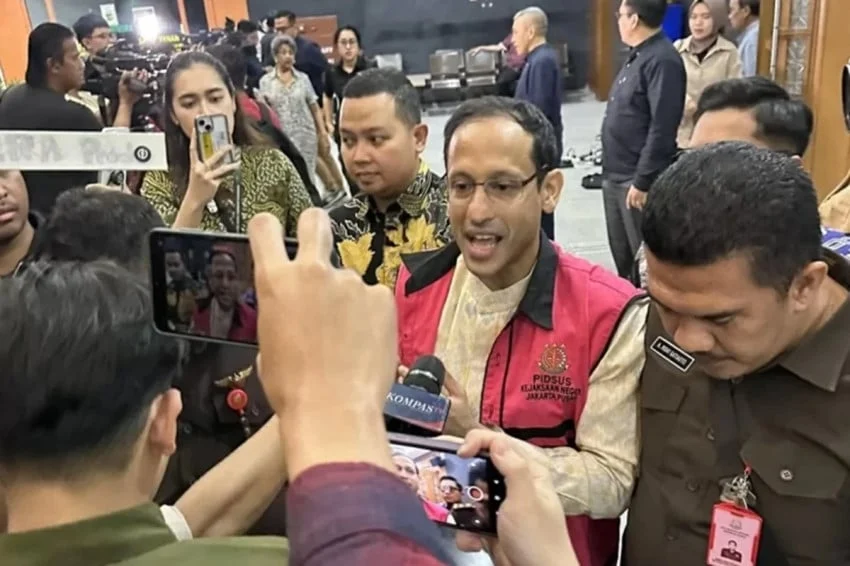
JAKARTA – A panel of judges has estimated state financial losses in a corruption case involving the procurement of Chromebook laptops and Chrome Device Management (CDM) systems to reach a staggering Rp5.2 trillion. This figure was revealed during a sentencing hearing for the defendant, Ibrahim Arief, widely known as Ibam, a former consultant at the Ministry of Education, Culture, Research, and Technology (Kemendikbudristek), on Tuesday, May 12, 2026. The court found Ibam guilty of corruption, sentencing him to four years in prison and a fine of Rp500 million, with an additional 120 days of imprisonment if the fine is not paid.
The indictment and subsequent trial focused on alleged overpricing and fraudulent procurement practices that inflated the cost of these digital devices, impacting educational initiatives. The court’s assessment of Rp5.2 trillion represents a significant escalation from previous calculations by the Financial and Development Supervisory Agency (BPKP), which had estimated the losses at approximately Rp1.57 trillion. This substantial discrepancy underscores the gravity of the alleged corruption and its far-reaching financial implications for the Indonesian state.
The Magnitude of State Losses: A Detailed Breakdown
During the sentencing, presiding Judge Sunoto articulated the court’s findings regarding the direct and indirect financial damages. The core of the alleged corruption revolved around the activation of the Chrome Device Management (CDM) system, which the court identified as the primary instrument leading to significant losses. The direct financial impact attributed to the CDM activation alone was calculated at USD44,054,426, equivalent to Rp621,387,678,730 at the prevailing exchange rates during the period of the alleged offense.
However, the most substantial portion of the estimated losses stemmed from the alleged inflation of the unit prices for the Chromebook laptops themselves. The court found evidence of significant price markups, with the procured units costing approximately three times their market value. This systematic overpricing, as detailed by Judge Sunoto, involved a markup of roughly Rp4 million per unit.
"And a simple mathematical calculation shows a markup of Rp4 million per unit, or three times the market price," stated Judge Sunoto.
When this per-unit markup is applied to the total number of Chromebooks procured, the scale of the financial drain becomes alarmingly clear. The procurement involved a colossal 1,159,327 units of Chromebooks. Multiplying the Rp4 million markup by this quantity yields a total estimated loss from the inflated unit prices of approximately Rp4.6 trillion (Rp4,637,308,000,000).
Combining the losses from the CDM activation and the inflated laptop prices, the court’s total estimated state loss reaches approximately Rp5.2 trillion. This figure dwarfs the BPKP’s earlier assessment, highlighting a potential systemic issue in the procurement process or a more extensive network of complicity than initially identified.
Background: The Chromebook Procurement and the Role of CDM
The procurement of Chromebooks and the implementation of the Chrome Device Management (CDM) system were part of broader government initiatives aimed at modernizing digital infrastructure within the education sector. These initiatives, often lauded as crucial steps towards digital transformation, aimed to equip students and educators with contemporary technological tools to enhance learning and administrative efficiency.
Chromebooks, known for their simplicity, cloud-based operating system, and cost-effectiveness in certain contexts, were seen as a viable solution for large-scale device deployment. The CDM system, on the other hand, is designed to manage fleets of Chrome OS devices, allowing for centralized control, application deployment, security settings, and user policy enforcement. Its implementation is critical for ensuring that devices are properly configured, maintained, and secured, especially in an educational environment with a large number of users and devices.
The allegations of corruption suggest that the intended benefits of these technological advancements were undermined by fraudulent practices. The "mark up" or overpricing of devices, coupled with potential irregularities in the CDM implementation, meant that public funds were allegedly diverted for personal gain, rather than being used to genuinely advance educational goals. This raises critical questions about oversight, due diligence, and the integrity of the procurement processes within government ministries.
Chronology of Events Leading to the Verdict
While the provided article focuses on the sentencing, a comprehensive understanding requires a chronological perspective of the case:
- Early 2020s (Estimated): The period when the procurement of Chromebooks and the implementation of CDM were initiated within Kemendikbudristek. This timeframe aligns with the broader push for digital learning solutions in Indonesia.
- Investigation Phase: Following initial reports or whistleblowing, investigative bodies, including potentially the Corruption Eradication Commission (KPK) or other law enforcement agencies, began looking into the procurement process. This would have involved gathering evidence, interviewing witnesses, and conducting financial audits.
- BPKP Assessment: The BPKP, tasked with assessing financial losses to the state, conducted its initial audit. This assessment formed a baseline for the financial impact, which was later significantly revised by the court.
- Indictment of Ibrahim Arief (Ibam): Based on the investigation, Ibrahim Arief was formally charged with corruption. His role as a consultant suggests he may have had influence or direct involvement in the procurement specifications, vendor selection, or operational implementation of the devices and management system.
- Trial Proceedings: The case proceeded to trial at the Corruption Eradication Court (Pengadilan Tipikor). This phase involved presenting evidence, witness testimonies, and legal arguments from both the prosecution and the defense.
- Court’s Calculation of Losses: During the trial, the court independently evaluated the evidence, including expert testimonies and financial analyses, to arrive at its own estimation of state losses, which significantly exceeded the BPKP’s figures.
- Sentencing Hearing (May 12, 2026): The culmination of the trial, where the court delivered its verdict and sentenced Ibrahim Arief to four years imprisonment and a substantial fine.
This timeline, though inferred, provides a framework for understanding how such a case progresses from initial allegations to a judicial conclusion.
Supporting Data and Analysis
The court’s decision highlights several critical points that warrant deeper analysis:
- The "Mark Up" Phenomenon: The finding of a "three times" price inflation is a stark indicator of potential bid-rigging, collusion with vendors, or the creation of artificial demand to justify exorbitant prices. In public procurement, transparency and competitive bidding are paramount to ensure value for money. The alleged markup suggests a severe breach of these principles.
- CDM as a "Key Instrument": The court’s designation of CDM activation as a "primary instrument" causing losses points to the possibility that the complexity or perceived necessity of this management system was exploited. It’s possible that the CDM itself was either unnecessarily expensive, poorly implemented, or that its integration was used as a justification for inflated overall project costs.
- Discrepancy with BPKP Figures: The significant difference between the court’s estimate (Rp5.2 trillion) and the BPKP’s estimate (Rp1.57 trillion) is a crucial aspect. This could imply:
- The BPKP’s methodology or scope of investigation was limited.
- New evidence emerged during the trial that led the court to a broader assessment.
- The court applied a more rigorous or expansive interpretation of "state loss" in this context.
- Potential systemic issues within the BPKP or other oversight bodies that allowed for such a vast underestimation.
The Rp5.2 trillion figure, if accurate, represents a substantial portion of the national budget allocated to education or technology development. Such a loss can have a ripple effect, potentially hindering future investments in critical areas, impacting the quality of education, and eroding public trust in government institutions.
Official Responses and Broader Implications
While the article only details the court’s pronouncements, a typical journalistic approach would seek reactions from relevant parties:
- Kemendikbudristek: The ministry, as the procuring entity, would likely be expected to issue a statement acknowledging the court’s decision, reiterating its commitment to combating corruption, and perhaps outlining internal review processes to prevent future occurrences. They might also comment on the implications for ongoing digital transformation efforts.
- Prosecution/Investigative Agencies: Agencies involved in the investigation and prosecution would likely express satisfaction with the verdict, emphasizing the importance of holding individuals accountable for corruption and reaffirming their dedication to upholding the law.
- Defense Counsel: The legal team for Ibrahim Arief might indicate intentions to appeal the verdict or offer a statement on their client’s behalf, potentially maintaining his innocence or disputing the court’s findings.
- Anti-Corruption Watchdogs: Civil society organizations focused on transparency and anti-corruption would likely use this case to call for stronger oversight mechanisms, greater accountability in public procurement, and potentially advocate for legislative reforms.
The implications of this case extend beyond the individual conviction of Ibrahim Arief:
- Deterrence: A significant sentence and a substantial estimated loss could serve as a powerful deterrent to others contemplating similar corrupt practices in public procurement.
- Systemic Reform: The sheer scale of the alleged losses may trigger a comprehensive review of procurement processes within Kemendikbudristek and potentially other government ministries. This could lead to enhanced transparency, stricter vetting of consultants and vendors, and improved auditing procedures.
- Public Trust: Cases of large-scale corruption, particularly those involving funds intended for education, can significantly erode public trust in government. Demonstrating a commitment to swift justice and effective recovery of stolen assets is crucial for rebuilding that trust.
- Future of Digitalization in Education: This case might cast a shadow over ambitious digitalization projects, potentially leading to increased scrutiny and a more cautious approach to large-scale technology procurement. However, it could also spur efforts to ensure that future initiatives are implemented with unimpeachable integrity.
The court’s finding of Rp5.2 trillion in state losses marks a critical juncture in this corruption case, underscoring the severe financial and ethical consequences of fraudulent practices in public service. The conviction of Ibrahim Arief is a step towards accountability, but the broader implications for governance, public trust, and the future of digital initiatives in Indonesia remain significant.