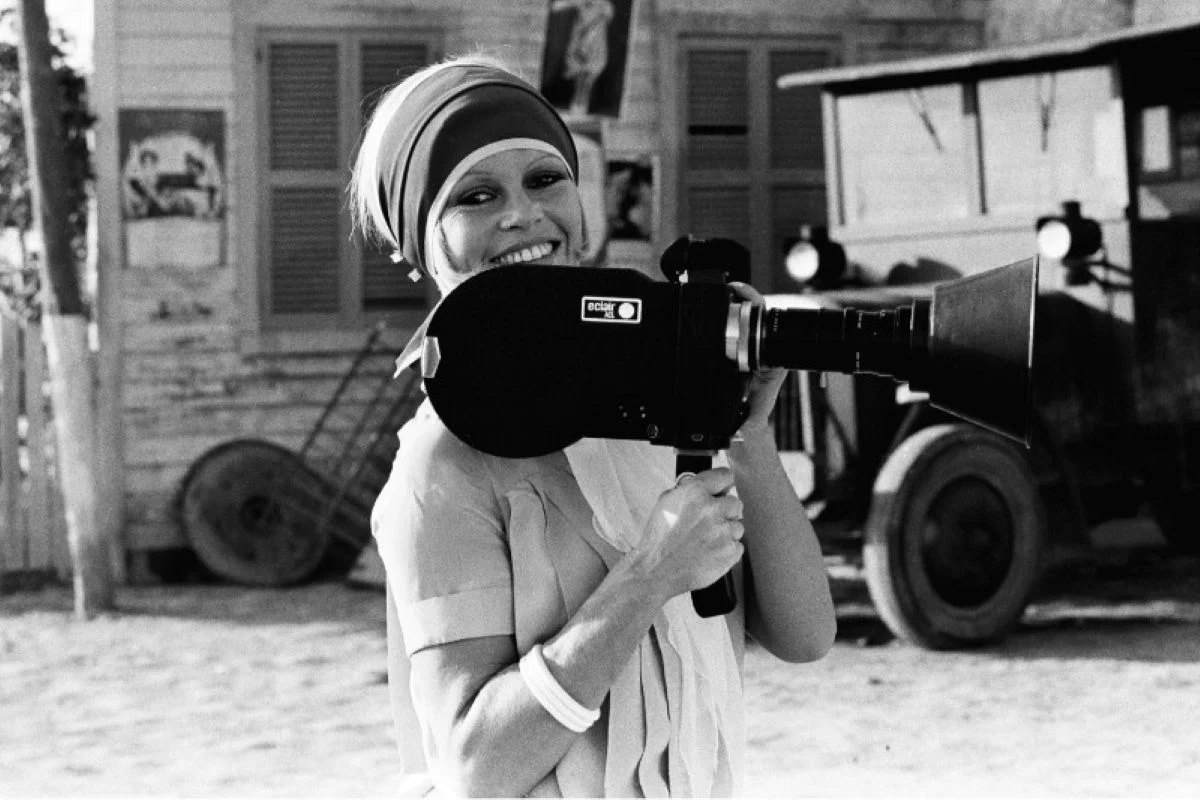
Jakarta (ANTARA) – Brigitte Bardot, the legendary French actress who transitioned into a devoted animal rights activist, passed away on Sunday, December 28, at the age of 91. The news of her death was confirmed by her eponymous foundation, which expressed profound sadness at the loss of its founder and president. Bardot, who had largely retreated from public life in recent decades, had been rarely seen in public following a period of medical treatment at a hospital in Toulon, southern France. She breathed her last at her cherished home, La Madrague, in Saint-Tropez, a coastal town in the south of France, a place synonymous with her later years and dedication to animal welfare.
A Life of Transformation: From Global Icon to Fierce Advocate
The official statement from the Brigitte Bardot Foundation underscored her remarkable journey: "The Brigitte Bardot Foundation with profound sadness announces the passing of our founder and president, Madame Brigitte Bardot. She was a world-renowned actress and singer who chose to leave her brilliant career to dedicate her life and energy to animal welfare through her foundation." This declaration encapsulates the dual legacy of a woman who captivated the world with her beauty and rebellious spirit, only to later channel that formidable energy into a relentless fight for voiceless creatures. Brigitte Bardot was more than just a film star; she was a cultural phenomenon, a symbol of an era, and, ultimately, a trailblazing activist whose impact resonated far beyond the silver screen. Her life story offers a compelling narrative of personal evolution, societal influence, and unwavering conviction.
Early Life and the Genesis of a Star
Born Brigitte Anne-Marie Bardot in Paris, France, on September 28, 1934, she emerged from a conservative, bourgeois family. Her father, Louis Bardot, was an industrialist, and her mother, Anne-Marie Mucel, fostered a love for the arts, enrolling Brigitte in ballet lessons at a young age. This early exposure to the arts, particularly dance, instilled in her a discipline and grace that would later define her screen presence. Her initial aspirations leaned towards ballet, and she was accepted into the prestigious Conservatoire de Paris, training under renowned Russian choreographer Boris Knyazev.
However, fate had other plans. At just 15 years old, Bardot’s striking beauty caught the attention of the fashion world. In 1949, she made her modeling debut for Jardin des Modes, followed by a pivotal cover shoot for Elle magazine in 1950. It was this Elle cover that truly opened the doors to the entertainment industry, catching the eye of aspiring film director Roger Vadim. Vadim, then an assistant to director Marc Allégret, recognized her raw potential, and their encounter marked the beginning of her meteoric rise to stardom.
The Cinematic Breakthrough: "And God Created Woman"
Bardot made her acting debut in "Le Trou Normand" (Crazy for Love) in 1952, the same year she married Roger Vadim. Over the next few years, she appeared in a series of European films, steadily building her profile. However, it was Vadim’s 1956 directorial debut, "And God Created Woman" (Et Dieu… créa la femme), that catapulted her to international fame. The film, shot in the idyllic setting of Saint-Tropez, showcased Bardot as the fiercely independent and sexually uninhibited Juliette Hardy. Her portrayal, combined with the film’s then-scandalous sensuality, created a sensation, particularly in the United States, where it was released by Columbia Pictures and became an unexpected art-house hit.
The film’s impact was monumental. Bardot became an overnight global sensation, an embodiment of post-war liberation and a new form of female sexuality that challenged conventional norms. Her dance scenes, especially the mambo, were considered provocative and daring, cementing her image as a "sex kitten" or "sex bomb." The film sparked widespread debate and controversy, particularly in conservative societies, but it also made Bardot an instant icon, symbolizing a radical shift in cultural attitudes towards women’s roles and desires. French philosopher Simone de Beauvoir famously analyzed Bardot’s significance in her 1959 essay "The Lolita Syndrome," later revised as "Brigitte Bardot and the Lolita Syndrome," where she described Bardot as a "locomotive of women’s history," embodying "absolute freedom" and an uninhibited naturalness that defied societal expectations.
A Prolific Career and Enduring Style
Following "And God Created Woman," Bardot’s career blossomed. She starred in over 40 films across various genres, working with some of the most celebrated directors of her time. Her filmography includes a diverse range of roles that showcased her versatility:
- "Le Trou Normand" (Crazy for Love, 1952): Her debut, a lighthearted comedy.
- "Love Is My Profession" (La Femme et le Pantin, 1959): Directed by Julien Duvivier, a dramatic role based on Pierre Louÿs’s novel.
- "Babette Goes to War" (Babette s’en va-t-en guerre, 1959): A popular comedy where she played a French spy during World War II.
- "The Truth" (La Vérité, 1960): Directed by Henri-Georges Clouzot, this dramatic role earned her critical acclaim and a nomination for a BAFTA Award for Best Foreign Actress.
- "Contempt" (Le Mépris, 1963): Directed by Jean-Luc Godard, this iconic New Wave film, often considered her most significant artistic achievement, saw her collaborate with Michel Piccoli and Fritz Lang, solidifying her status beyond a mere sex symbol.
- "Viva Maria!" (1965): Co-starring with Jeanne Moreau, this adventure-comedy directed by Louis Malle showcased her comedic timing and strong screen presence, earning her a BAFTA nomination for Best Foreign Actress.
- "Shalako" (1968): A Western where she starred alongside Sean Connery, demonstrating her appeal in Hollywood productions.
- "The Women" (Les Femmes, 1969): A romantic comedy.
- "Les Novices" (The Novices, 1970): A comedy-drama.
Beyond her acting prowess, Bardot became a global fashion icon. Her distinctive style – the tousled blonde hair, often worn in a beehive or bouffant, the expressive cat-eye makeup, and her preference for natural, often revealing clothing – set trends worldwide. The "Bardot neckline" (a wide, open neckline that exposes both shoulders) became synonymous with her and remains a classic symbol of feminine elegance and sensuality. She popularized bikinis, ballet flats, gingham prints, and peasant blouses, influencing generations of women and shaping the aesthetic of the 1960s. Her image graced countless magazine covers, posters, and advertisements, making her one of the most recognizable faces of the 20th century.
The Radical Shift: From Screen Siren to Animal Rights Crusader
At the pinnacle of her fame, in 1973, just shy of her 40th birthday, Brigitte Bardot made a startling announcement: she was retiring from acting. The decision sent shockwaves through the entertainment industry. Having starred in 47 films and recorded over 60 songs, she chose to leave the glamour and pressures of celebrity life behind to dedicate herself entirely to animal welfare. This was not a gradual transition but a definitive break, signaling a profound reorientation of her life’s purpose.
Her commitment to animal rights was deeply personal and unwavering. In 1977, she established the Brigitte Bardot Foundation for the Welfare and Protection of Animals, initially funding it by selling off her personal belongings, including jewelry, clothing, and even her famous Riviera villa, La Madrague. The foundation quickly became a powerful voice in the global animal rights movement, campaigning against a wide range of abuses:
- Seal Hunting: Bardot became a prominent figure in the international fight against the brutal commercial hunting of seals, particularly in Canada. Her outspoken advocacy helped bring global attention to the issue.
- Vivisection and Animal Experimentation: She vigorously opposed the use of animals in scientific research and product testing.
- Fur Trade: A staunch opponent of the fur industry, she consistently condemned the use of animal fur in fashion.
- Elephant Poaching: Bardot lent her voice to campaigns against elephant poaching and the illegal ivory trade.
- Factory Farming and Cruelty to Livestock: Her foundation has actively campaigned against inhumane practices in industrial agriculture.
- Animal Circuses and Zoos: She advocated for the protection of wild animals from exploitation in entertainment.
Bardot’s activism was often characterized by her passionate, uncompromising, and sometimes controversial approach. She utilized her immense celebrity platform to draw attention to causes, leveraging her fame for a cause she believed in more than anything else.
Controversies and the Complex Legacy
Despite her admirable dedication to animal welfare, Brigitte Bardot’s later years were not without controversy. Her outspokenness occasionally led her into trouble, particularly concerning her views on immigration and certain social issues. She faced multiple convictions for inciting racial hatred in France due to comments perceived as anti-immigrant or Islamophobic, often linking population growth to the decline of animal welfare. These episodes cast a shadow over her public image and sparked debates about the complexities of free speech, activism, and the responsibility of public figures. While her defenders argued she was simply expressing her concerns about French culture and animal rights, critics highlighted the discriminatory nature of some of her statements.
Nevertheless, her commitment to animals remained unquestionable. Her foundation grew into a significant international organization, running shelters, funding rescue operations, and lobbying governments worldwide. For her extensive humanitarian work, including her animal rights advocacy, she was awarded the Légion d’honneur (Legion of Honour), France’s highest order of merit, in 1985, though she initially refused it. She later accepted it, recognizing its potential to further her cause. For Bardot, her love for animals was "the path to the freest and most meaningful life," a sentiment that encapsulated her post-acting existence.
Final Years and Enduring Impact
In her final decades, Bardot largely lived a secluded life at La Madrague, surrounded by her rescued animals. She remained a formidable presence in the animal rights world, issuing statements and engaging in advocacy from her retreat. Her health had been a concern in recent years, leading to her hospitalization in Toulon prior to her passing.
Brigitte Bardot’s death marks the end of an extraordinary era. Her legacy is a rich and complex tapestry woven with threads of glamour, rebellion, artistic achievement, and fierce humanitarianism. In the annals of cinema, she will forever be remembered as the embodiment of a revolutionary spirit, a muse for acclaimed directors, and a global fashion icon whose style continues to influence. Her films, particularly "And God Created Woman" and "Contempt," remain cornerstones of cinematic history, having profoundly influenced popular culture and societal perceptions of women.
Beyond the silver screen, her second act as an unwavering animal rights activist solidified her place as a powerful force for change. She demonstrated that celebrity could be a potent tool for advocacy, bringing issues like seal hunting and vivisection to the forefront of global consciousness. Her foundation continues its vital work, a testament to her enduring vision and dedication.
Brigitte Bardot leaves behind a legacy that is both celebrated and debated, a testament to her profound and multifaceted impact on the 20th and 21st centuries. Her journey from the ultimate "sex kitten" to a dedicated animal protector serves as a powerful narrative of transformation, reminding the world that true passion can manifest in many forms, leaving an indelible mark on culture, society, and the lives of countless beings. Her departure leaves a void, but her legend, in all its complexity, will undoubtedly endure.